Janet McLaughlin is an Associate Professor of Health Studies and a Research Associate with the International Migration Research Centre at Wilfrid Laurier University. She is an interdisciplinary scholar trained in medical anthropology, with interests in the areas of global and environmental health, food systems, labour, social justice, citizenship, transnational migration and the social impacts of autism. Her research and publications have focused on various areas of migrant workers’ health, rights and well-being, including: access to health care and workers’ compensation; women’s experiences of gender-based violence; occupational, mental, sexual and reproductive health; social determinants of health; and the impacts of separation on migrant families. She is co-founder of the Migrant Worker Health Project, www.migrantworkerhealth.ca, which promotes accessible health care for migrant workers. Dr. McLaughlin is currently researching autism policy and family impacts in Ontario.
Janet McLaughlin
From this contributor

Changes to Canada autism program could do more harm than good
The Ontario, Canada, government recently announced its intentions to overhaul the Ontario Autism Program, but the changes could leave autistic children without supports.
Changes to Canada autism program could do more harm than good
Explore more from The Transmitter

Prevalence of profound autism declines with new definition
The updated, more precise definition used in a CDC study includes adaptive scores.
Prevalence of profound autism declines with new definition
The updated, more precise definition used in a CDC study includes adaptive scores.
Is it time for neuroscience to shift its focus from a computational mind to a navigating mind?
Andrea Hiott explains her navigational approach to the mind, and why now is the time to embrace seemingly paradoxical findings in neuroscience.
Is it time for neuroscience to shift its focus from a computational mind to a navigating mind?
Andrea Hiott explains her navigational approach to the mind, and why now is the time to embrace seemingly paradoxical findings in neuroscience.
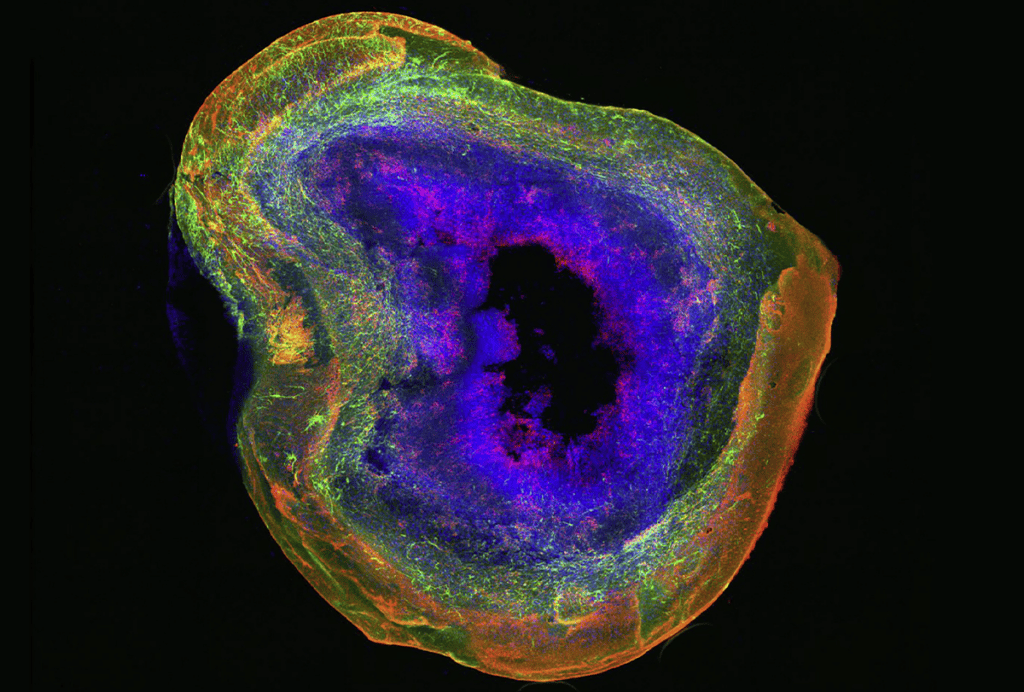
Human brain organoids come of age—but still have room to grow
The U.S. government has touted organoids as an alternative to animals for studying the brain. The model has improved since its debut in 2013, but scientists are still working to overcome key limitations: immaturity, consistency and the lack of vascularization.
Human brain organoids come of age—but still have room to grow
The U.S. government has touted organoids as an alternative to animals for studying the brain. The model has improved since its debut in 2013, but scientists are still working to overcome key limitations: immaturity, consistency and the lack of vascularization.