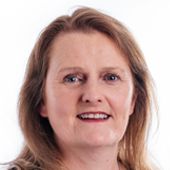
Headshot of Mary Doherty.

Mary Doherty

Consultant anaesthetist
Our Lady’s Hospital, Navan, Ireland

Mary Doherty is an autistic consultant anesthesiologist based in Ireland, an honorary clinical research fellow at Brighton & Sussex Medical School in the United Kingdom, and a Ph.D. student at London South Bank University. She is also the mother of two neurodivergent young people.

Doherty is founder of Autistic Doctors International and Autistic Med Students, both dedicated to peer support, advocacy, research and training. She has been involved with biomedical autism research for several years, as a member of the AIMS-2-Trials Autism Representatives Steering Committee and more recently the Participatory Research Advisory Committee for the RESPECT 4 Neurodevelopment Network.

Her research interests include health care for autistic adults and the experiences of autistic medical students and doctors. Her doctoral research focuses on the experiences and perspectives of autistic psychiatrists.
From this contributor

Explore more from The Transmitter

A human silhouette with lines connecting the brain to various organs.

PIEZO channels are opening the study of mechanosensation in unexpected places

The force-activated ion channels underlie the senses of touch and proprioception. Now scientists are using them as a tool to explore molecular mechanisms at work in internal organs, including the heart, bladder, uterus and kidney.

By Calli McMurray
30 January 2026 | 6 min read
US Department of Health and Human Services building.

Latest iteration of U.S. federal autism committee comes under fire

The new panel “represents a radical departure from all past rosters,” says autism researcher Helen Tager-Flusberg.

By Angie Voyles Askham
29 January 2026 | 9 min read
Progenitors cells in the medial ganglionic eminence become increasingly organized during development as rows of brain imaging progress from top to bottom.

‘Tour de force’ study flags fount of interneurons in human brain

The newly discovered cell type might point to the origins of the inhibitory imbalance linked to autism and other conditions.

By Holly Barker
29 January 2026 | 4 min read

privacy consent banner

Privacy Preference

We use cookies to provide you with the best online experience. By clicking “Accept All,” you help us understand how our site is used and enhance its performance. You can change your choice at any time. To learn more, please visit our Privacy Policy.