Niko McCarty was Spectrum’s data reporter from 2021 to 2022. He has an M.A. from New York University’s Science, Health and Environmental Reporting Program. He also has an M.Res. in systems and synthetic biology from Imperial College London, where he was a Fulbright Scholar, and an M.Sc. in bioengineering from the California Institute of Technology. His prior research focused on engineered microbial communities and building CRISPR-Cas technologies.

Niko McCarty
Former data reporter
Spectrum
From this contributor

Neuroscience journal retracts 13 papers at once
The papers were flagged by a method that has now been called into question.
DNA unwinder tied to social behaviors in mice, zebrafish
Blocking the enzyme, called TOP2A, in embryos makes the animals less inclined to seek companionship later in life.
DNA unwinder tied to social behaviors in mice, zebrafish
By
Niko McCarty
16 December 2022 | 0 min watch
Microscopy mash-up quantifies, maps neural circuits
A new method that merges tissue expansion, light-sheet microscopy and automated image segmentation can reconstruct neural circuits in about a week.
Microscopy mash-up quantifies, maps neural circuits
By
Niko McCarty
7 December 2022 | 0 min watch
Autism brain signature most pronounced in sensory areas
An analysis of 11 cortical regions shows anterior-to-posterior shifts in gene expression linked to autism.
Autism brain signature most pronounced in sensory areas
By
Niko McCarty
2 November 2022 | 6 min read
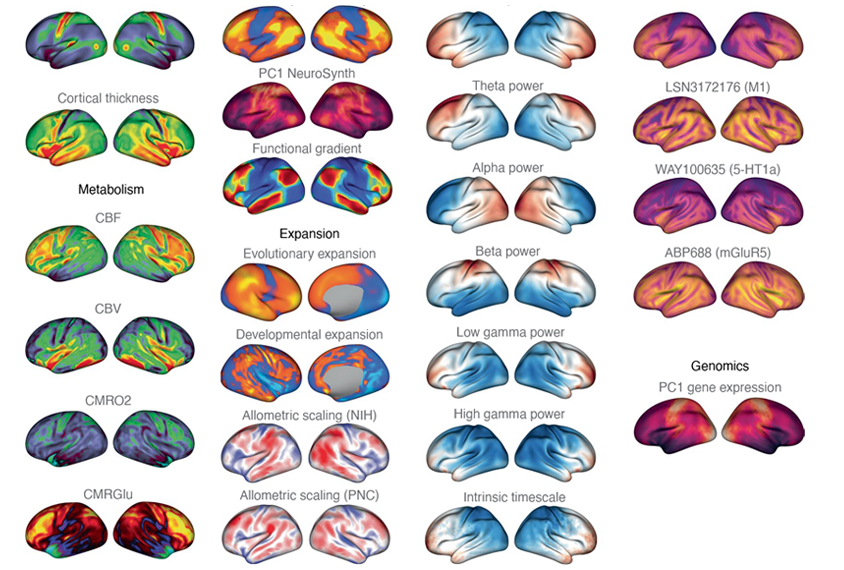
New tool transforms, compares dissimilar brain maps
The open-source software makes it possible to overlay disparate datasets and potentially accelerate hypothesis generation.
New tool transforms, compares dissimilar brain maps
By
Niko McCarty
1 November 2022 | 4 min read
Explore more from The Transmitter
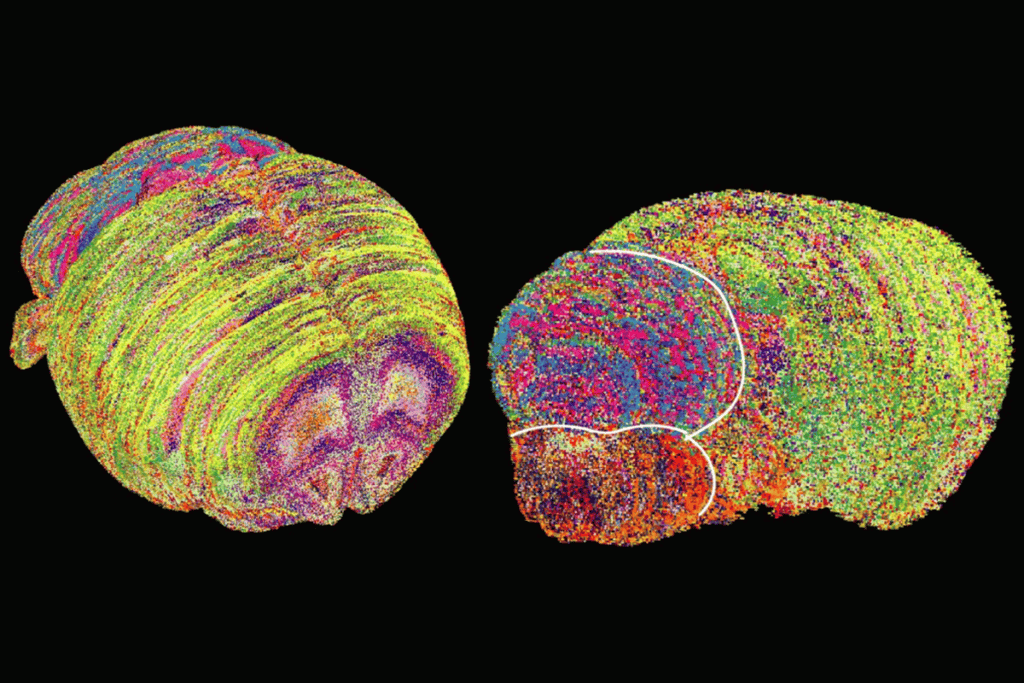
Lipids enter brain mapping limelight
Two new studies, including the first whole-brain lipid atlas in mice, uncover unforeseen complexity and influence during pregnancy and aging.
Lipids enter brain mapping limelight
Two new studies, including the first whole-brain lipid atlas in mice, uncover unforeseen complexity and influence during pregnancy and aging.
By
Lauren Schenkman
27 October 2026 | 6 min read
Behavioral phenomics in zebrafish; and more
Here is a roundup of autism-related news and research spotted around the web for the week of 26 October.
Behavioral phenomics in zebrafish; and more
Here is a roundup of autism-related news and research spotted around the web for the week of 26 October.
By
Jill Adams
27 October 2026 | 2 min read

Neuroscience gave AI its start. What happens now?
David Sussillo maps the two fields' divergent paths, and where they might still meet.
Neuroscience gave AI its start. What happens now?
David Sussillo maps the two fields' divergent paths, and where they might still meet.
By
Emily Singer
27 October 2026 | 10 min read