Yves Sciama is a freelance science writer, trained in biology and science journalism, who covers life and environmental sciences. His work has appeared in Science et Vie, Le Monde and other major French-language media, as well as in Science. He has won multiple prizes and fellowships, including a yearlong Knight Science Journalism Fellowship at the Massachusetts Institute of Technology in 2014, and is former president of AJSPI, the French association of science journalists.

Yves Sciama
Contributing writer
From this contributor
At the end of the earth with Paul-Antoine Libourel
The French researcher’s accomplishments working with chinstrap penguins in the Antarctic highlight the importance of recording sleep in the wild.
Explore more from The Transmitter
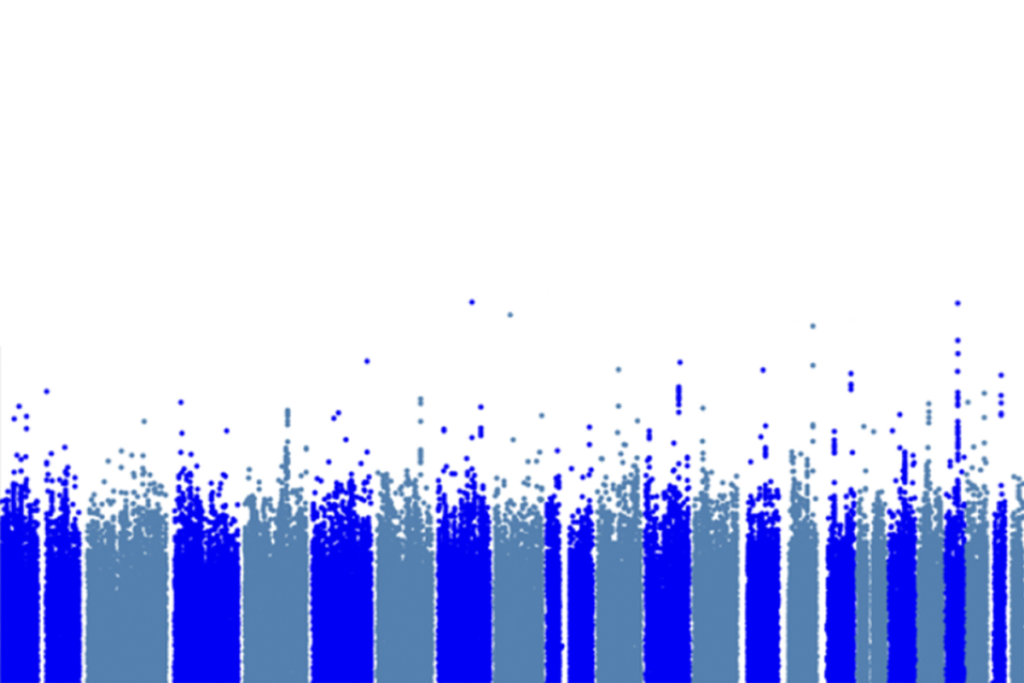
Revised statistical bar extracts less-common variants from autism genetics studies
Adjusting genetic analyses could help plug autism’s heritability gap, according to a new preprint.
Revised statistical bar extracts less-common variants from autism genetics studies
Adjusting genetic analyses could help plug autism’s heritability gap, according to a new preprint.
By
Holly Barker
12 March 2026 | 4 min read
Tom Griffiths describes how neural networks, logic and probability theory together explain cognition
In his new book, “The Laws of Thought,” Griffiths shows how these three pillars of study complement one another and together form a solid foundation to eventually explain all of our cognition, from brain to mind.
Tom Griffiths describes how neural networks, logic and probability theory together explain cognition
In his new book, “The Laws of Thought,” Griffiths shows how these three pillars of study complement one another and together form a solid foundation to eventually explain all of our cognition, from brain to mind.
By
Paul Middlebrooks
11 March 2026 | 100 min listen

This paper changed my life: Talia Lerner reflects on dopamine neuron diversity and the value of simple experiments
In a 2011 Neuron study, Stephan Lammel and his colleagues showed that dopamine neurons with different projections have different physiological properties. The work inspired Lerner to think about how to challenge widely held assumptions in the field.
This paper changed my life: Talia Lerner reflects on dopamine neuron diversity and the value of simple experiments
In a 2011 Neuron study, Stephan Lammel and his colleagues showed that dopamine neurons with different projections have different physiological properties. The work inspired Lerner to think about how to challenge widely held assumptions in the field.
By
Talia Lerner
11 March 2026 | 6 min read