SALK 2013
Recent articles

Network of protein variants suggests new autism genes
Researchers have created a network of various forms of many proteins linked to autism, revealing new molecular interactions that may play a role in the disorder. The unpublished work was presented in a poster last week at the Salk Institute, Fondation IPSEN and Nature Symposium on Biological Complexity in La Jolla, California.
Network of protein variants suggests new autism genes
Researchers have created a network of various forms of many proteins linked to autism, revealing new molecular interactions that may play a role in the disorder. The unpublished work was presented in a poster last week at the Salk Institute, Fondation IPSEN and Nature Symposium on Biological Complexity in La Jolla, California.
Fragile X mice show brain-wave abnormalities during sleep
Neurons in mice that model fragile X syndrome show immature, overexcitable firing patterns, particularly during sleep, according to unpublished research presented last week at the Salk Institute, Fondation IPSEN and Nature Symposium on Biological Complexity in La Jolla, California.
Fragile X mice show brain-wave abnormalities during sleep
Neurons in mice that model fragile X syndrome show immature, overexcitable firing patterns, particularly during sleep, according to unpublished research presented last week at the Salk Institute, Fondation IPSEN and Nature Symposium on Biological Complexity in La Jolla, California.
Eye movement, motor difficulties linked in autism
Problems with eye movements in people with autism are part of their motor difficulties and may contribute to the social deficits characteristic of the disorder, according to unpublished research presented last week at the Salk Institute, Fondation IPSEN and Nature Symposium on Biological Complexity in La Jolla, California.
Eye movement, motor difficulties linked in autism
Problems with eye movements in people with autism are part of their motor difficulties and may contribute to the social deficits characteristic of the disorder, according to unpublished research presented last week at the Salk Institute, Fondation IPSEN and Nature Symposium on Biological Complexity in La Jolla, California.
Autism-linked protein differs in male and female brains
The autism-linked protein MET is expressed at lower levels in the brains of men with autism than in control brains, according to unpublished research presented Thursday at the Salk Institute, Fondation IPSEN and Nature Symposium on Biological Complexity in La Jolla, California. Women with autism do not differ from healthy controls, however.
Autism-linked protein differs in male and female brains
The autism-linked protein MET is expressed at lower levels in the brains of men with autism than in control brains, according to unpublished research presented Thursday at the Salk Institute, Fondation IPSEN and Nature Symposium on Biological Complexity in La Jolla, California. Women with autism do not differ from healthy controls, however.
Alzheimer’s drug aids autism mouse model
Memantine, a drug used to treat Alzheimer’s disease, can reverse autism-like features in mice lacking one copy of the MEF2C gene, according to a poster presented last week at the Salk Institute, Fondation IPSEN and Nature Symposium on Biological Complexity in La Jolla, California.
Alzheimer’s drug aids autism mouse model
Memantine, a drug used to treat Alzheimer’s disease, can reverse autism-like features in mice lacking one copy of the MEF2C gene, according to a poster presented last week at the Salk Institute, Fondation IPSEN and Nature Symposium on Biological Complexity in La Jolla, California.
Childhood-onset schizophrenia, autism share genetic links
Individuals who have childhood-onset schizophrenia carry more DNA deletions and duplications associated with other disorders, such as autism, than their unaffected siblings do. The unpublished research was presented 16 January at the Salk Institute, Fondation IPSEN and Nature Symposium on Biological Complexity in La Jolla, California.
Childhood-onset schizophrenia, autism share genetic links
Individuals who have childhood-onset schizophrenia carry more DNA deletions and duplications associated with other disorders, such as autism, than their unaffected siblings do. The unpublished research was presented 16 January at the Salk Institute, Fondation IPSEN and Nature Symposium on Biological Complexity in La Jolla, California.
Explore more from The Transmitter
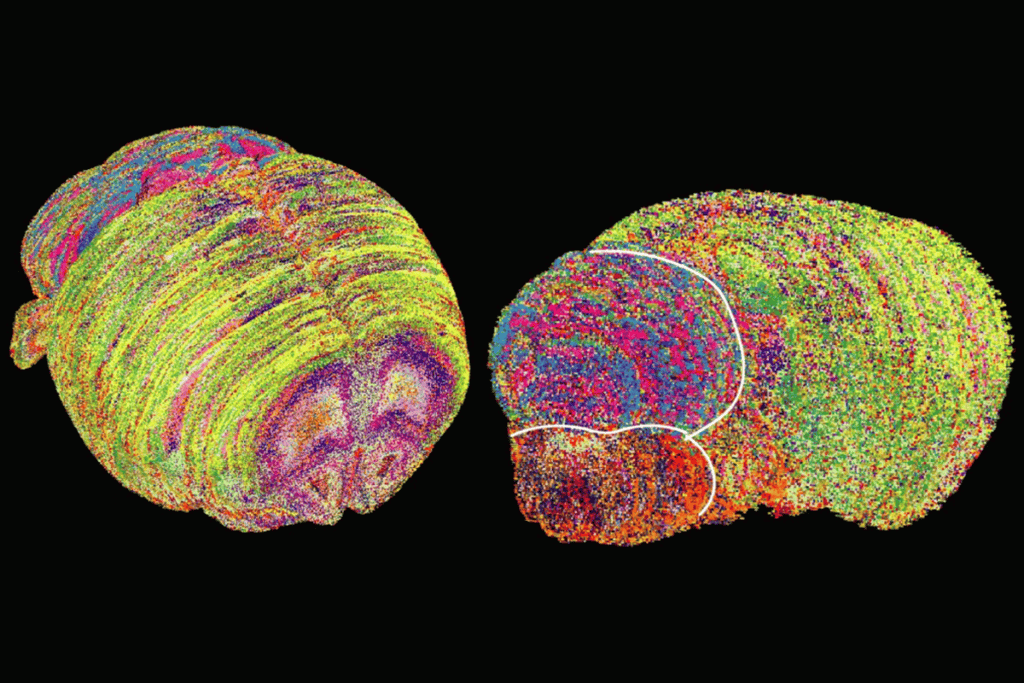
Lipids enter brain mapping limelight
Two new studies, including the first whole-brain lipid atlas in mice, uncover unforeseen complexity and influence during pregnancy and aging.
Lipids enter brain mapping limelight
Two new studies, including the first whole-brain lipid atlas in mice, uncover unforeseen complexity and influence during pregnancy and aging.
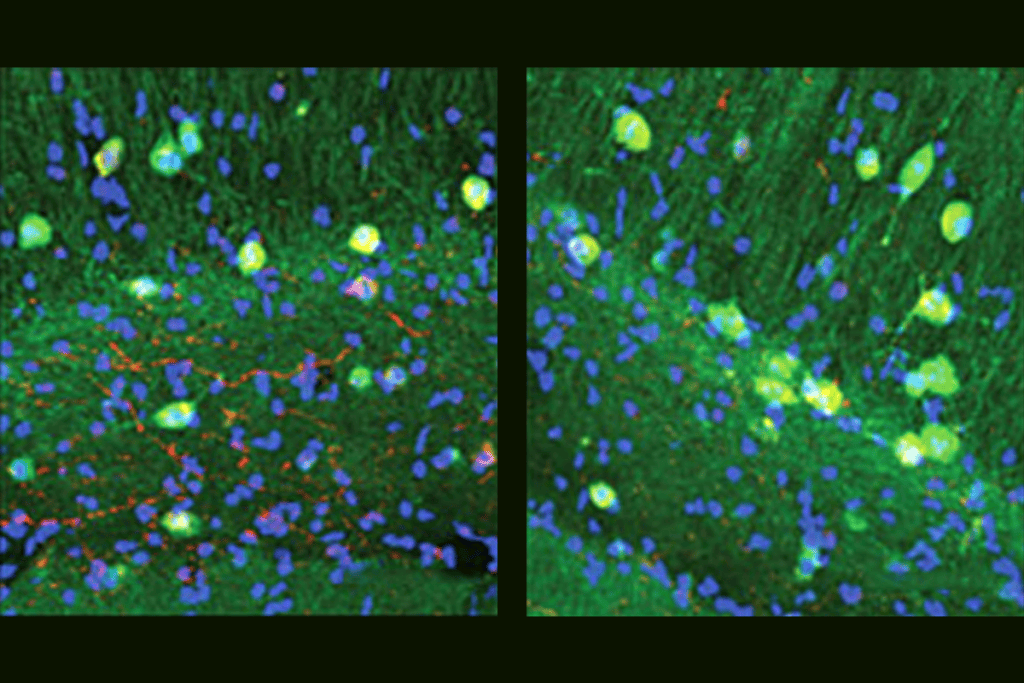
Behavioral phenomics in zebrafish; and more
Here is a roundup of autism-related news and research spotted around the web for the week of 26 October.
Behavioral phenomics in zebrafish; and more
Here is a roundup of autism-related news and research spotted around the web for the week of 26 October.
Neuroscience gave AI its start. What happens now?
David Sussillo maps the two fields' divergent paths, and where they might still meet.
Neuroscience gave AI its start. What happens now?
David Sussillo maps the two fields' divergent paths, and where they might still meet.