ASHG 2013
Recent articles

Recurrent mutations up risk of autism, related disorders
Autism, epilepsy and intellectual disability share certain risk genes, and mutations in these genes recur in multiple individuals. The preliminary results were presented Friday at the American Society of Human Genetics Meeting in Boston, Massachusetts.
Recurrent mutations up risk of autism, related disorders
Autism, epilepsy and intellectual disability share certain risk genes, and mutations in these genes recur in multiple individuals. The preliminary results were presented Friday at the American Society of Human Genetics Meeting in Boston, Massachusetts.
Hopping gene destabilizes autism-linked chromosomal region
Researchers have found the first direct evidence that a hopscotching gene destabilizes the 15q13.3 chromosomal region, and may be to blame for the region’s role in autism and other brain disorders. They presented the unpublished results Wednesday at the American Society of Human Genetics Meeting in Boston, Massachusetts.
Hopping gene destabilizes autism-linked chromosomal region
Researchers have found the first direct evidence that a hopscotching gene destabilizes the 15q13.3 chromosomal region, and may be to blame for the region’s role in autism and other brain disorders. They presented the unpublished results Wednesday at the American Society of Human Genetics Meeting in Boston, Massachusetts.
Explore more from The Transmitter
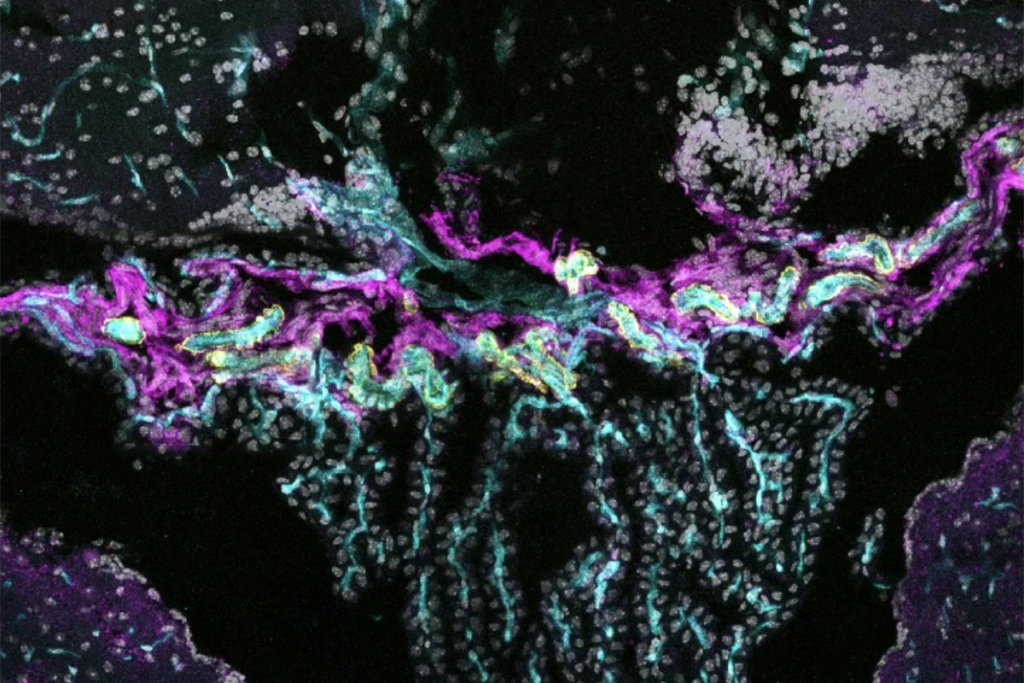
Newly identified barrier cells seal off choroid plexus from CSF, rest of brain
A long-overlooked layer of fibroblasts exists inside the choroid plexus of mice and humans, adding complexity to the area’s compartmentalization.
Newly identified barrier cells seal off choroid plexus from CSF, rest of brain
A long-overlooked layer of fibroblasts exists inside the choroid plexus of mice and humans, adding complexity to the area’s compartmentalization.
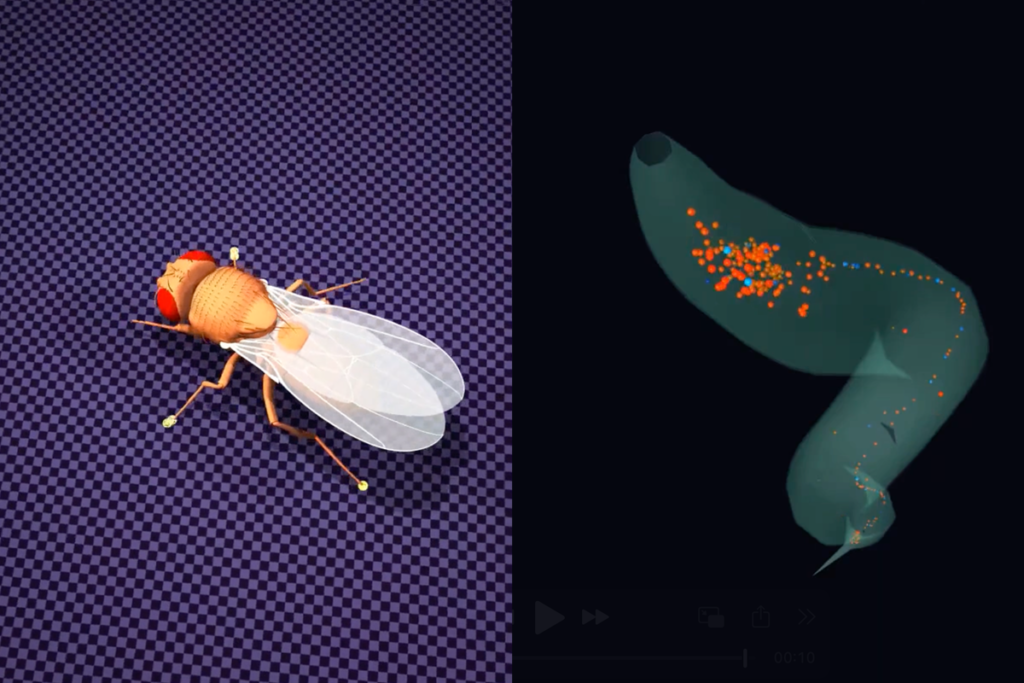
‘Digital sphinx’ raises questions about connectome models
The sphinx, with a worm’s brain and a fly’s body, illustrates the potential pitfalls of using deep-learning techniques to model biological processes.
‘Digital sphinx’ raises questions about connectome models
The sphinx, with a worm’s brain and a fly’s body, illustrates the potential pitfalls of using deep-learning techniques to model biological processes.
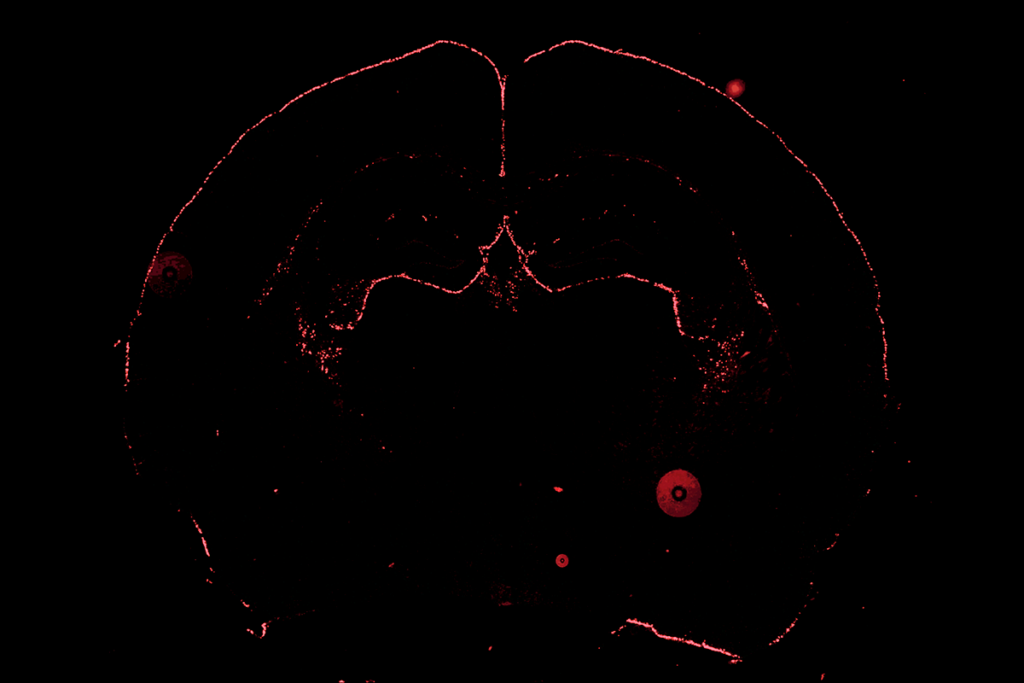
Taking a closer look at astrocytes and autism
These glial cells are increasingly linked to neurodevelopmental conditions and the regulation of social behaviors and anxiety.
Taking a closer look at astrocytes and autism
These glial cells are increasingly linked to neurodevelopmental conditions and the regulation of social behaviors and anxiety.