Neurotechnologies
Recent articles
‘Bioethics and Brains: A Disciplined and Principled Neuroethics,’ an excerpt
In their new book, published earlier this week, Giordano and Shook examine how ethics can guide neuroscience research and its real-world applications.
‘Bioethics and Brains: A Disciplined and Principled Neuroethics,’ an excerpt
In their new book, published earlier this week, Giordano and Shook examine how ethics can guide neuroscience research and its real-world applications.
Explore more from The Transmitter
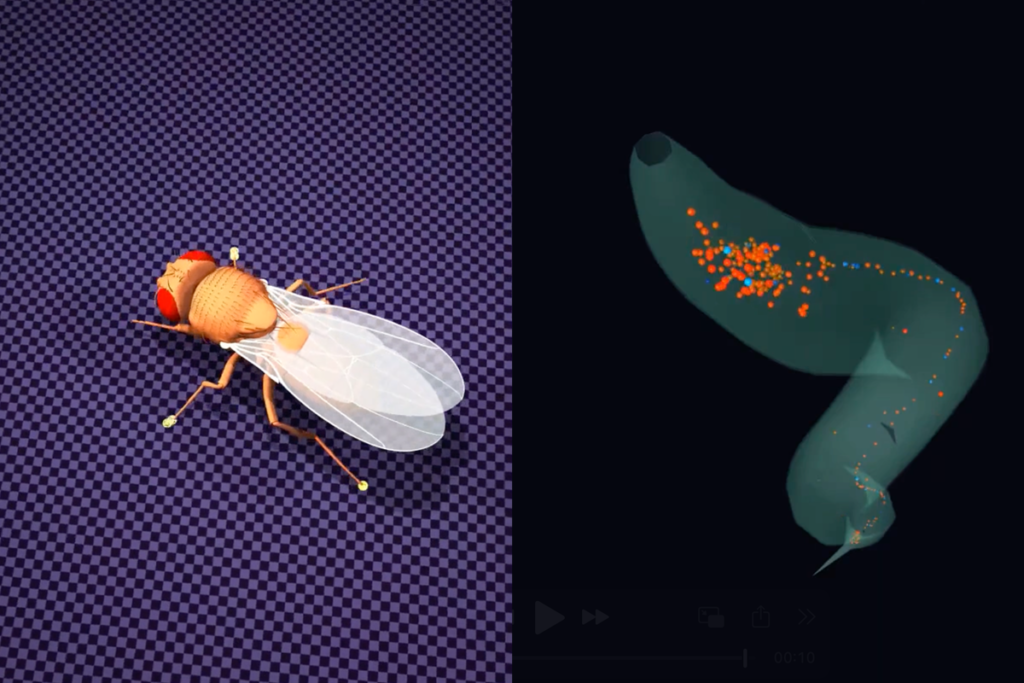
‘Digital sphinx’ raises questions about connectome models
The sphinx, with a worm’s brain and a fly’s body, illustrates the potential pitfalls of using deep-learning techniques to model biological processes.
‘Digital sphinx’ raises questions about connectome models
The sphinx, with a worm’s brain and a fly’s body, illustrates the potential pitfalls of using deep-learning techniques to model biological processes.
Taking a closer look at astrocytes and autism
These glial cells are increasingly linked to neurodevelopmental conditions and the regulation of social behaviors and anxiety.
Taking a closer look at astrocytes and autism
These glial cells are increasingly linked to neurodevelopmental conditions and the regulation of social behaviors and anxiety.
Neuro’s ark: Sounding out the evolution of hearing with geckos
Catherine Carr explains her discovery that geckos retain a vibration-sensing pathway previously thought to be lost when animals moved onto land.
Neuro’s ark: Sounding out the evolution of hearing with geckos
Catherine Carr explains her discovery that geckos retain a vibration-sensing pathway previously thought to be lost when animals moved onto land.