Amy Kuceyeski is professor of mathematics in radiology and neuroscience at Weill Cornell Medicine and Cornell University. Her lab uses computational approaches, including biophysical models and artificial intelligence, to model the brain’s functional and structural networks and map brain networks to behavioral outcomes in health and disease. Her goals are to understand how the brain works and, specifically, how it breaks in disease and how it is repaired in recovery. Kuceyeski earned her Ph.D. at Case Western Reserve University, after which she came to Weill Cornell Medicine’s Department of Radiology as a postdoctoral fellow and never left. Her lab now spans Cornell’s campuses from New York City to Ithaca.

Amy Kuceyeski
Professor of mathematics in radiology and neuroscience
Weill Cornell Medicine and Cornell University
From this contributor
Selected articles
- “Krakencoder: a unified brain connectome translation and fusion tool” | Nature Methods
- “Sex-specific differences in brain activity dynamics of youth with a family history of substance use disorder” | Nature Mental Health
- “Human brain responses are modulated when exposed to optimized natural images or synthetically generated images” | Communications Biology
- “Receptor-informed network control theory links LSD and psilocybin to a flattening of the brain’s control energy landscape” | Nature Communications
- “NeuroGen: Activation optimized image synthesis for discovery neuroscience” | NeuroImage
Explore more from The Transmitter
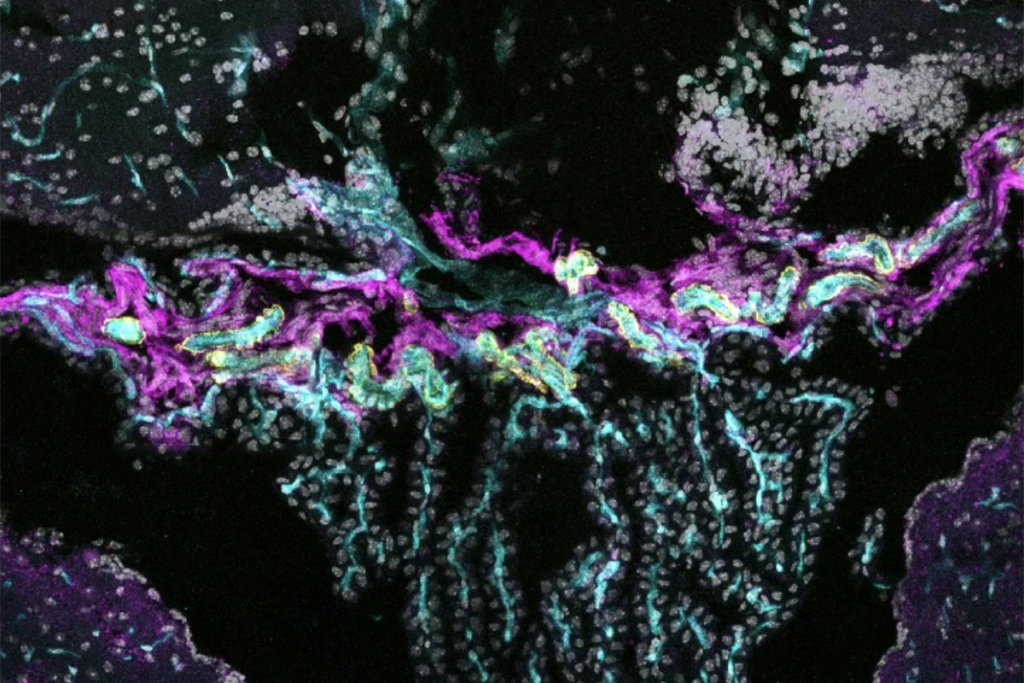
Newly identified barrier cells seal off choroid plexus from CSF, rest of brain
A long-overlooked layer of fibroblasts exists inside the choroid plexus of mice and humans, adding complexity to the area’s compartmentalization.
Newly identified barrier cells seal off choroid plexus from CSF, rest of brain
A long-overlooked layer of fibroblasts exists inside the choroid plexus of mice and humans, adding complexity to the area’s compartmentalization.
By
Claudia López Lloreda
3 April 2026 | 4 min read
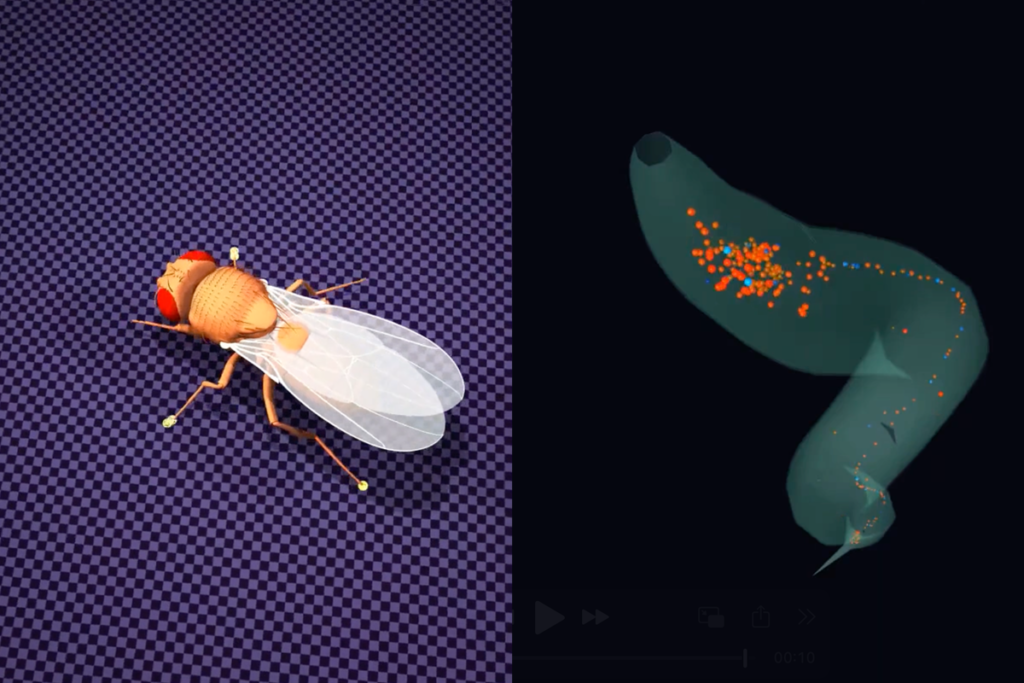
‘Digital sphinx’ raises questions about connectome models
The sphinx, with a worm’s brain and a fly’s body, illustrates the potential pitfalls of using deep-learning techniques to model biological processes.
‘Digital sphinx’ raises questions about connectome models
The sphinx, with a worm’s brain and a fly’s body, illustrates the potential pitfalls of using deep-learning techniques to model biological processes.
By
Natalia Mesa
2 April 2026 | 5 min read
Taking a closer look at astrocytes and autism
These glial cells are increasingly linked to neurodevelopmental conditions and the regulation of social behaviors and anxiety.
Taking a closer look at astrocytes and autism
These glial cells are increasingly linked to neurodevelopmental conditions and the regulation of social behaviors and anxiety.
By
The Transmitter
2 April 2026 | 2 min read