Sreekanth Chalasani is associate professor in the Molecular Neurobiology Laboratory at the Salk Institute for Biological Studies in La Jolla, California
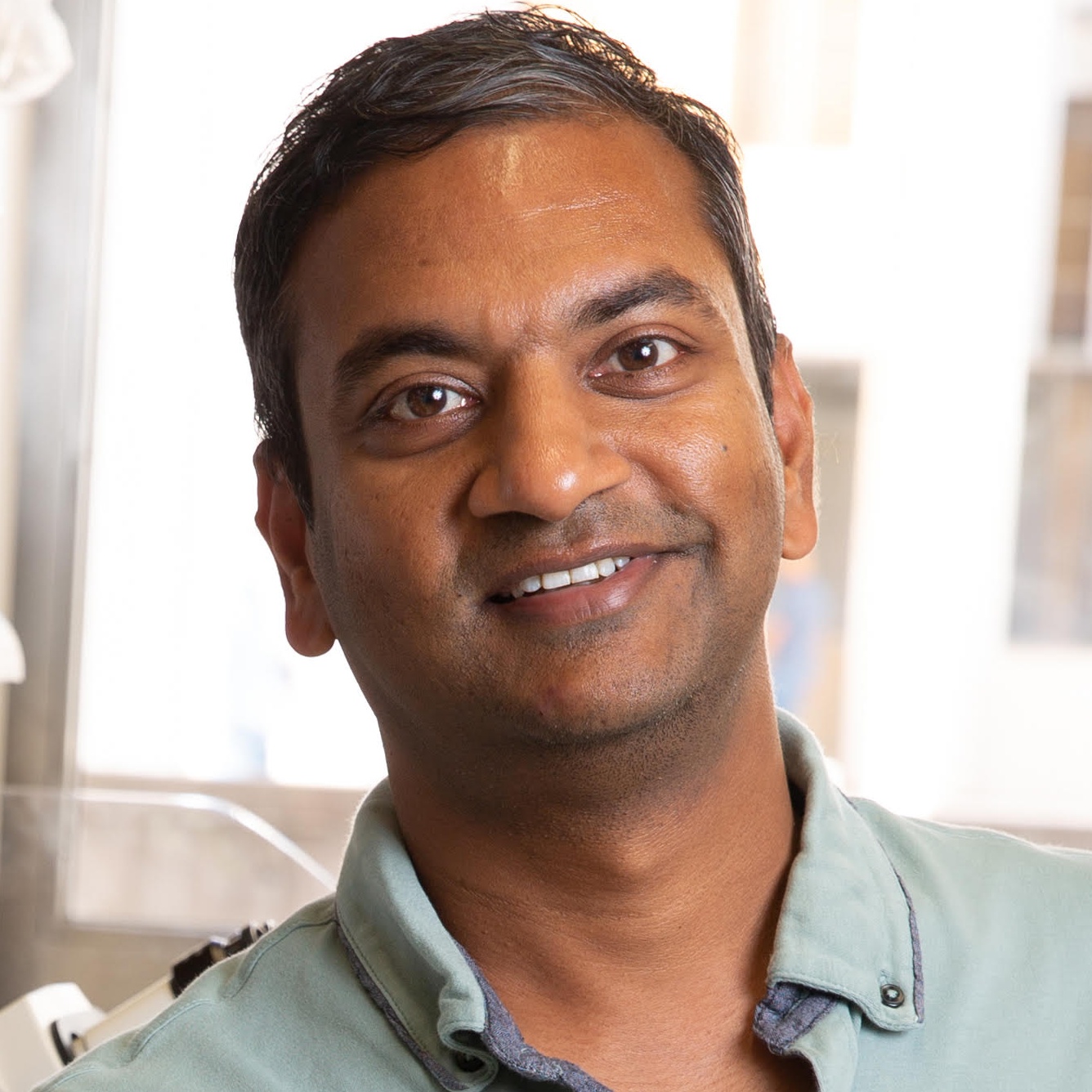
Sreekanth Chalasani
Associate professor
Salk Institute for Biological Studies
From this contributor
Controlling neurons with ultrasound: Q&A with Sreekanth Chalasani
The new method, called sonogenetics, noninvasively manipulates neural circuits in mice.
Controlling neurons with ultrasound: Q&A with Sreekanth Chalasani
By
Niko McCarty
1 March 2022 | 7 min read
Explore more from The Transmitter

Neuroscience conference policy draws confusion, apology
NeurIPS organizers apologized and altered course after issuing a policy that barred submissions from researchers at U.S.-government-sanctioned institutions.
Neuroscience conference policy draws confusion, apology
NeurIPS organizers apologized and altered course after issuing a policy that barred submissions from researchers at U.S.-government-sanctioned institutions.
By
Dalmeet Singh Chawla
27 March 2026 | 5 min read

Funding for animal research alternatives reaches ‘inflection point’
The United States and Europe are dedicating hundreds of millions of dollars in funding to advance novel alternative methods, but not all neuroscientists see this as a positive step.
Funding for animal research alternatives reaches ‘inflection point’
The United States and Europe are dedicating hundreds of millions of dollars in funding to advance novel alternative methods, but not all neuroscientists see this as a positive step.
By
Claudia López Lloreda
26 March 2026 | 4 min read

‘Friction-maxxing’ in school: Students should read primary literature, not AI summaries
Trainees need to learn how to identify a neuroscience paper’s major takeaways and integrate them into their understanding. This skill doesn’t come from outsourcing the work to large language models.
‘Friction-maxxing’ in school: Students should read primary literature, not AI summaries
Trainees need to learn how to identify a neuroscience paper’s major takeaways and integrate them into their understanding. This skill doesn’t come from outsourcing the work to large language models.
By
Nora Bradford
26 March 2026 | 5 min read