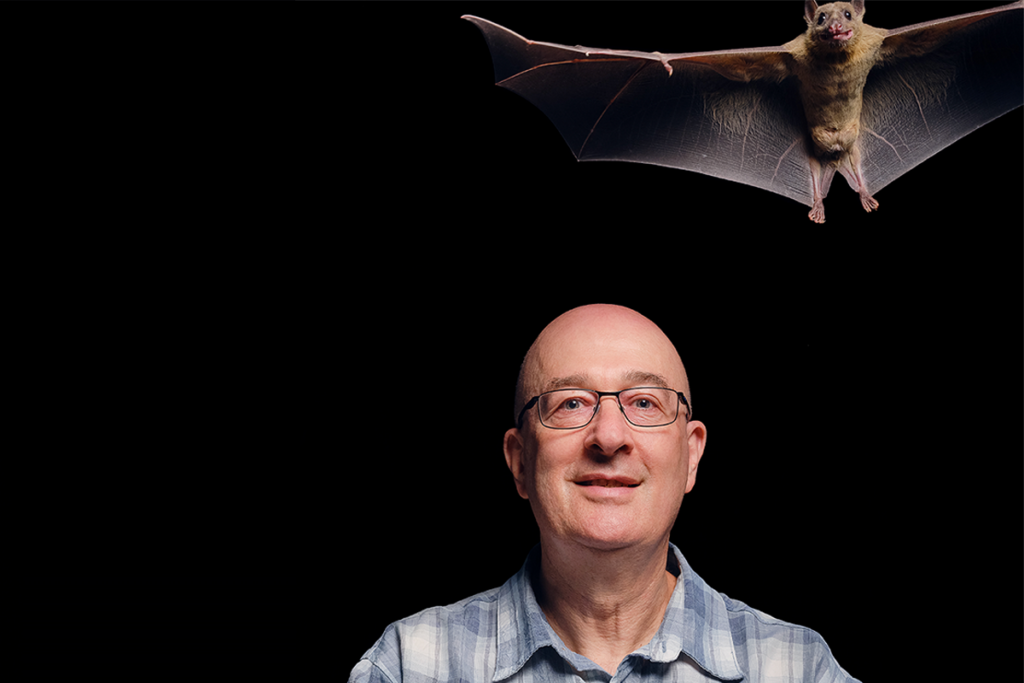
When I was a doctoral student, I attended my first annual meeting of the International Society for Autism Research (INSAR) in 2005. It was also among the earliest of the INSAR meetings, which had begun in 2001. And at this gathering of several hundred scientists in Boston, I recall being awestruck, attending sessions alongside people—superheroes in the field, really—whom I’d read about and admired.
I’ve attended almost every meeting since. With time, I became more involved in the society, initially serving as a mentor for the Early Career Committee. Years later, when I was asked to serve as vice president, I knew instantly that I would say yes. Since 2025, I have served as INSAR’s president, and it is both an honor and a profound responsibility to mark the 25th anniversary of this meeting. For a quarter of a century, it has served as the primary gathering for autism scientists, clinicians and advocates united by a shared purpose: to deepen understanding of autism and improve lives.
I see this anniversary as a moment both to look back on our past—and to issue a call to action for our future. Considering our history, our current research and funding challenges and the road ahead, now is a critical juncture for members of the autism research community to come together and support our mission. Both the autism spectrum itself and the community invested in understanding it have expanded, making it vital to continuously strengthen our science and connections to each other.
O
The first meeting, held in San Diego, was a satellite meeting of the Society for Neuroscience annual meeting in 2001, with 200 people attending. But what started as a modest gathering has since evolved into a truly global event with thousands of attendees.
Twenty-five years ago, the landscape of autism research and advocacy looked markedly different. Autism was narrowly defined and frequently misunderstood by the public. Research was fragmented, with limited collaboration across disciplines and borders.
Today, the autism research community has grown not only in size but in depth, diversity and inclusion. We have witnessed a shift from viewing autism solely through a clinical lens to embracing a broader, more nuanced understanding that includes lived experience. And we are seeing a more neuroinclusive field, with a growing number of researchers identifying as autistic.
Scientific progress has accelerated in ways that were difficult to imagine 25 years ago. Advances in genetics, neuroscience and behavioral science have deepened our understanding of autism’s biological complexity. We have moved beyond one-size-fits-all models toward approaches that recognize individual variability and emphasize personalized interventions and supports.
Our community has also become more international. This year’s meeting in Prague will include more than 2,200 participants from 50 countries, reflecting diverse perspectives that enrich our collective knowledge and help address autism in a wide range of cultural and socioeconomic contexts. This global engagement underscores both shared challenges and unique local needs, reminding us that any progress must ensure equity in access, opportunities and outcomes.
A
At the same time, we must also confront a pressing present-day challenge that threatens to slow our progress: the instability of research funding, which I discussed in an article for The Transmitter last year. In the United States, shifting federal priorities have made it more difficult for researchers to sustain long-term, high-impact work.
Because the United States has historically been a major driver of global scientific funding and collaboration, these challenges reverberate far beyond its borders. Reduced funding affects international partnerships, limits opportunities for early-career investigators and constrains the ambitious, large-scale studies that are essential for advancing our understanding of autism worldwide.
Many people on the autism spectrum and their families continue to face barriers to diagnosis, support, education and employment. Disparities persist, particularly among underserved and marginalized communities. As a society, we are called not only to advance knowledge but to ensure that its benefits are felt by all.
The increasing public interest in and awareness of autism, at a time when science is under attack in some parts of the world, intensifies the need for autism scientists to rally around each other. However, it is equally important that community interests and the voices of those with lived experience be included in our research to ensure that it translates into meaningful, actionable and impactful outcomes.
This 25th anniversary milestone challenges us to build on the foundation laid by those founding parents and researchers with renewed commitment, humility and collaboration. The progress we celebrate today was made possible by a community willing to evolve, listen and work together.
And so, I encourage each of you to be more involved in the society. Serve on committees or the INSAR board, contribute to the annual meeting and mentor early-career researchers so that INSAR will continue to thrive for another 25 years.