Add us as a Preferred Source on Google

Untangling genetic effects, and more

Here is a roundup of autism-related news and research spotted around the web for the week of 11 May.

By Jill Adams
12 May 2026 | 2 min read

Unraveled ties: Researchers used a novel method to disentangle some of the multitude of maternal factors—genetic and environmental—that influence autism likelihood in children. In their preprint, investigators analyzed maternal cousin pairs in a Danish national birth registry. Direct genetic effects, such as epilepsy and personality disorders, were shared with the mother’s siblings of either sex, but indirect genetic effects, such as obstetric factors and affective disorders in mothers, were shared with sisters only, suggesting they were “operating through the prenatal environment,” the authors write. 

Autism research spotted this week: 
  • “A human specific CCG repeat in the RBFOX1 promoter is implicated in speech and autism” bioRxiv
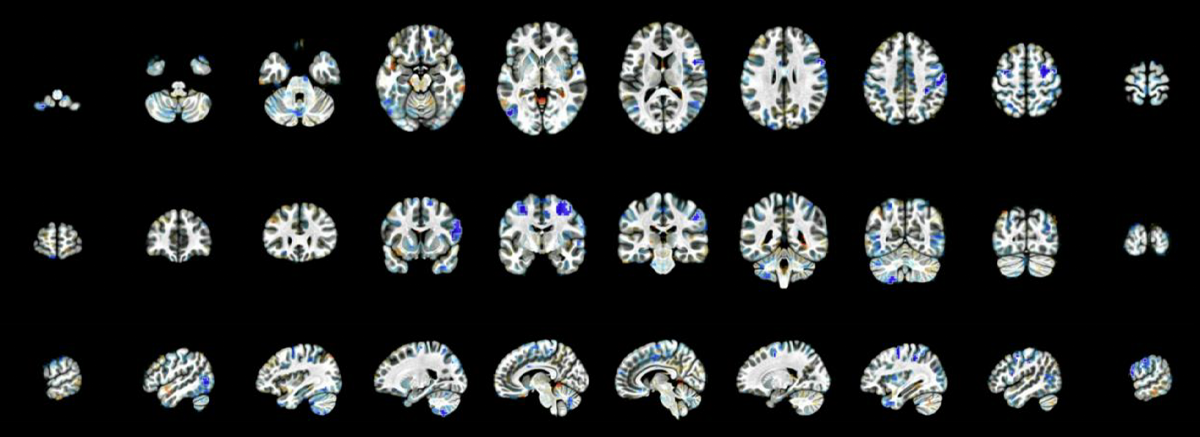
  • “Autism sensory profiles predict stimulus-evoked insula connectivity” medRxiv
Research image showing brain activity related to sensory sensitivity and hypoconnectivity
Sense of connection: Links between sensory sensitivity and hypoconnectivity originating from the insula are reflected in many brain regions and depend on sex. Blue marks those areas in which autistic boys show a stronger negative association than autistic girls.
  • “Exaggerated NMDA receptor–primed metaplasticity via SK channel dysregulation in FMR1 knockout mice” The Journal of Neuroscience
  • “Combinatorial effects of gene dosage, polygenic background and environment on complex traits” medRxiv
  • “Individual profound autism criteria and unmet needs among autistic adolescents and their caregivers” JAMA Pediatrics
  • “A framework to infer de novo exonic variants when parental genotypes are missing enhances association studies of autism” Bioinformatics

Sign up for the weekly Spectrum newsletter.

Stay current with the latest advancements in autism research.