Cannabis
Recent articles
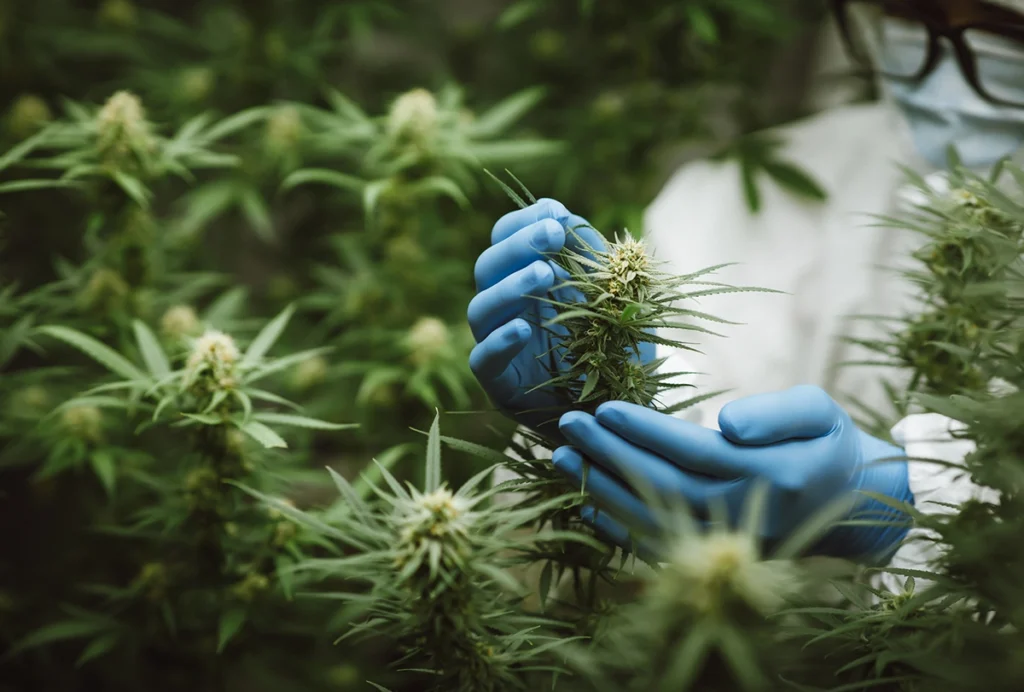
Cannabis may be rescheduled–what does it mean for neuroscience?
The drug could become much easier to access, increasing the number of researchers who can work with it and the manufacturers who can produce it.
Cannabis may be rescheduled–what does it mean for neuroscience?
The drug could become much easier to access, increasing the number of researchers who can work with it and the manufacturers who can produce it.
How organ-on-a-chip models can help drug development
This month’s Going on Trial newsletter explores how organ-on-a-chip models could smooth the transition from preclinical to clinical trials, among other drug development news.
How organ-on-a-chip models can help drug development
This month’s Going on Trial newsletter explores how organ-on-a-chip models could smooth the transition from preclinical to clinical trials, among other drug development news.
Prenatal exposures; Angelman trial suspension; autistic adult well-being
This month’s issue of the Null and Noteworthy newsletter breaks down some negative results involving prenatal exposures, an experimental treatment for Angelman syndrome, and the role that age at autism diagnosis plays in subsequent outcomes, and more.
Prenatal exposures; Angelman trial suspension; autistic adult well-being
This month’s issue of the Null and Noteworthy newsletter breaks down some negative results involving prenatal exposures, an experimental treatment for Angelman syndrome, and the role that age at autism diagnosis plays in subsequent outcomes, and more.
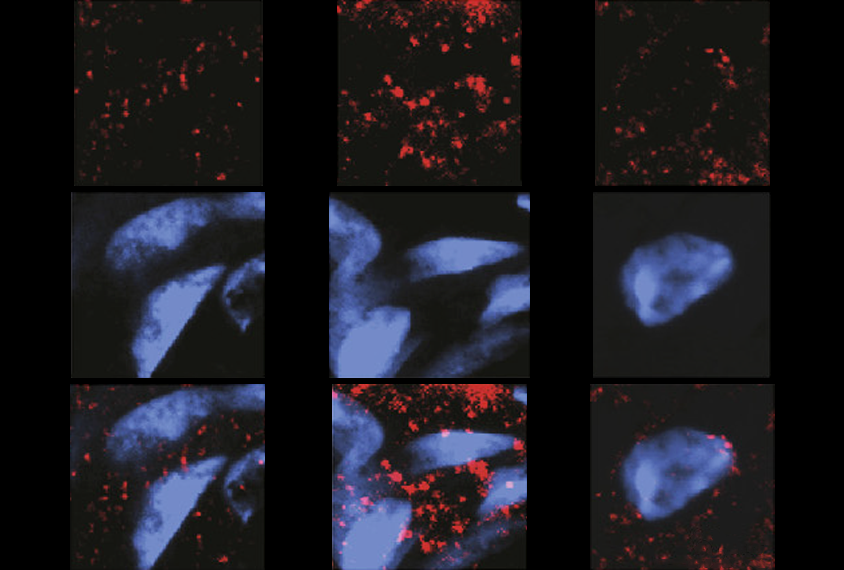
Cannabis compound rebalances signaling to quell seizures in mice
Cannabidiol (CBD) blocks the action of a molecule that drives an overexcitability feedback loop in a rodent model of epilepsy.
Cannabis compound rebalances signaling to quell seizures in mice
Cannabidiol (CBD) blocks the action of a molecule that drives an overexcitability feedback loop in a rodent model of epilepsy.
Explore more from The Transmitter
Is it time for neuroscience to shift its focus from a computational mind to a navigating mind?
Andrea Hiott explains her navigational approach to the mind, and why now is the time to embrace seemingly paradoxical findings in neuroscience.
Is it time for neuroscience to shift its focus from a computational mind to a navigating mind?
Andrea Hiott explains her navigational approach to the mind, and why now is the time to embrace seemingly paradoxical findings in neuroscience.
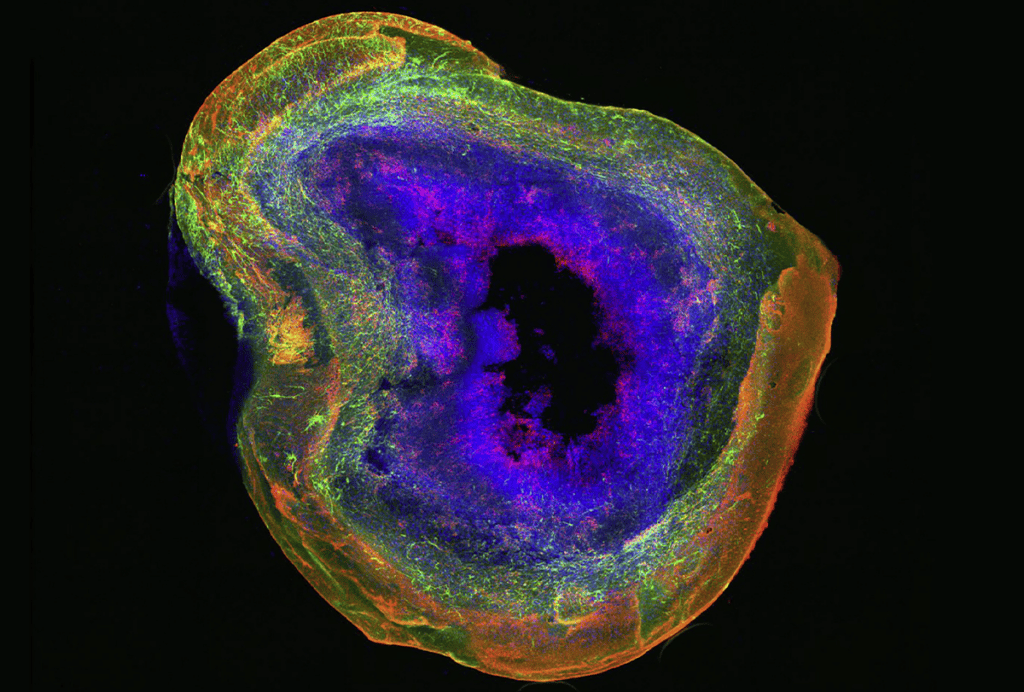
Human brain organoids come of age—but still have room to grow
The U.S. government has touted organoids as an alternative to animals for studying the brain. The model has improved since its debut in 2013, but scientists are still working to overcome key limitations: immaturity, consistency and the lack of vascularization.
Human brain organoids come of age—but still have room to grow
The U.S. government has touted organoids as an alternative to animals for studying the brain. The model has improved since its debut in 2013, but scientists are still working to overcome key limitations: immaturity, consistency and the lack of vascularization.
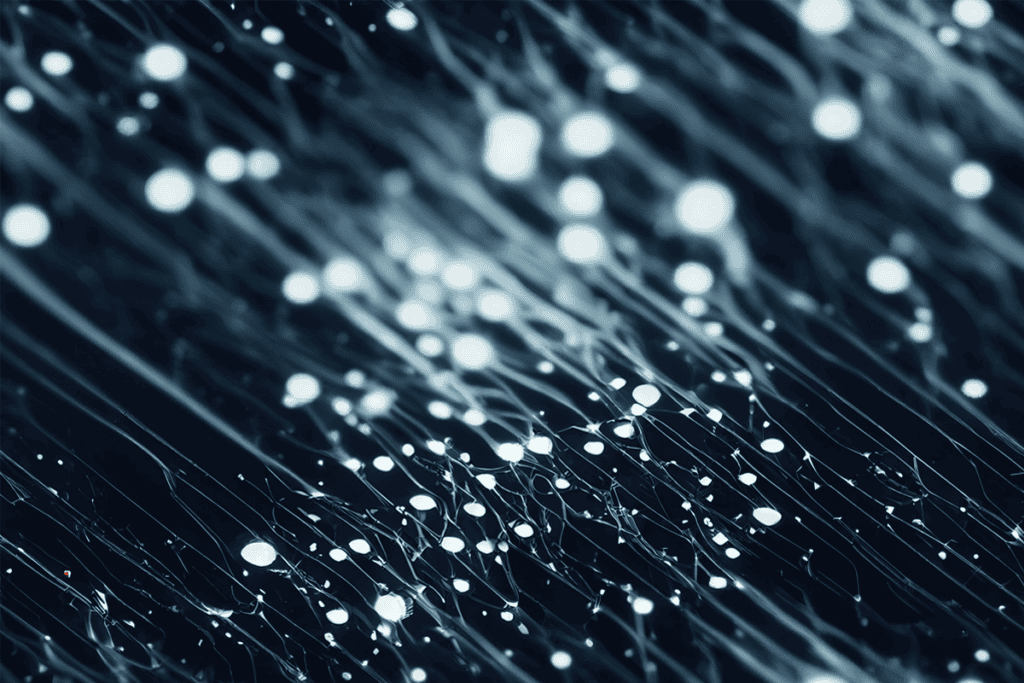
Finding neuroheterogeneity’s sweet spot
Once thought to be detrimental to memory processing, neuronal diversity—at the right ‘Goldilocks’ dose—is a new boon to theoretical neuroscience.
Finding neuroheterogeneity’s sweet spot
Once thought to be detrimental to memory processing, neuronal diversity—at the right ‘Goldilocks’ dose—is a new boon to theoretical neuroscience.