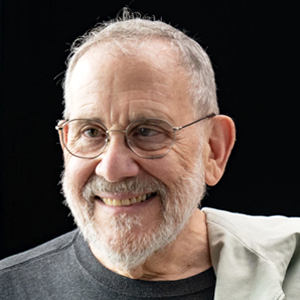
Headshot of Joshua Sanes.

Joshua R. Sanes

Professor emeritus of molecular and cellular biology, Harvard University;
Contributing editor, The Transmitter

Joshua Sanes is professor of molecular and cellular biology and founding director of the Center for Brain Science at Harvard University. He and his colleagues study the formation of synapses. They have also pioneered new ways to mark and manipulate neurons and the synapses they form.

For the past 20 years, Sanes and his team have focused on the retina, in which specific patterns of connections form the complex circuits that underlie the initial steps in visual perception. Most recently, they have extended this work to comprehensive classification of retinal cell types in multiple species, including humans. Sanes received a B.A. from Yale University and a Ph.D. from Harvard University. He served on the faculty of Washington University in St. Louis, Missouri, for more than 20 years before returning to Harvard in 2004.

He is a member of the National Academy of Sciences and the American Academy of Arts and Sciences. His work has been published in more than 400 papers, and he has been honored with the Schuetze Award, the Gruber Neuroscience Prize, the Cowan Award, the Perl-UNC Neuroscience Prize and the Edward M. Scolnick Prize in Neuroscience, as well as an honorary doctoral degree from Hebrew University in Jerusalem, Israel.

Explore more from The Transmitter

A mouse stands on a gloved hand.

Psychedelics research in rodents has a behavior problem

Simple behavioral assays—originally validated as drug-screening tools—fall short in studies that aim to unpack the psychedelic mechanism of action, so some behavioral neuroscientists are developing more nuanced tasks.

By Calli McMurray
19 December 2025 | 8 min read
Research image of organoids derived from stem cell lines from people with intellectual disability, polymicroglia or microcephaly, alongside a control organoid.

New organoid atlas unveils four neurodevelopmental signatures

The comprehensive resource details data on microcephaly, polymicrogyria, epilepsy and intellectual disability from 352 people.

By Diana Kwon
17 December 2025 | 4 min read

Can neuroscientists decode memories solely from a map of synaptic connections?

Five experts discuss the progress, possibilities and hurdles of decoding a “nontrivial” memory from an organism just by analyzing its brain connectivity patterns.

By Paul Middlebrooks
17 December 2025 | 1 min read

privacy consent banner

Privacy Preference

We use cookies to provide you with the best online experience. By clicking “Accept All,” you help us understand how our site is used and enhance its performance. You can change your choice at any time. To learn more, please visit our Privacy Policy.