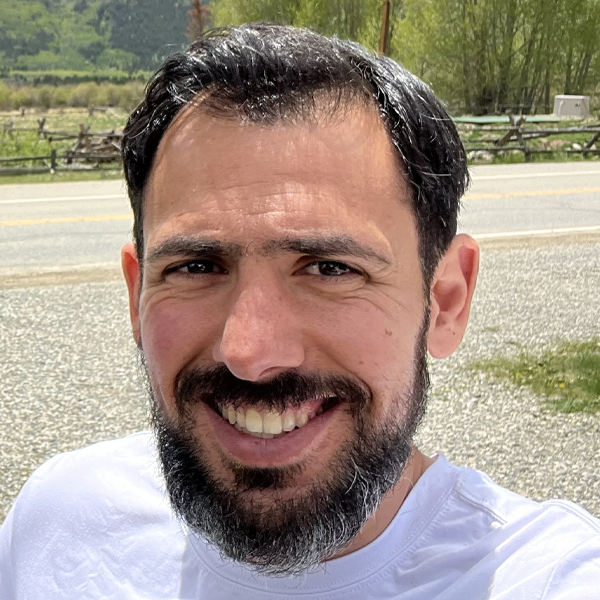
Michael Halassa.

Michael Halassa

Professor of neuroscience and psychiatry
Tufts University

Michael Halassa is professor of neuroscience and psychiatry at Tufts University. Hisresearch focuses on cognitive control and flexibility. His lab has identified the first non-relay function for the thalamus: the control of task-relevant prefrontal dynamics and effective connectivity. This work has opened up many new lines of research and provided fundamental insight into the neural basis of human cognition. His lab trainees have gone on to lead faculty positions at various institutions. 

Halassa is also a board-certified and practicing psychiatrist who specializes in treatment of psychotic disorders. His clinical research is focused on identifying novel precision targets based on emerging pharmacology and neurostimulation. He has been consistently funded by the U.S. National Institutes of Health and has received several fellowships and prizes throughout his career—most notably, the Vilcek Prize for Promise in the Biomedical Sciences (2017), an award given to immigrant scientists who have made extraordinary contributions to American society.

Halassa earned his Ph.D. in neuroscience at the University of Pennsylvania and his M.D. at the University of Jordan.
Explore more from The Transmitter

Illustration of ants marching back to an anthill.

This paper changed my life: John Tuthill reflects on the subjectivity of selfhood

Wittlinger, Wehner and Wolf’s 2006 “stilts and stumps” Science paper revealed how ants pull off extraordinary feats of navigation using a biological odometer, and it inspired Tuthill to consider how other insects sense their own bodies.

By John Tuthill
12 January 2026 | 7 min read
Rhesus macaque monkey makes an intimidating face.

Some facial expressions are less reflexive than previously thought

A countenance such as a grimace activates many of the same cortical pathways as voluntary facial movements.

By Natalia Mesa
8 January 2026 | 5 min read
Mouse on top of drinking water spout in crowded cage.

Cracking the neural code for emotional states

Rather than act as a simple switchboard for innate behaviors, the hypothalamus encodes an animal's internal state, which influences behavior.

By Natalia Mesa
8 January 2026 | 8 min read

privacy consent banner

Privacy Preference

We use cookies to provide you with the best online experience. By clicking “Accept All,” you help us understand how our site is used and enhance its performance. You can change your choice at any time. To learn more, please visit our Privacy Policy.