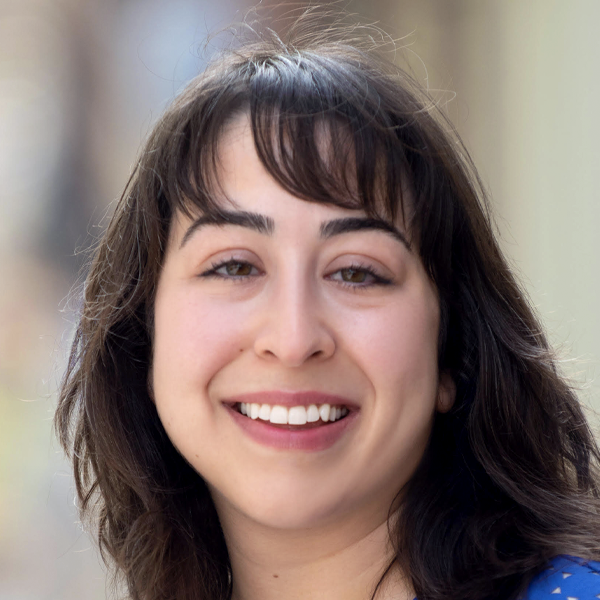
Nedah Nemati is a postdoctoral research scholar at Columbia University’s Center for Science and Society. She is principal investigator on the National Science Foundation-funded project “Scientific Outcomes From AI Tools and Models.” She studies the influences of behavioral tracking methods in behavioral neuroscience, with particular attention to how techniques such as action segmentation contribute to structuring the ontologies of behavior. Nemati is broadly interested in the role of lived experience in neuroscience and draws from philosophical and empirical methods to examine how lived experience shapes explanations of behavior across cellular and molecular approaches, as well as computational neuroscience.
Nemati earned her B.S. in philosophy at Millsaps College and her M.Sc. in biological sciences at the University of Mississippi Medical Center before completing her Ph.D. in history and philosophy of science at the University of Pittsburgh. During her doctorate, she was a member of the interdisciplinary Center for the Neural Basis of Cognition at the University of Pittsburgh and Carnegie Mellon University, and she later was a visiting fellow in the Department of the History of Science at Harvard University. From 2022 to 2025, she was the Robert A. Burt Presidential Scholar in Society and Neuroscience at the Center for Science and Society. Her current work is funded by the National Science Foundation and Dana Foundation.