Sue Fletcher-Watson is professor of developmental psychology at the University of Edinburgh in Scotland.

Sue Fletcher-Watson
Chancellor’s fellow in developmental psychology
University of Edinburgh
From this contributor
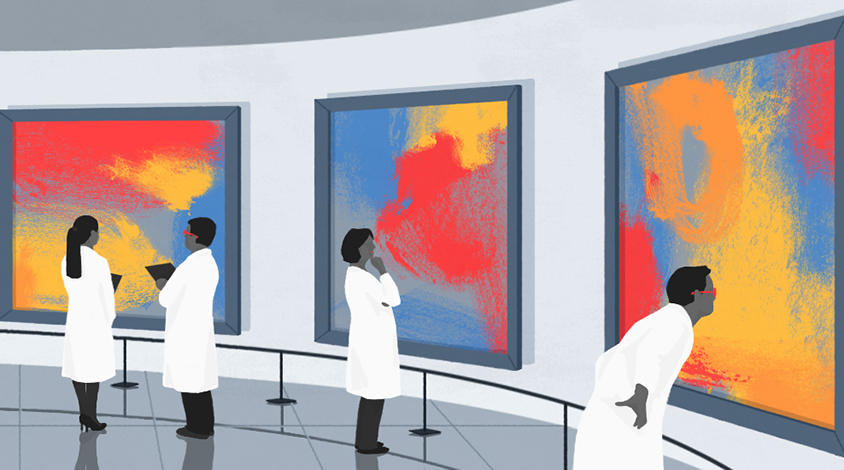
Autism research needs a dose of social science
Academics in disciplines such as law, history and the arts have the potential to make extensive contributions to the lives of people with autism.
Autism research needs a dose of social science
By
Sue Fletcher-Watson
18 July 2017 | 6 min read
Explore more from The Transmitter
Error equation predicts brain’s ability to generalize
Four statistical measurements of neural network geometry capture how well brains and artificial networks use what they already know to solve new problems, a study suggests.
Error equation predicts brain’s ability to generalize
Four statistical measurements of neural network geometry capture how well brains and artificial networks use what they already know to solve new problems, a study suggests.
By
Natalia Mesa
10 April 2026 | 5 min read

Embrace complexity to improve the translatability of basic neuroscience
Researchers must learn to view heterogeneity as an essential feature of the systems they study and a central consideration in experimental design, not a variable to control for or reduce.
Embrace complexity to improve the translatability of basic neuroscience
Researchers must learn to view heterogeneity as an essential feature of the systems they study and a central consideration in experimental design, not a variable to control for or reduce.
By
Linda Douw, Klaus Eyer, Lara Keuck
9 April 2026 | 5 min read
Romain Brette reveals fundamental flaws in commonly assumed neuroscience concepts
His new book, “The Brain, In Theory,” offers alternatives to many of the computer science frameworks currently driving theoretical neuroscience.
Romain Brette reveals fundamental flaws in commonly assumed neuroscience concepts
His new book, “The Brain, In Theory,” offers alternatives to many of the computer science frameworks currently driving theoretical neuroscience.
By
Paul Middlebrooks
8 April 2026 | 131 min listen