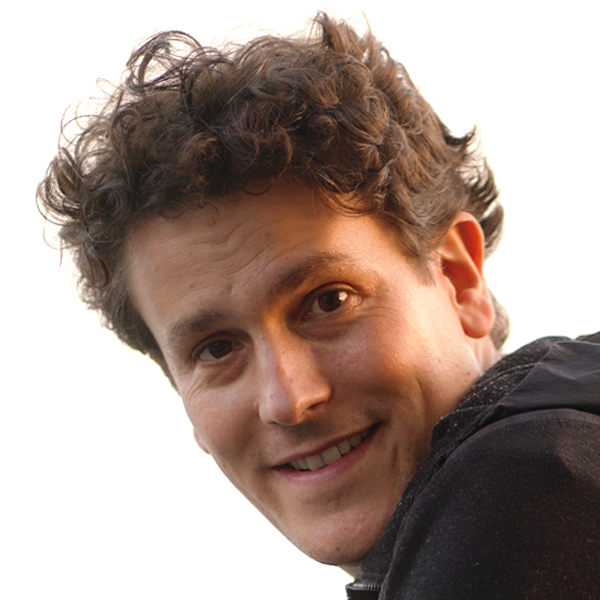
Klaus Eyer.

Klaus Eyer

Associate professor of biomedicine
Aarhus University

Klaus Eyer is associate professor of biomedicine at Aarhus University, where he investigates how single-cell diversity and complexity shape immune responses and their outcomes. His lab develops high-resolution single-cell technologies to measure cellular function and phenotype within complex immune environments, capturing dynamic behaviors and revealing how complex immune outcomes emerge from individual cells with diverse functionality, metabolism, gene expression and plasticity—concepts that parallel variability and population dynamics in neural systems. More recently, Eyer’s work has expanded to explore diseases at the neuro-immune interface. 

Eyer trained in pharmaceutical sciences and bioanalytics at ETH Zurich and completed postdoctoral work in microfluidics and single-cell analysis at ESPCI Paris, as well as a visiting fellowship in B cell immunology at the Institut Pasteur.  

He coordinates the TRANSCEND doctoral network and actively engages in translational initiatives through patents, spinoffs, mentoring and teaching. At Aarhus University, he established doctoral courses on measurement and data translation, training the next generation of scientists to integrate fundamental research with clinical and biomedical translation.
Explore more from The Transmitter

Illustration of an open journal featuring lines of text and small illustrations of eyes and mouths.

Autism-linked genes alter sleep behavior, and more

Here is a roundup of autism-related news and research spotted around the web for the week of 13 April.

By Jill Adams
14 April 2026 | 2 min read
Illustration of a monkey pushing a button.

This paper changed my life: Erin Calipari ponders the nuances of rewarding and aversive stimuli

A 1960s study by Kelleher and Morse found that lever pressing in squirrel monkeys depended not on whether they received a reward or shock, but on the rules of the task. This taught Calipari to think deeply about factors that influence how behavior is generated and maintained.

By Erin Calipari
14 April 2026 | 5 min read
Illustration of a sheet of paper with a topography map-like pattern on it.

Why neural foundation models work, and what they might—and might not—teach us about the brain

These models can partly generalize across species, brain regions and tasks, suggesting that a set of machine-learnable rules govern neural population activity. But will we be able to understand them?

By Juan Gallego
13 April 2026 | 8 min read