Listen to this story:
0:00
/
New cross-species findings may help settle a long-standing debate about whether the hippocampus is required for passive learning.
Experience kindles most of our learning throughout life, without any explicit instruction or reward. Thanks to this process, called statistical learning, people unconsciously recognize patterns in their surroundings, and infants soak up language.
The hippocampus, it turns out, may be essential for this capability, according to a new preprint, beginning to resolve a long-standing debate. Numerous functional MRI studies have suggested that the structure is involved in statistical learning, but lesion studies have produced mixed results.
“This is a tour-de-force study,” says Anna Schapiro, associate professor of psychology at the University of Pennsylvania, who was not involved in the work. “It makes me feel more confident that, yes, the hippocampus is involved in statistical learning, but it’s also necessary for that learning across species.”
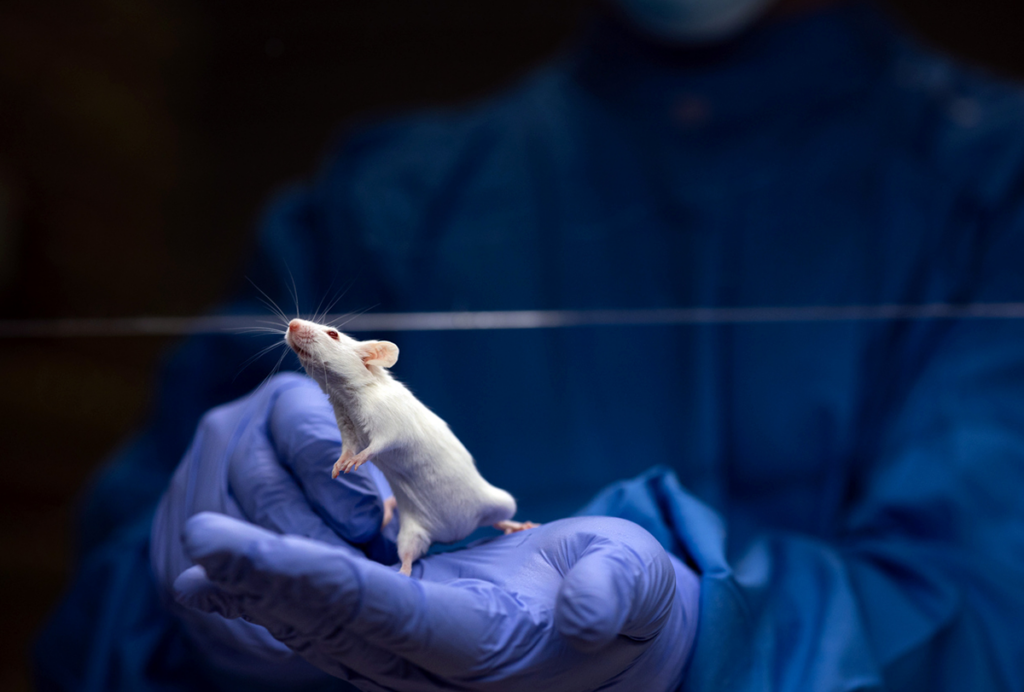
In the study, people and mice learned to respond—by pressing a key or licking a waterspout, respectively—to a particular sound. As they performed this “cover” task, they also heard an irrelevant four-note sequence at random times, interspersed with the other sound. After repeating this cover task 100 times, both people and rodents showed strong pupil dilation, a sign of surprise, whenever the sequence of notes changed slightly, with more similar sequences evoking a smaller response—indicating that they had passively learned the original musical motif and abstract rules about its structure.
Neuronal populations in the hippocampus encoded not only the original and altered tone sequences but also how frequently each occurred. Pharmacologically or optogenetically shutting down hippocampal neurons in the mice prevented them from passively learning the auditory pattern and making generalizations about how often it played, but it didn’t disrupt their performance on the cover task.
The “hippocampus can track how rare an auditory event is,” says study investigator Athena Akrami, group leader at the Sainsbury Wellcome Centre at University College London, and it may serve as a “general-purpose statistical learning machine.”
T
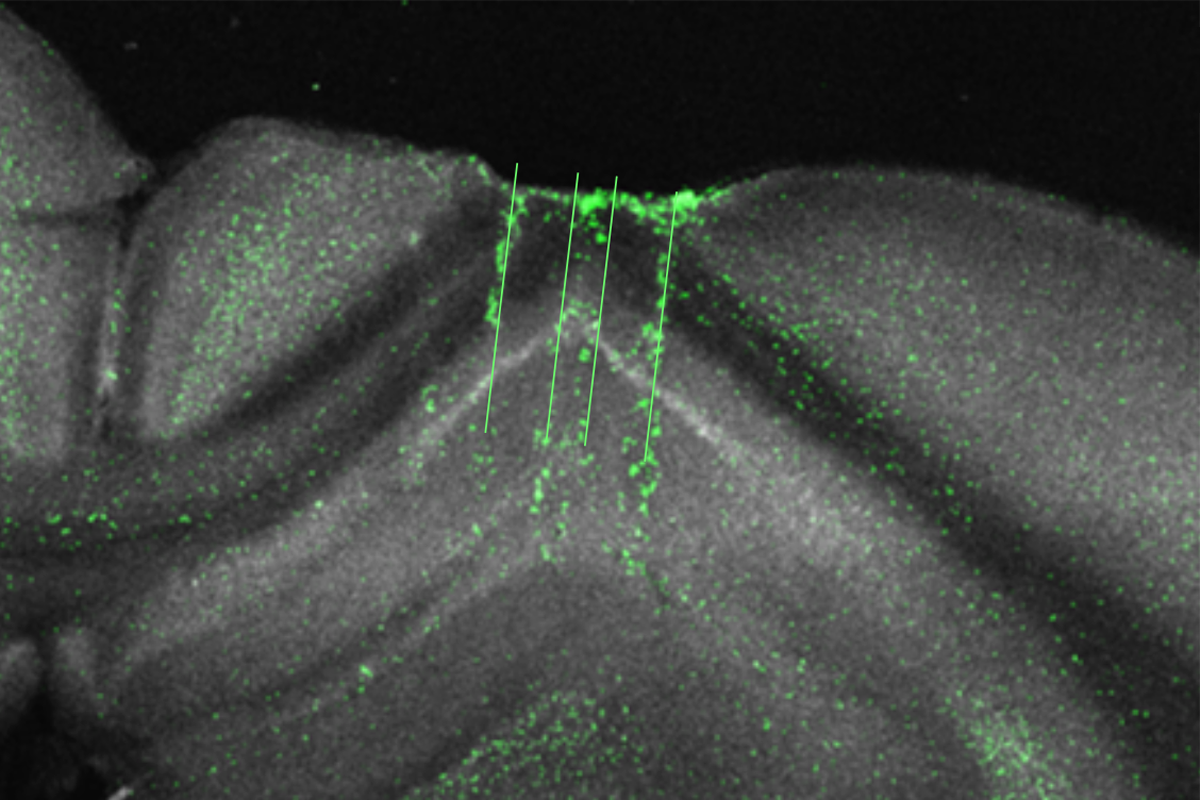
This statistical learning faltered when the researchers silenced activity in the dorsal CA1 region of the hippocampus optogenetically or with the drug muscimol. When dCA1 activity was suppressed, mice appeared to be unable to passively learn new abstract rules or update those rules once the statistics of the environment changed. Crucially, silencing the dCA1 did not affect baseline pupil size, task performance or pupillary responses to task-relevant visual features.
Neuropixels recordings in the dCA1 revealed that the hippocampus represented the tone sequences and their statistics in separate activity patterns. And these representations came about “very quickly,” Akrami says, which suggests that the hippocampus may be important for making rapid generalizations.
“It’s the first evidence that this dorsal CA1 is required for the statistical learning in mice, which is quite interesting and very surprising,” says Mayank Mehta, professor of physics, neurology and electrical and computer engineering at the University of California, Los Angeles, who was not involved in the preprint.
P
But the hippocampal CA1 also seems to passively encode statistics about sensory information that are irrelevant to a specific task, the new preprint suggests. It may use statistical learning to build cognitive maps and infer latent or “hidden” states in the environment, Akrami hypothesizes, whether the animal receives a reward or not.
The hippocampus is also involved in predictive sequence learning, integrating past sequences of information to predict future outcomes, Mehta points out. Whether the hippocampus is learning and predicting the order of events over time—sequence learning—or generating expectations based on an internal model of the world—true statistical learning—is unclear and may be difficult to unravel, Akrami says.
“Most sensory events unfold over time, and it’s very difficult to take that away,” Akrami says. “I’m not sure if the hippocampus can recognize structure in just one visual image, for example. But it would be interesting to see.”
How the hippocampus supports both episodic memory and statistical learning is still unclear. “Hippocampus is involved in orthogonalizing memories, to separate them and then store them very quickly. And that seemed to be opposite to what we need for statistical learning,” Akrami says.
One explanation is that two distinct pathways involving the hippocampus support these different computations, Schapiro says. The monosynaptic pathway, which encodes and updates general knowledge by averaging over time, goes from the entorhinal cortex directly to CA1, whereas the trisynaptic pathway, which encodes novelty and specific information, goes from the entorhinal cortex to the dentate gyrus, to CA3 and then finally to CA1. Akrami says she hopes to tease apart the roles of the two pathways in statistical learning in future work.