Different strokes: Variants of the SCN2A gene have a range of impacts on the Nav1.2 sodium channel and appear to relate to the different neurodevelopmental conditions that result, according to a new preprint. Notably, those variants that give rise to non-syndromic autism cause a loss of channel function. When these loss-of-function variants are co-expressed with wildtype channels, a dominant-negative effect occurs, indicating an overall disruption of channel activity. The Transmitter has previously reported on differential effects of SCN2A variants on the workings of sodium channels.
Portfolio of SCN2A gene variants, and more
Here is a roundup of autism-related news and research spotted around the web for the week of 9 March.
By
Jill Adams
10 March 2026 | 2 min read
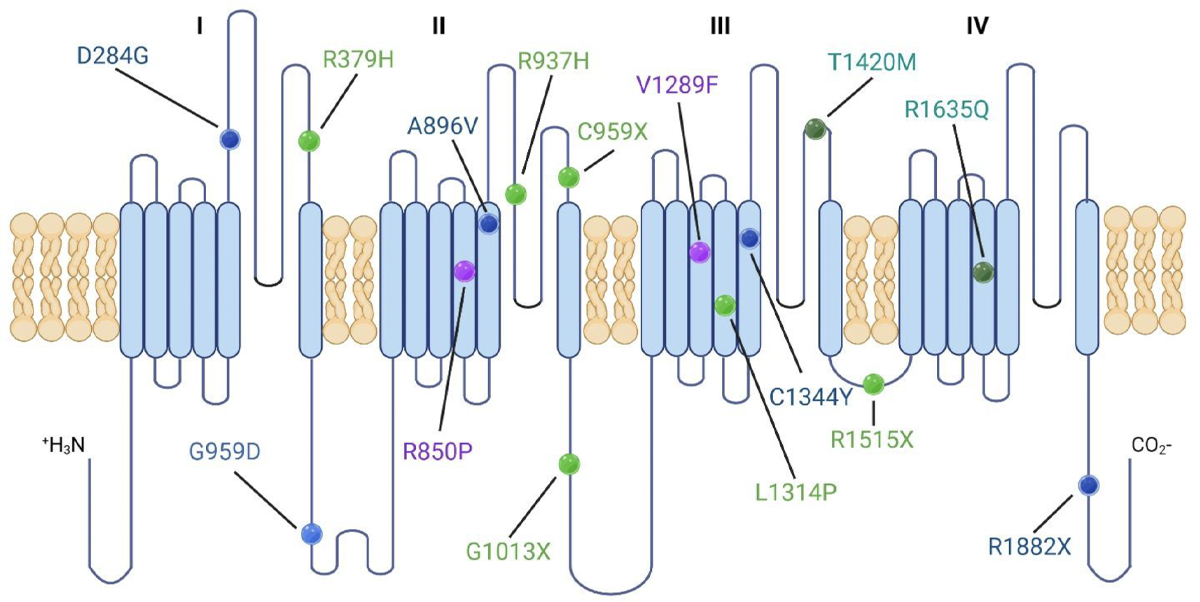
Mapping change: Variation can be found across the alpha subunit of the Nav1.2 sodium channel, such as variants tied to non-syndromic autism (light green), autism + epileptiform EEG (dark green), developmental and epileptic encephalopathy (blue) and schizophrenia (purple).
Autism research spotted this week:
- “Elevated delta power in a maternal UBE3A-deletion pig model of angelman syndrome” bioRxiv
- “Deletion size and background genetic variation shape congenital heart disease phenotypes in 3,016 individuals with 22q11.2 deletion syndrome” medRxiv
See also: Change of heart and mind: Autism’s ties to cardiac defects - “Modulating alternative splicing of MECP2 is a potential therapeutic strategy for Rett syndrome” Science Translational Medicine
- “Disruption of the SYNGAP1 PDZ ligand motif accelerates differentiation of human iPSC-derived GABAergic neurons” bioRxiv
- “TOP2a-dependent neuronal regulation of social behavior and persistent rescue of social deficit through PRC2-mediated epigenetic reprogramming” bioRxiv
See also: DNA unwinder tied to social behaviors in mice, zebrafish - “Researcher ‘honestly shocked’ to discover name on paper, editor claims misunderstanding” Retraction Watch
tags:
Explore more from The Transmitter

Glutamate receptors, mRNA transcripts and SYNGAP1; and more
By
Jill Adams
16 December 2025 | 2 min read
Plumbing the link between anti-CASPR2 antibodies and autism; and more
By
Jill Adams
2 December 2025 | 1 min read
Cite this article: