Stroke
Recent articles
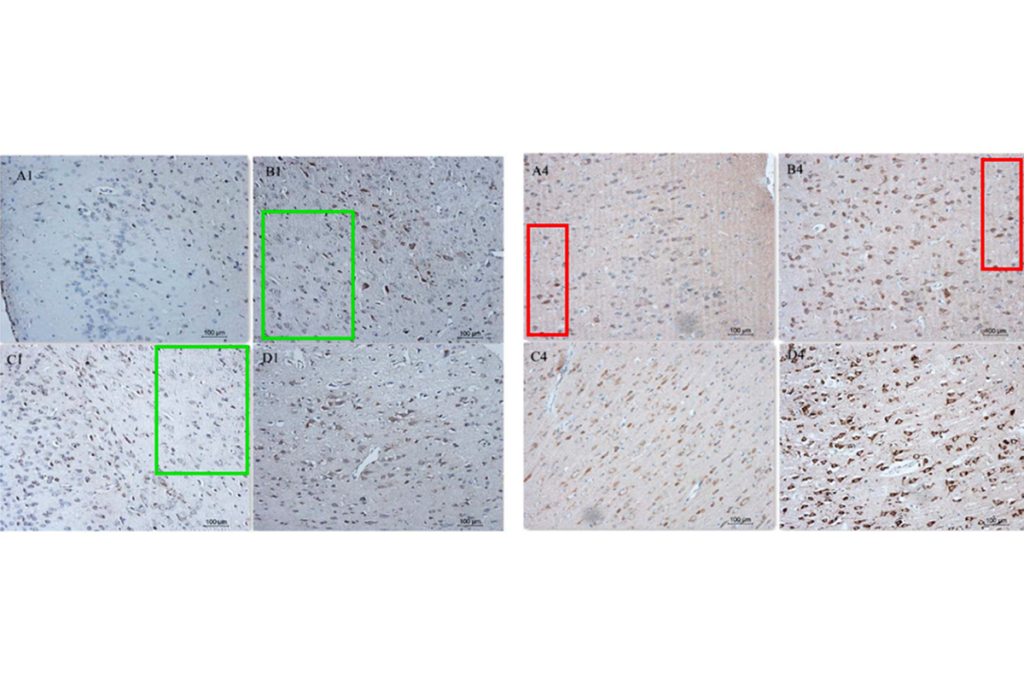
Image integrity issues create new headache for subarachnoid hemorrhage research
First-time sleuths found potentially problematic images in hundreds of papers about early brain injury after subarachnoid hemorrhage.
Image integrity issues create new headache for subarachnoid hemorrhage research
First-time sleuths found potentially problematic images in hundreds of papers about early brain injury after subarachnoid hemorrhage.

Exclusive: Issues with dozens of papers prompt inquiry into prolific stroke researcher
Two of John H. Zhang’s papers have been retracted, 19 have corrections, and 27 have expressions of concern.
Exclusive: Issues with dozens of papers prompt inquiry into prolific stroke researcher
Two of John H. Zhang’s papers have been retracted, 19 have corrections, and 27 have expressions of concern.
Explore more from The Transmitter
Error equation predicts brain’s ability to generalize
Four statistical measurements of neural network geometry capture how well brains and artificial networks use what they already know to solve new problems, a study suggests.
Error equation predicts brain’s ability to generalize
Four statistical measurements of neural network geometry capture how well brains and artificial networks use what they already know to solve new problems, a study suggests.

Embrace complexity to improve the translatability of basic neuroscience
Researchers must learn to view heterogeneity as an essential feature of the systems they study and a central consideration in experimental design, not a variable to control for or reduce.
Embrace complexity to improve the translatability of basic neuroscience
Researchers must learn to view heterogeneity as an essential feature of the systems they study and a central consideration in experimental design, not a variable to control for or reduce.
Romain Brette reveals fundamental flaws in commonly assumed neuroscience concepts
His new book, “The Brain, In Theory,” offers alternatives to many of the computer science frameworks currently driving theoretical neuroscience.
Romain Brette reveals fundamental flaws in commonly assumed neuroscience concepts
His new book, “The Brain, In Theory,” offers alternatives to many of the computer science frameworks currently driving theoretical neuroscience.