Brain structure
Recent articles
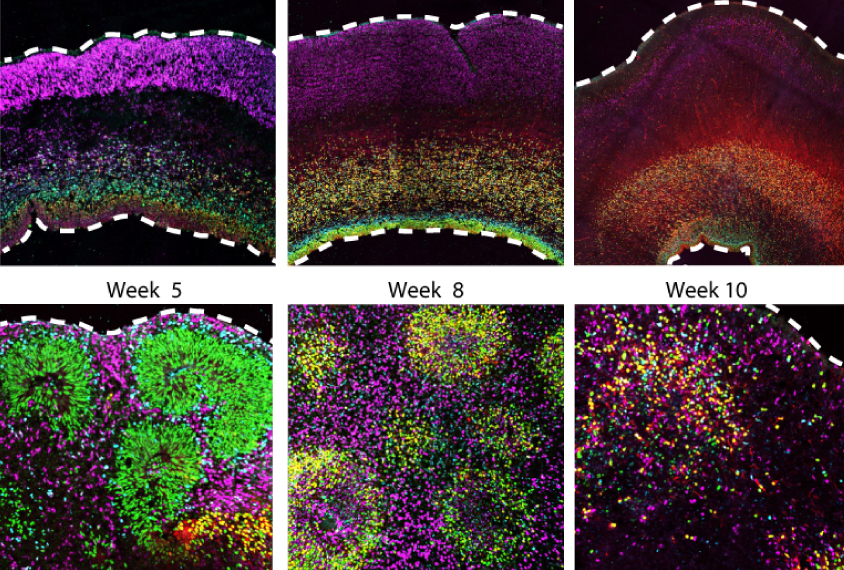
Cell stress may sap organoids’ usefulness in autism research
Some cells in brain organoids — 3D clusters of cultured brain cells — fail to develop fully.
Cell stress may sap organoids’ usefulness in autism research
Some cells in brain organoids — 3D clusters of cultured brain cells — fail to develop fully.
Explore more from The Transmitter
Embrace complexity to improve the translatability of basic neuroscience
Researchers must learn to view heterogeneity as an essential feature of the systems they study and a central consideration in experimental design, not a variable to control for or reduce.
Embrace complexity to improve the translatability of basic neuroscience
Researchers must learn to view heterogeneity as an essential feature of the systems they study and a central consideration in experimental design, not a variable to control for or reduce.
Romain Brette reveals fundamental flaws in commonly assumed neuroscience concepts
His new book, “The Brain, In Theory,” offers alternatives to many of the computer science frameworks currently driving theoretical neuroscience.
Romain Brette reveals fundamental flaws in commonly assumed neuroscience concepts
His new book, “The Brain, In Theory,” offers alternatives to many of the computer science frameworks currently driving theoretical neuroscience.
Arboreal deer mice reveal neural roots of dexterity
The rodents offered researchers an opportunity to link genetically driven changes in corticospinal abundance and morphology to climbing cachet.
Arboreal deer mice reveal neural roots of dexterity
The rodents offered researchers an opportunity to link genetically driven changes in corticospinal abundance and morphology to climbing cachet.