Connectomics
Recent articles
A planetarium for the brain
Tyler Sloan’s new film, more than a decade in the making, takes viewers on an immersive journey.
A planetarium for the brain
Tyler Sloan’s new film, more than a decade in the making, takes viewers on an immersive journey.
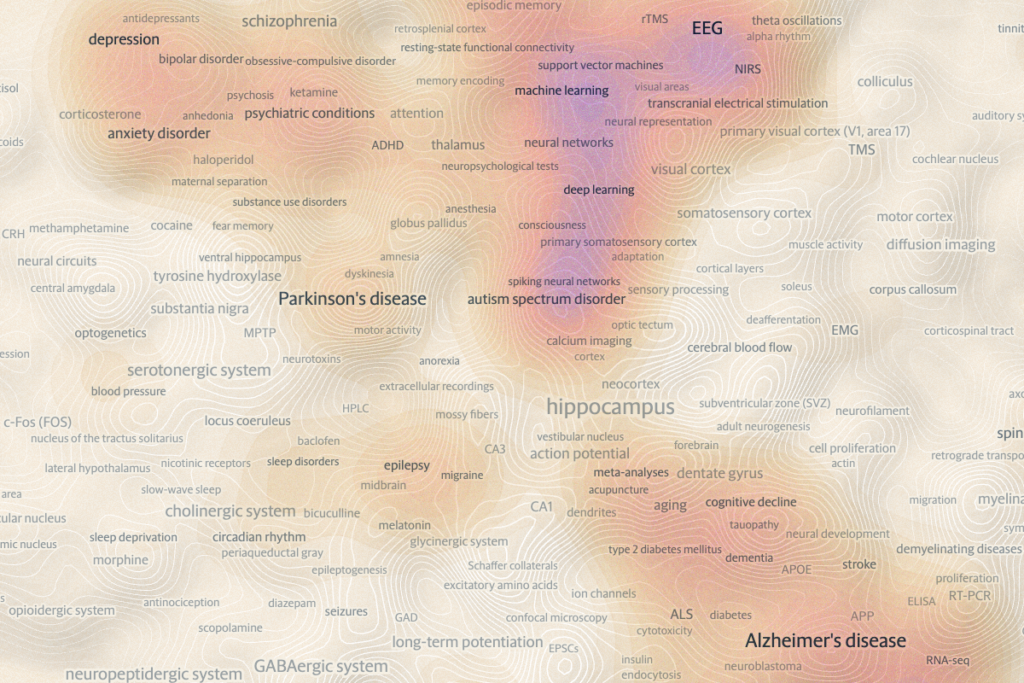
Putting 50 years of neuroscience on the map
Navigate the rise and fall of research topics over five decades using our interactive map, which is based on a semantic analysis of nearly 350,000 abstracts in leading neuroscience journals.
Putting 50 years of neuroscience on the map
Navigate the rise and fall of research topics over five decades using our interactive map, which is based on a semantic analysis of nearly 350,000 abstracts in leading neuroscience journals.
Should neuroscience focus on big team science or the traditional model?
A balanced approach is best, according to the majority of respondents. Many stressed that big team science has value for large-scale, resource-intensive projects, particularly for cell atlases and similar efforts. But some noted that small group support is key for creativity.
Should neuroscience focus on big team science or the traditional model?
A balanced approach is best, according to the majority of respondents. Many stressed that big team science has value for large-scale, resource-intensive projects, particularly for cell atlases and similar efforts. But some noted that small group support is key for creativity.
Explore more from The Transmitter
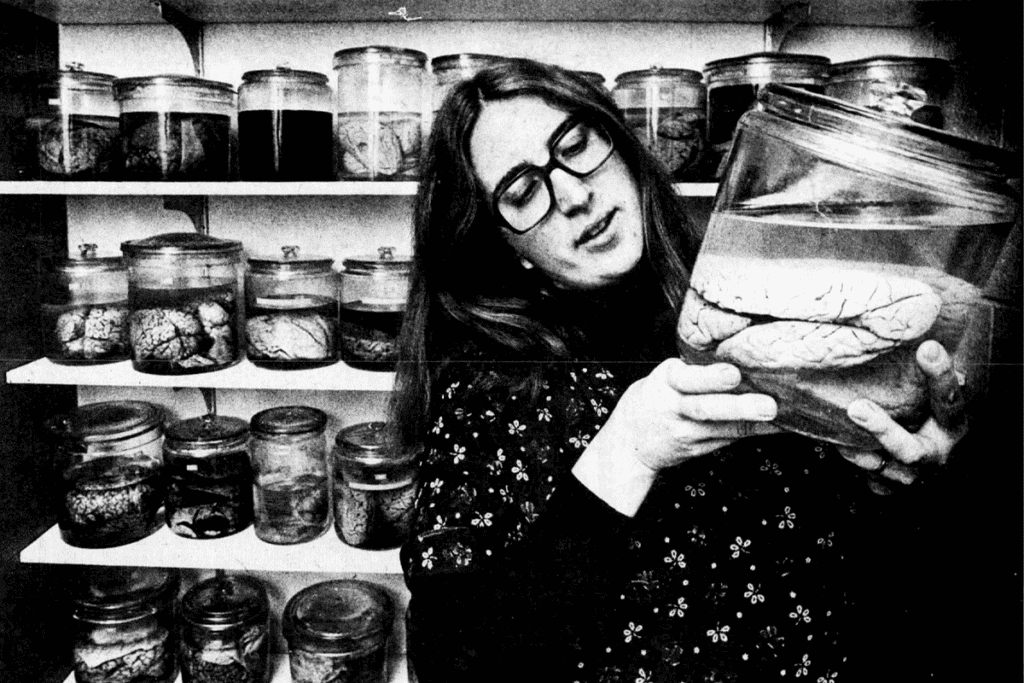
Remembering Barbara Finlay, ‘maverick’ of evolutionary neuroscience
Finlay, who died on 12 September, championed the idea that developmental constraints dictate how evolution sculpts brains, a concept she used to model the timing of hundreds of events and align them across mammalian species.
Remembering Barbara Finlay, ‘maverick’ of evolutionary neuroscience
Finlay, who died on 12 September, championed the idea that developmental constraints dictate how evolution sculpts brains, a concept she used to model the timing of hundreds of events and align them across mammalian species.
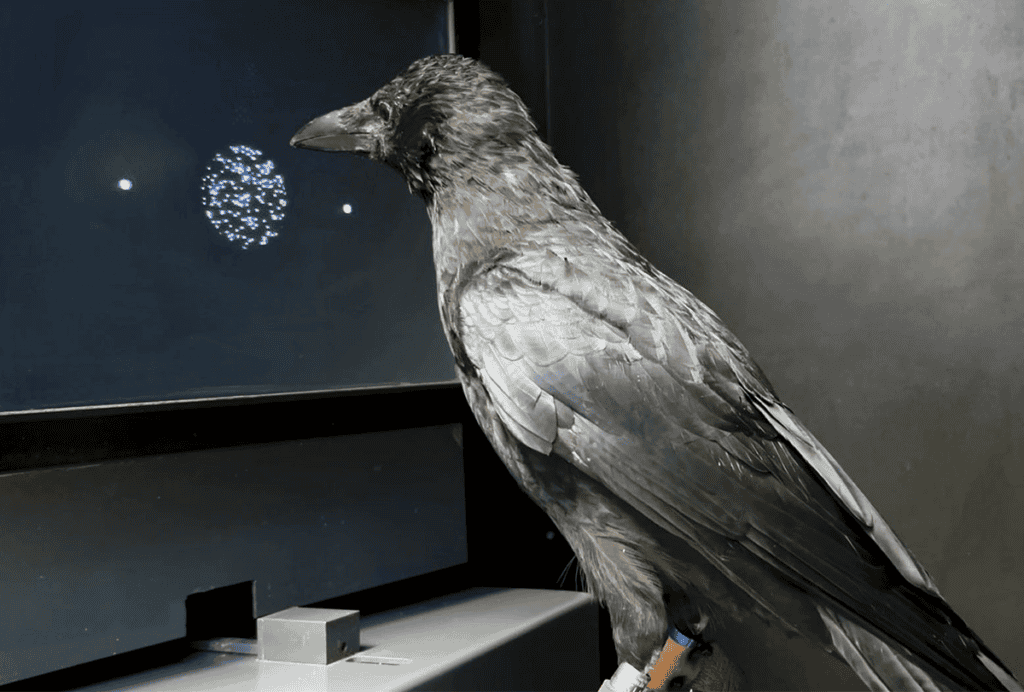
Crows have brains ‘in the fast lane’
The birds accurately complete decision-making tasks twice as fast as primates, although their endbrains look considerably different.
Crows have brains ‘in the fast lane’
The birds accurately complete decision-making tasks twice as fast as primates, although their endbrains look considerably different.

Prevalence of profound autism declines with new definition
The updated, more precise definition used in a CDC study includes adaptive scores.
Prevalence of profound autism declines with new definition
The updated, more precise definition used in a CDC study includes adaptive scores.