Diana Kwon is a freelance journalist who covers the life sciences, health and academia. Her writing has appeared in several publications, including Nature, Scientific American, Knowable and The Scientist. She is based in Berlin.

Diana Kwon
Science writer
From this contributor
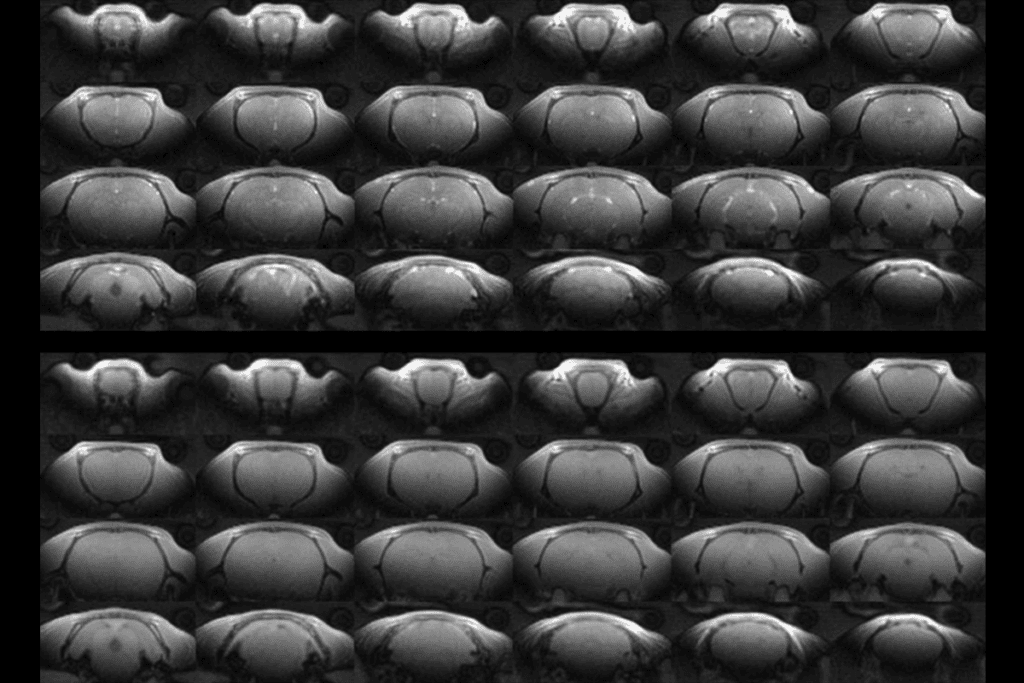
Silent, motion-resistant fMRI expands scans in behaving mice
The method, called SORDINO, captures brain images in animals while they move and interact.
Silent, motion-resistant fMRI expands scans in behaving mice
By
Diana Kwon
2 October 2026 | 5 min read

Sensory over-responsivity tied to autism, anxiety but not other conditions
Negative reactions to sensations track with certain neurodevelopmental traits in more than 15,000 children—pointing to shared neurobiological roots.
Sensory over-responsivity tied to autism, anxiety but not other conditions
By
Diana Kwon
10 September 2026 | 5 min read
Bringing basic biology back to INSAR
As the International Society for Autism Research has grown over the past two decades, basic science has become less central, Christine Wu Nordahl says. This year, she and other meeting organizers aimed to change that.

Reporter’s notebook: Highlights from INSAR 2026
At the 25th annual meeting of the International Society for Autism Research, scientists, clinicians and self-advocates gathered to discuss topics such as autism genetics and the gap between clinical trials and real-world benefits.
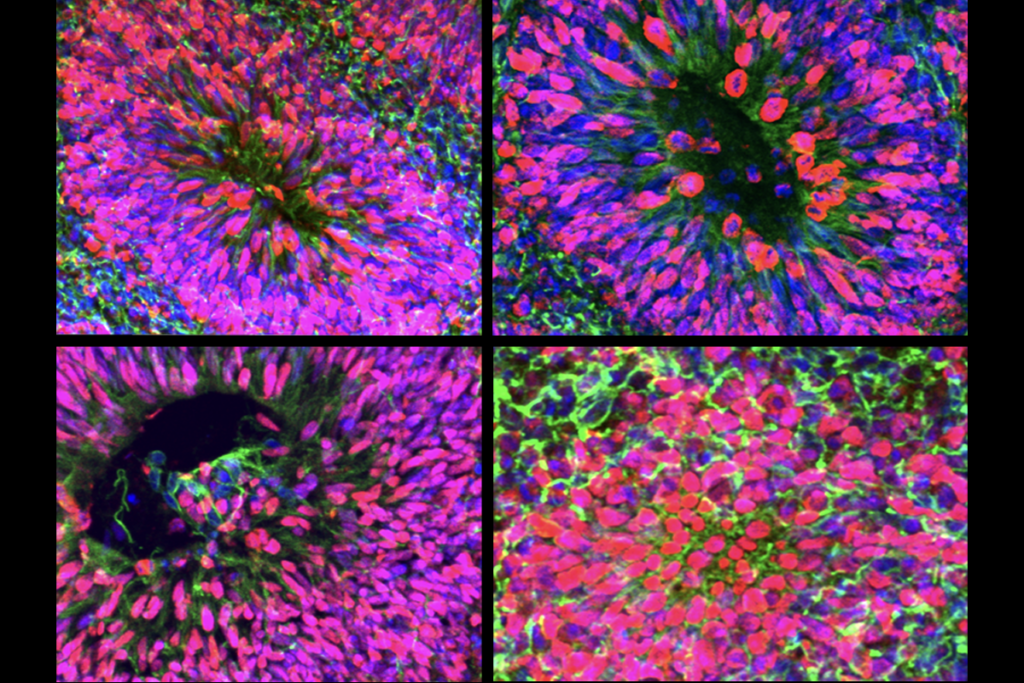
New organoid atlas unveils four neurodevelopmental signatures
The comprehensive resource details data on microcephaly, polymicrogyria, epilepsy and intellectual disability from 352 people.
New organoid atlas unveils four neurodevelopmental signatures
By
Diana Kwon
17 December 2025 | 4 min read
Explore more from The Transmitter
Grace Hwang and Joe Monaco discuss the future of NeuroAI
Hwang and Monaco organized a recent workshop to hear from leaders in the field about how best to integrate NeuroAI research into the BRAIN Initiative.
Grace Hwang and Joe Monaco discuss the future of NeuroAI
Hwang and Monaco organized a recent workshop to hear from leaders in the field about how best to integrate NeuroAI research into the BRAIN Initiative.
By
Paul Middlebrooks
4 December 2024 | 97 min listen
Imagining the ultimate systems neuroscience paper
A growing body of papers on systems neuroscience and on giant simulations of neural circuits involves data beyond the point that anyone can reasonably understand end to end. Looking ahead, “paper-bots” could solve that problem.
Imagining the ultimate systems neuroscience paper
A growing body of papers on systems neuroscience and on giant simulations of neural circuits involves data beyond the point that anyone can reasonably understand end to end. Looking ahead, “paper-bots” could solve that problem.
By
Mark Humphries
2 December 2024 | 7 min read
Hessameddin Akhlaghpour outlines how RNA may implement universal computation
Could the brain’s computational abilities extend beyond neural networks to molecular mechanisms? Akhlaghpour describes how natural universal computation may have evolved via RNA mechanisms.
Hessameddin Akhlaghpour outlines how RNA may implement universal computation
Could the brain’s computational abilities extend beyond neural networks to molecular mechanisms? Akhlaghpour describes how natural universal computation may have evolved via RNA mechanisms.
By
Paul Middlebrooks
26 November 2024 | 107 min listen