Diana Robins is associate professor of psychology at Drexel University. She leads the Research Program in Early Detection and Intervention at the A.J. Drexel Autism Institute.
Diana Robins
Associate professor of psychology
Drexel University
From this contributor

Screening toddlers for autism is worthwhile
A Norwegian study published in February suggested that the Modified Checklist for Autism in Toddlers fails to detect many cases of autism at 18 months of age. The creators of the test explain why there’s more to the story.
Screening toddlers for autism is worthwhile
By
Deborah Fein, Diana Robins
29 April 2014 | 6 min read
Explore more from The Transmitter
Head direction cells stably orient mice to outside world
The cells’ representations show little drift over time—unlike those of other navigation system neurons—and may provide a “rigid backbone” for more flexible sensory and cognitive responses.
Head direction cells stably orient mice to outside world
The cells’ representations show little drift over time—unlike those of other navigation system neurons—and may provide a “rigid backbone” for more flexible sensory and cognitive responses.
By
Angie Voyles Askham
25 March 2026 | 0 min watch
Juan Gallego discusses how manifolds are transforming our understanding of the coordination of neuronal population activity
A wealth of evidence supports the view that neural manifolds are real and useful, Gallego says, even if they may not completely solve the age-old mind-body problem.
Juan Gallego discusses how manifolds are transforming our understanding of the coordination of neuronal population activity
A wealth of evidence supports the view that neural manifolds are real and useful, Gallego says, even if they may not completely solve the age-old mind-body problem.
By
Paul Middlebrooks
25 March 2026 | 121 min listen
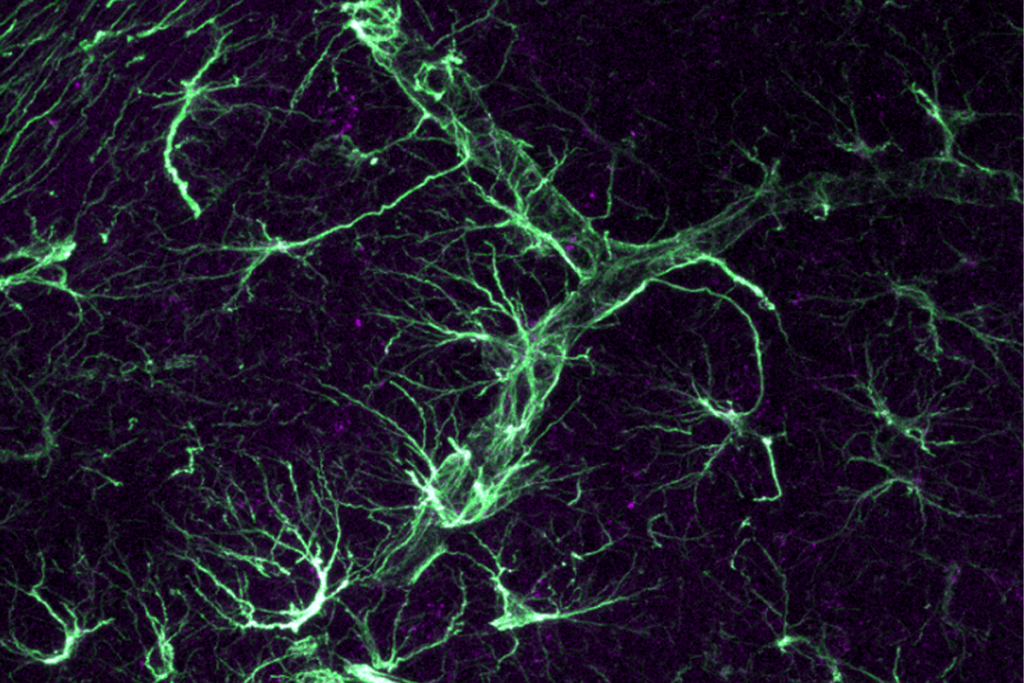
Astrocytes in mouse amygdala encode emotional state
The glial cells’ activity reliably tracks with freezing, hesitancy and other behaviors reminiscent of anxiety.
Astrocytes in mouse amygdala encode emotional state
The glial cells’ activity reliably tracks with freezing, hesitancy and other behaviors reminiscent of anxiety.
By
Holly Barker
24 March 2026 | 4 min read