Emily Hayes
Contributing writer
From this contributor
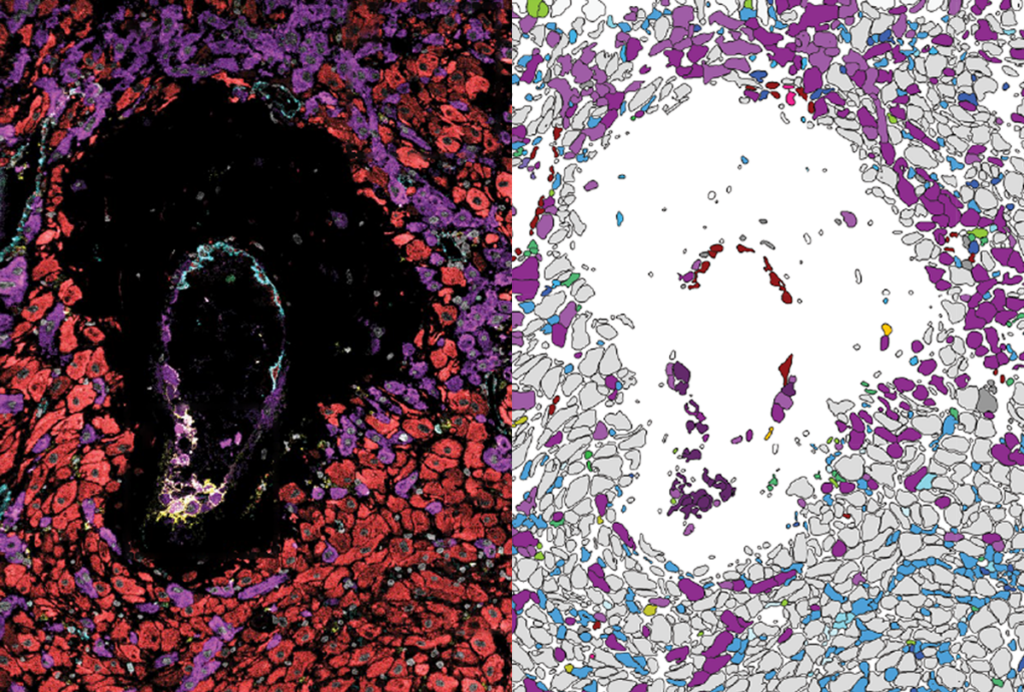
Atlas charts cells of human placenta, uterus across early pregnancy
A new resource gives an unparalleled look at how fetal placental cells attach to the uterine wall and remodel maternal blood vessels to access nutrients.
Atlas charts cells of human placenta, uterus across early pregnancy
Explore more from The Transmitter
‘Wired for Words: The Neural Architecture of Language,’ an excerpt
In his new book, Hickok provides a detailed overview of the research into the circuits that control speech and language. In this excerpt from Chapter 5, he shares how meeting his colleague David Poeppel led to them developing the theory for bilateral speech perception.
‘Wired for Words: The Neural Architecture of Language,’ an excerpt
In his new book, Hickok provides a detailed overview of the research into the circuits that control speech and language. In this excerpt from Chapter 5, he shares how meeting his colleague David Poeppel led to them developing the theory for bilateral speech perception.
Plumbing the link between anti-CASPR2 antibodies and autism; and more
Here is a roundup of autism-related news and research spotted around the web for the week of 1 December.
Plumbing the link between anti-CASPR2 antibodies and autism; and more
Here is a roundup of autism-related news and research spotted around the web for the week of 1 December.
This paper changed my life: Nancy Padilla-Coreano on learning the value of population coding
The 2013 Nature paper by Mattia Rigotti and his colleagues revealed how mixed selectivity neurons—cells that are not selectively tuned to a stimulus—play a key role in cognition.
This paper changed my life: Nancy Padilla-Coreano on learning the value of population coding
The 2013 Nature paper by Mattia Rigotti and his colleagues revealed how mixed selectivity neurons—cells that are not selectively tuned to a stimulus—play a key role in cognition.