John Strang is a pediatric neuropsychologist and director of the Gender and Autism Program at the Center for Autism Spectrum Disorders with the Children’s National Hospital in Washington, D.C.

John Strang
Pediatric neuropsychologist
Children’s National Hospital
From this contributor
Why we need to respect sexual orientation, gender diversity in autism
Autistic people with a minority sexual orientation or gender identity face specific challenges, from having their self-assessments dismissed to difficulties advocating for their gender needs.
Why we need to respect sexual orientation, gender diversity in autism
By
John Strang
27 November 2018 | 6 min read
Explore more from The Transmitter
Taking a closer look at astrocytes and autism
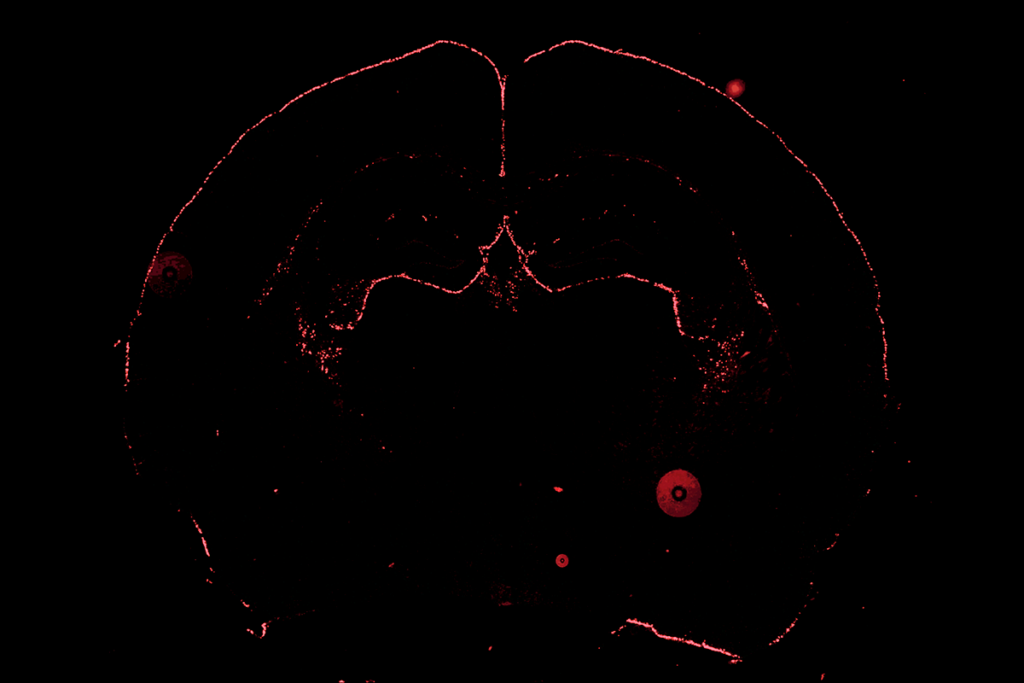
These glial cells are increasingly linked to neurodevelopmental conditions and the regulation of social behaviors and anxiety.
Taking a closer look at astrocytes and autism
These glial cells are increasingly linked to neurodevelopmental conditions and the regulation of social behaviors and anxiety.
By
The Transmitter
2 April 2026 | 2 min read
Neuro’s ark: Sounding out the evolution of hearing with geckos
Catherine Carr explains her discovery that geckos retain a vibration-sensing pathway previously thought to be lost when animals moved onto land.
Neuro’s ark: Sounding out the evolution of hearing with geckos
Catherine Carr explains her discovery that geckos retain a vibration-sensing pathway previously thought to be lost when animals moved onto land.
By
Helena Kudiabor
1 April 2026 | 5 min read
Researchers retract multisensory learning paper after failed replications
Even though one set of experiments did not hold up, the authors stand by the original conclusions of the work and plan to resubmit it as a new paper.
Researchers retract multisensory learning paper after failed replications
Even though one set of experiments did not hold up, the authors stand by the original conclusions of the work and plan to resubmit it as a new paper.
By
Calli McMurray
31 March 2026 | 4 min read