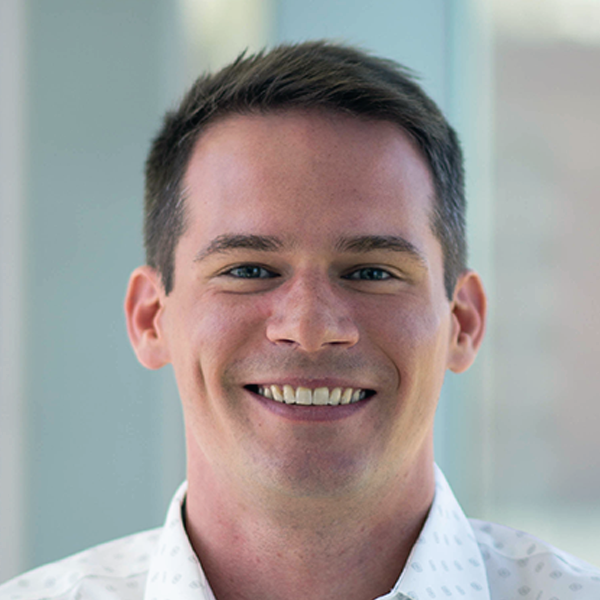
Justin O’Hare

Assistant professor of pharmacology and physiology
University of Colorado Anschutz

Justin O’Hare is assistant professor of pharmacology and physiology at the University of Colorado Anschutz. His lab studies how a neuron’s dendritic arbor supports learning and memory by driving action-potential firing that newly reflects experience. By pursuing this core question from molecules to brain circuits to behavior, his lab aims to uncover new mechanisms of learning and memory—and how they go awry in disease.

After earning a B.A. in neurobiology and cognitive neuroscience from Northwestern University while working with Ravi Allada and Ken Paller, O’Hare earned his Ph.D. in the Department of Neurobiology at Duke University, in the lab of Nicole Calakos and in close collaboration with Henry Yin. Afterward, he completed his postdoctoral studies at Columbia University’s Mortimer B. Zuckerman Mind Brain Behavior Institute under the joint guidance of Attila Losonczy and Franck Polleux. Following a stint working with Ivan Soltesz as a visiting instructor at Stanford University, O’Hare moved to Denver to open his lab in July 2025.
Explore more from The Transmitter

Two primate centers drop ‘primate’ from their name

The Washington and Tulane National Biomedical Research Centers—formerly called National Primate Research Centers—say they made the change to better reflect the breadth of research performed at the centers.

By Calli McMurray
26 February 2026 | 5 min read

Post-infection immune conflict alters fetal development in some male mice

The immune-conflict between dam and fetus could help explain sex differences in neurodevelopmental conditions.

By Viviane Callier
26 February 2026 | 5 min read

Three ecological psychologists on the right and wrong ways to use the field’s principles in neuroscience

Matthieu de Wit, Luis H. Favela and Vicente Raja weigh in on the recent trend of neuroscientists importing concepts from ecological psychology, the study of how an organism’s interactions with its environment explain perception and action.

By Paul Middlebrooks
25 February 2026 | 1 min read

privacy consent banner

Privacy Preference

We use cookies to provide you with the best online experience. By clicking “Accept All,” you help us understand how our site is used and enhance its performance. You can change your choice at any time. To learn more, please visit our Privacy Policy.