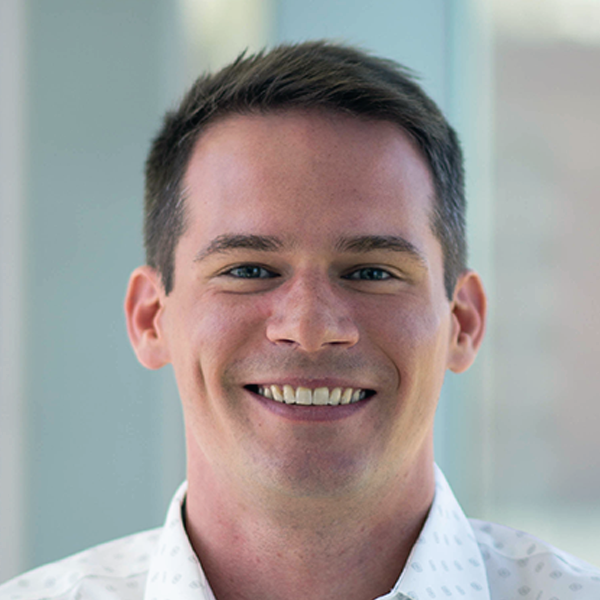
Justin O’Hare is assistant professor of pharmacology and physiology at the University of Colorado Anschutz. His lab studies how a neuron’s dendritic arbor supports learning and memory by driving action-potential firing that newly reflects experience. By pursuing this core question from molecules to brain circuits to behavior, his lab aims to uncover new mechanisms of learning and memory—and how they go awry in disease.
After earning a B.A. in neurobiology and cognitive neuroscience from Northwestern University while working with Ravi Allada and Ken Paller, O’Hare earned his Ph.D. in the Department of Neurobiology at Duke University, in the lab of Nicole Calakos and in close collaboration with Henry Yin. Afterward, he completed his postdoctoral studies at Columbia University’s Mortimer B. Zuckerman Mind Brain Behavior Institute under the joint guidance of Attila Losonczy and Franck Polleux. Following a stint working with Ivan Soltesz as a visiting instructor at Stanford University, O’Hare moved to Denver to open his lab in July 2025.