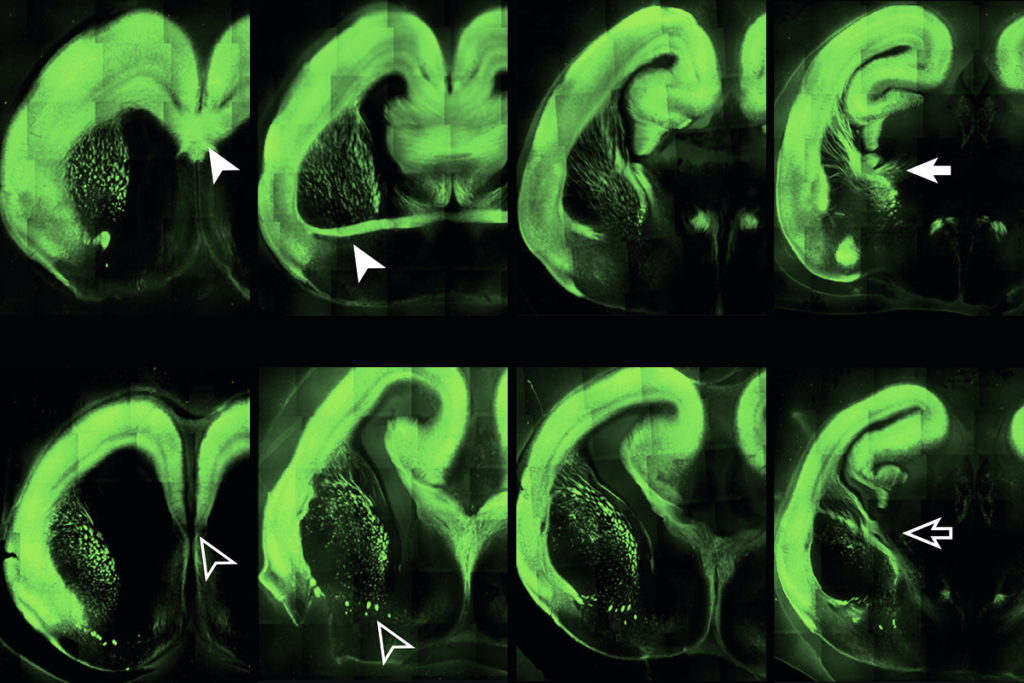
Seth Grant is professor of molecular neuroscience at Edinburgh University. His lab studies synapse diversity in the brain using synaptome mapping, a combined laboratory and computational approach that reports proteomics at single-synapse resolution and on the whole-brain scale. Synaptome mapping is uncovering how brain synapse diversity and architecture change during development and aging, are modulated by sensory input and lived experience, and are affected by genetic disorders such as dementia, Alzheimer’s disease and schizophrenia. These studies are providing clues to understanding of the role of the synaptome in learning, memory and behavior.
After graduating from Sydney University with bachelor’s degrees in science, medicine and surgery, Grant studied transgenic mouse models of cancer and diabetes with Douglas Hanahan at Cold Spring Harbor Laboratory. He also studied mouse genetic models of learning and memory with Eric Kandel at the Howard Hughes Medical Institute and Columbia University. He established his first laboratory at Edinburgh University in 1994 and in 2000 was appointed professor of molecular neuroscience.
Grant has held additional appointments, including John Cade Visiting Professor at Melbourne University, principal investigator at the Wellcome Trust Sanger Institute, and honorary professorship at Cambridge University. He was elected fellow of the Royal Society of Edinburgh in 2011 and fellow of the Academy of Medical Sciences in 2015.