Stephen Blumberg is an associate director for science at the National Center for Health Statistics.
Stephen Blumberg
Associate director of science
National Center for Health Statistics
From this contributor

Questions for Stephen Blumberg: Tracking autism’s transience
Roughly 13 percent of children with autism eventually lose their diagnosis, either because they outgrow it or because they never had autism to begin with.
Questions for Stephen Blumberg: Tracking autism’s transience
By
Katie Moisse
3 November 2015 | 5 min read
Explore more from The Transmitter
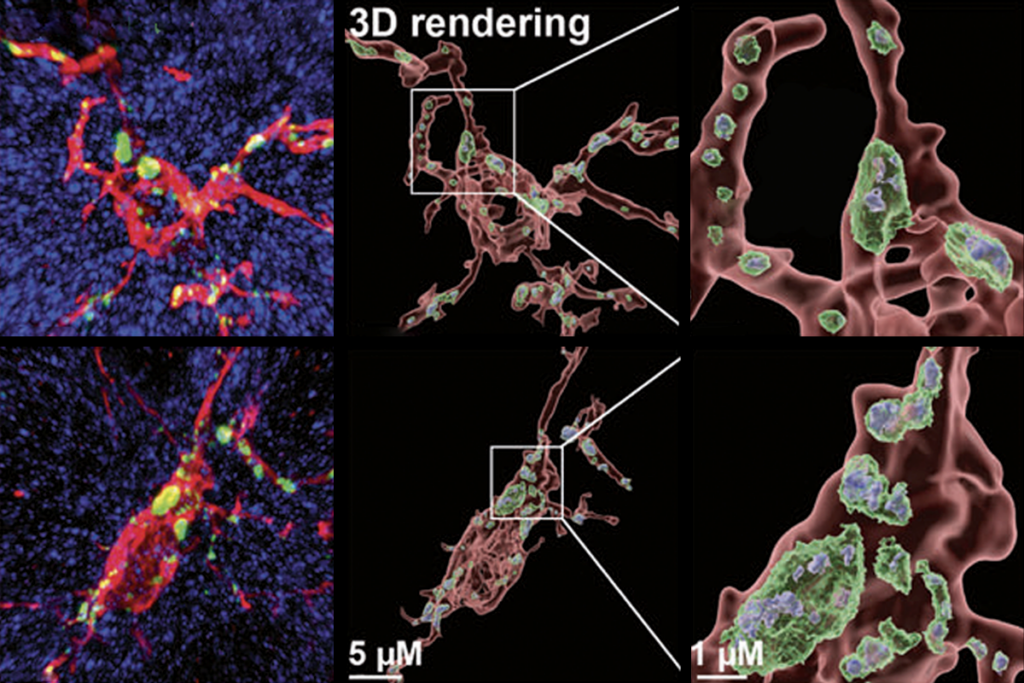
Single-gene systems-level effects, and more
Here is a roundup of autism-related news and research spotted around the web for the week of 6 April.
Single-gene systems-level effects, and more
Here is a roundup of autism-related news and research spotted around the web for the week of 6 April.
By
Jill Adams
7 April 2026 | 2 min read
‘The Brain, In Theory,’ an excerpt
In his new book, Brette pushes back against theories that describe the brain as a “biological computer.” In this excerpt from Chapter 4, he challenges equating brain evolution with programming, and the universality of neural network models.
‘The Brain, In Theory,’ an excerpt
In his new book, Brette pushes back against theories that describe the brain as a “biological computer.” In this excerpt from Chapter 4, he challenges equating brain evolution with programming, and the universality of neural network models.
By
Romain Brette
7 April 2026 | 5 min read

Computational neuroscientist Keith Hengen explains his work through illustrations
The images help him communicate the “big-picture ideas” behind the mathematical principles of neuronal networks.
Computational neuroscientist Keith Hengen explains his work through illustrations
The images help him communicate the “big-picture ideas” behind the mathematical principles of neuronal networks.
By
Helena Kudiabor
7 April 2026 | 3 min read