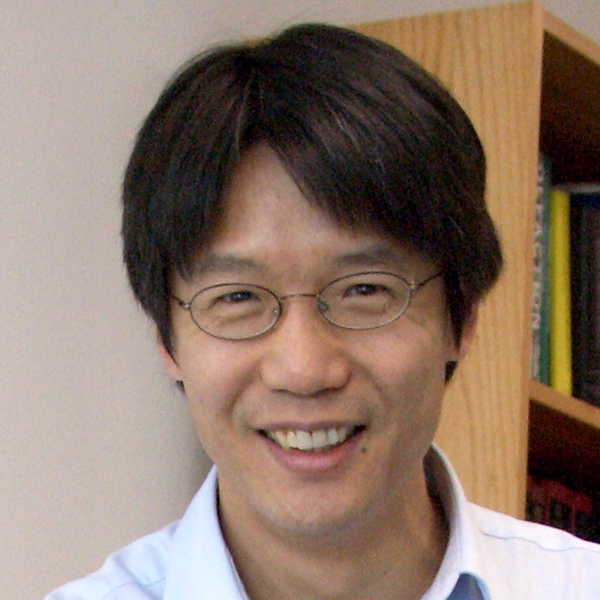
Xiao-Jing Wang is Distinguished Global Professor of Neural Science at New York University. Using theory and computational modeling, Wang focuses on neural circuit mechanisms of cognitive functions such as working memory and decision-making, with a special interest in the prefrontal cortex—a region that plays a central role in intelligence and executive control of behavior. He was one of the initiators of a nascent field called computational psychiatry. More recently, his group developed connectome-based modeling of large-scale brain circuits to investigate whole-brain dynamics and cognition.
Wang has contributed to training young researchers and building the community in multiple ways. He served as director of three Swartz Centers at Brandeis University, Yale University and NYU. He also co-founded a Gordon Research Conference on the Neurobiology of Cognition (with Robert Desimone) and an international Computational and Cognitive Neuroscience summer school at Cold Spring Harbor Asia (with Upi Bhalla, Zachary Mainen and Si Wu) in 2010. He served as co-director (with Stephen Baccus) of the Methods in Computational Neuroscience summer course at the Marine Biological Laboratory from 2018 to 2023. He is the author of a new textbook, Theoretical Neuroscience: Understanding Cognition.
Wang earned a B.C. and a Ph.D. in physics from the Free University of Brussels. He was a professor at Yale University before joining the faculty at NYU.