Dup15q 2018
Recent articles

Rare duplication within chromosome 15 delivers relatively mild blow
Children who have a rare extra copy of one segment on chromosome 15 have better cognitive abilities and daily living skills than those with a duplication that forms an extra chromosome.
Rare duplication within chromosome 15 delivers relatively mild blow
Children who have a rare extra copy of one segment on chromosome 15 have better cognitive abilities and daily living skills than those with a duplication that forms an extra chromosome.
Explore more from The Transmitter
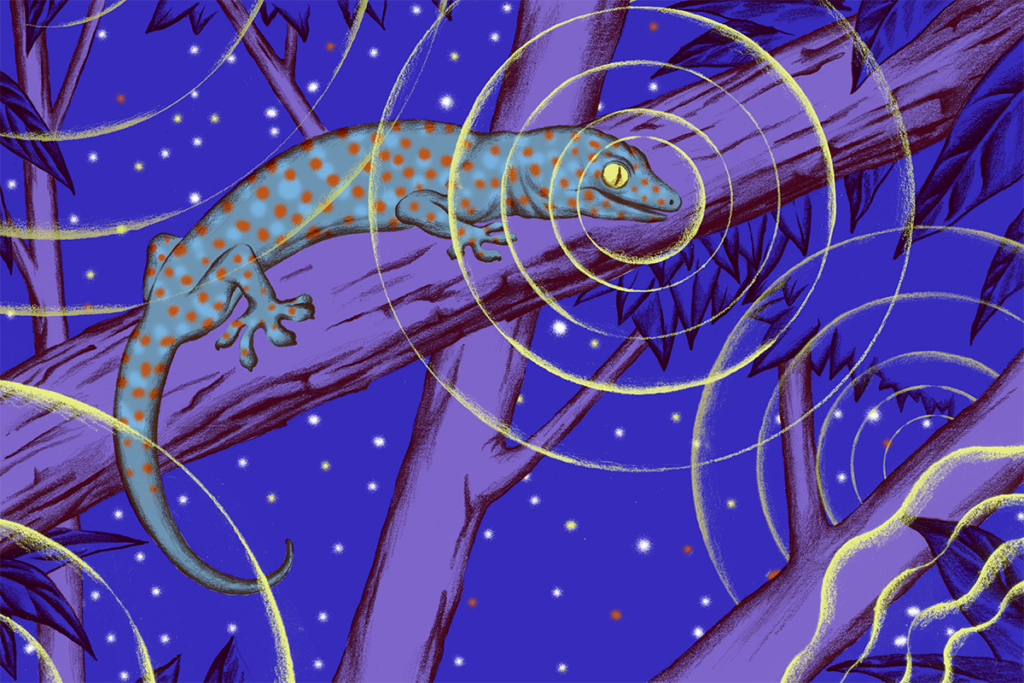
Neuro’s ark: Sounding out the evolution of hearing with geckos
Catherine Carr explains her discovery that geckos retain a vibration-sensing pathway previously thought to be lost when animals moved onto land.
Neuro’s ark: Sounding out the evolution of hearing with geckos
Catherine Carr explains her discovery that geckos retain a vibration-sensing pathway previously thought to be lost when animals moved onto land.
Researchers retract multisensory learning paper after failed replications
Even though one set of experiments did not hold up, the authors stand by the original conclusions of the work and plan to resubmit it as a new paper.
Researchers retract multisensory learning paper after failed replications
Even though one set of experiments did not hold up, the authors stand by the original conclusions of the work and plan to resubmit it as a new paper.
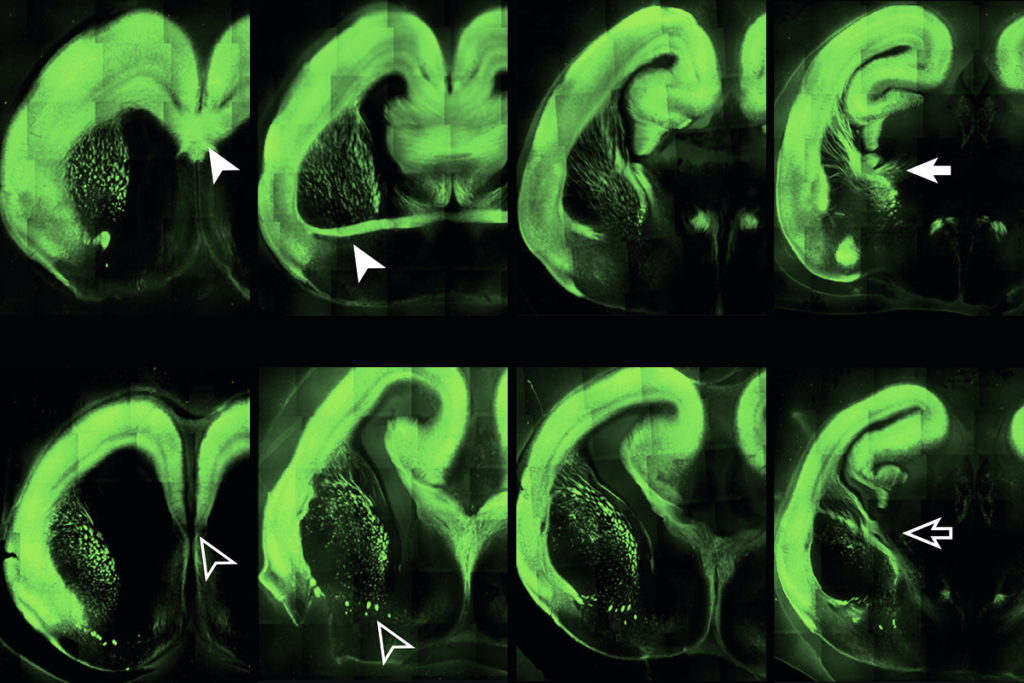
Cortical evolution, ZBTB18, and more
Here is a roundup of autism-related news and research spotted around the web for the week of 30 March.
Cortical evolution, ZBTB18, and more
Here is a roundup of autism-related news and research spotted around the web for the week of 30 March.