PIEZO channels are opening the study of mechanosensation in unexpected places
The force-activated ion channels underlie the senses of touch and proprioception. Now scientists are using them as a tool to explore molecular mechanisms at work in internal organs, including the heart, bladder, uterus and kidney.
In 2010, Ardem Patapoutian unmasked a piece of cellular machinery that had long evaded identification: PIEZO channels, pores wrenched open by changes in a cell’s membrane tension to allow ions to flow through, thereby converting mechanical force into electrical activity.
The discovery marked a turning point for the field of mechanosensation—a process that can be unwieldy to study, says Arthur Beyder, associate professor of physiology and medicine at the Mayo Clinic, because “it reaches its fingers into everything.” The field needed “something to grab onto,” he says, to untangle these processes from other sensory ones—and PIEZO channels provided the first handhold.
The PIEZO discovery garnered much attention, and since then, a flurry of studies have outlined how the channels contribute to touch, itch and proprioception. In 2021, Patapoutian shared the Nobel Prize in Physiology or Medicine for his contributions to this work. Now, a growing cadre of researchers is using these receptors as a tool to explore interoception, or the brain’s sense of what the internal organs are doing.
“We’re seeing a resurgence and an expansion of research in this area,” says Miriam Goodman, professor of molecular and cellular physiology at Stanford University. The field, she adds, is in the middle of a “PIEZO-driven renaissance.”
E
ven a body at rest is in constant motion: The heart pumps blood, the lungs expand and contract, the gut squeezes food, and the bladder stretches with urine. Biologists had intuited that mechanical force was a key part of these processes—and also part of how organs communicate with the brain—but for decades they did not have a way to dive into the molecular mechanisms behind them.
Over the past few years, though, PIEZOs have proved to be an ideal tool for this challenge because they are “professional mechanosensors,” says Patapoutian, professor of neuroscience at the Scripps Research Institute. Nothing but mechanical force activates PIEZOs, and therefore any tissue that expresses the receptors relies on mechanosensation for an element of its physiology. “That happens to be a very, very powerful thesis or argument to start projects,” Patapoutian adds.
The bladder offers a prime example. Neurons enervating the organ express PIEZO2, as do a subset of cells lining the inside of the bladder, Patapoutian and Kara Marshall, a former postdoctoral researcher in the lab, found in 2020. The channels turn out to be a crucial element of sensing bladder stretch and controlling urination.
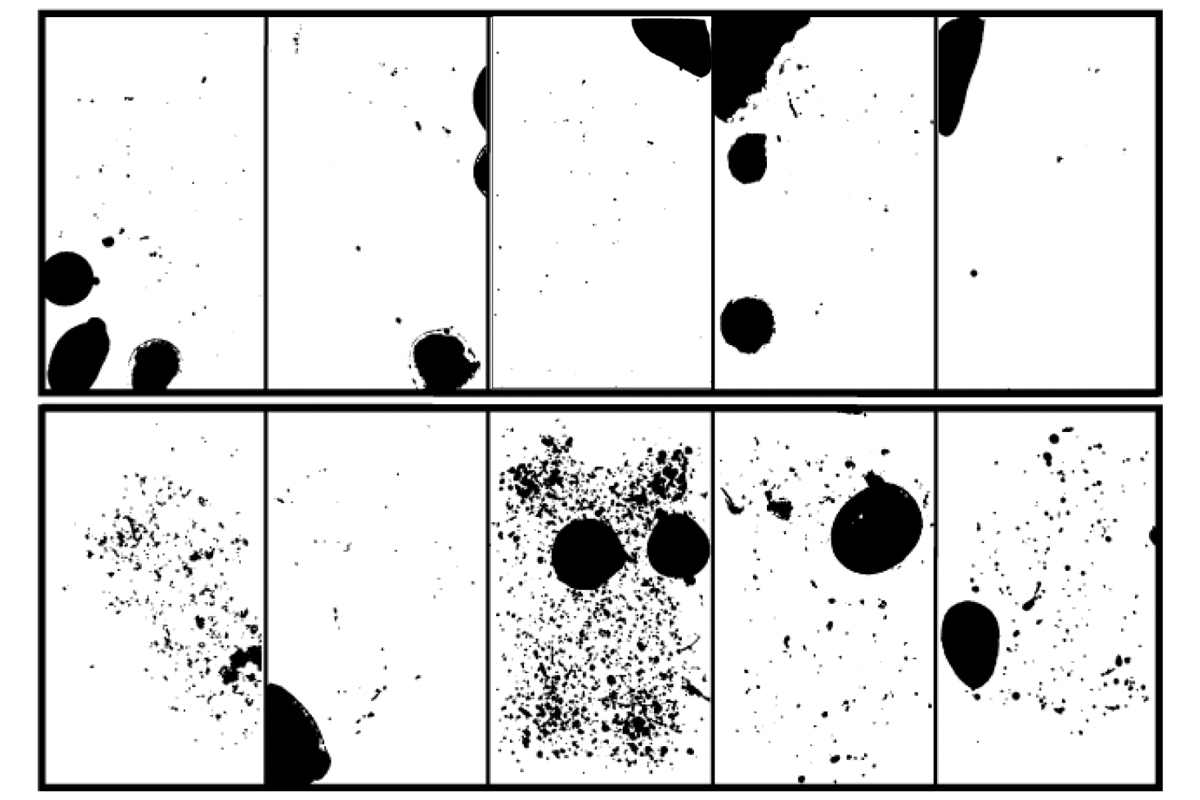
Bladder blobs: Mice without PIEZO2 channels in their bladder lose control of their urination. Control mice pee almost exclusively in the corner of their cages (top row), whereas the knockouts (bottom row) leak urine and empty their bladders in the center of the cage.
Marshall et al., Nature 2020
To demonstrate this central role of the channels, the team knocked out PIEZO2s in mice from the “waist” down, including in the bladder. Control mice emptied their bladder almost exclusively in the cage corner, but the knockout mice leaked urine across the entire cage and often emptied their bladder in the center, indicating reduced control over their urination.
PIEZO2 channels also appear in neurons that enervate the uterus, whereas PIEZO1 channels appear in cells in the uterus itself, Patapoutian and his team reported in November. This did not come as a shock—in people, the organ expands to 500 times its size during pregnancy, so “there is no way that instructive mechanical signals are not important here,” Patapoutian says.
Those signals are key for a smooth birth: Blocking the expression of both PIEZO channels in the lower half of mice does not affect gestation but increases how long the mice spend in labor. Control mice delivered all of their pups within two hours, but five out of seven double-knockout mice did not finish labor within 24 hours. The double knockouts also had weaker contractions than the control mice.
Knowing the identity of a receptor—and being able to turn it off with genetic tools—means you can see how a “system changes when sensation is impaired in a very specific way,” says Marshall, who is now assistant professor of neuroscience at Baylor College of Medicine. These types of experiments provide more nuanced insights than simply cutting the nerves woven around an organ, she says.
G
enetic knockout experiments also make it possible to untangle mechanosensation from other senses and tease out its specific role in a physiological process, says Zhikai Liu, a postdoctoral researcher in Stephen Liberles’ lab at Harvard University.
For example, knocking out both PIEZO1 and PIEZO2 in neurons that innervate the heart disrupts blood pressure regulation, also called the baroreflex, but knocking out only PIEZO2 has no effect on the process. Mice missing only PIEZO2, however, cannot appropriately adjust their blood pressure and heart rate in response to changes in blood volume caused by gravity, according to a paper Liu and his colleagues published in Nature on Wednesday.
The intertwined sensory processes that detect blood pressure and blood volume are hard to study independently, and they had been “mysterious for so long,” says Liberles, professor of cell biology. “The genetic tools, now that we can eliminate one pathway and not the other, have clarified the reflexes and responses of these neurons.”
A similar intertwining problem complicates kidney research. One of the organ’s jobs is to maintain the proper balance of salt and fluids by adjusting the amount of the enzyme renin present in the bloodstream. Two different chemical signaling pathways prompt juxtaglomerular granular cells in the kidney to produce and release renin. Kidney scientists also hypothesized that a mechanosensor could trigger renin release by detecting changes in blood volume, but they didn’t have a way to study it in isolation from the other pathways.
“Without that link to the molecule, it was very hard to understand, because unless you can knock something out, it’s hard to get a handle on what it is,” says Rose Hill, assistant professor of chemical physiology and biochemistry at Oregon Health & Science University.
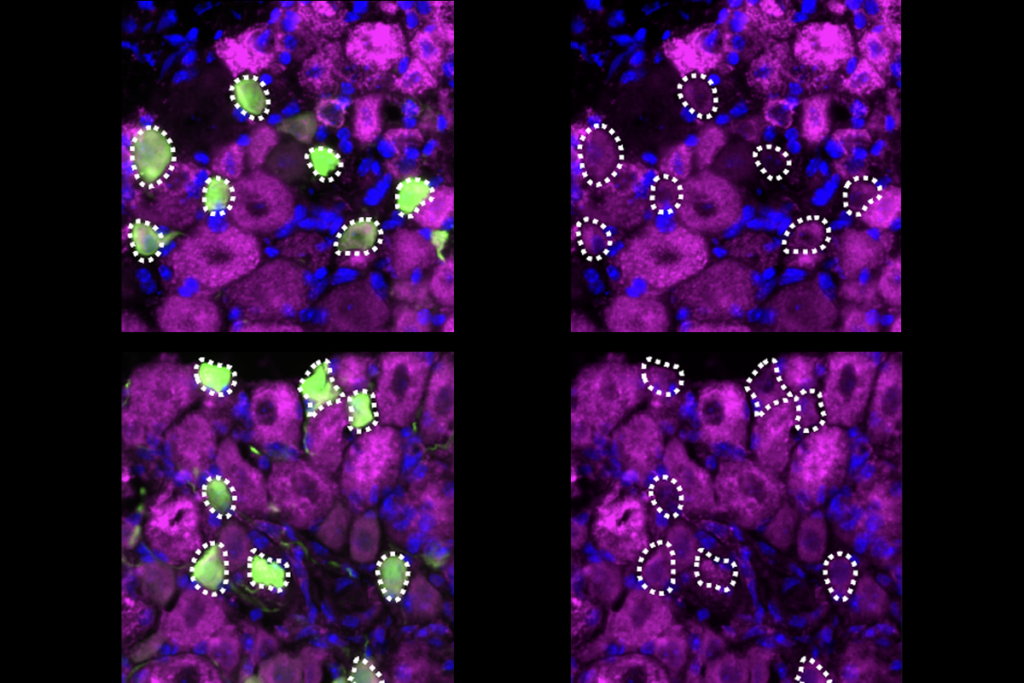
The filtering units inside the kidney—the glomeruli—and the JG cells both express PIEZO2, according to a paper Hill’s team published in December. Mice lacking PIEZO2 in their JG cells have higher blood levels of renin than control mice do. Normally, calcium levels in the JG cells oscillate in tandem with blood vessel expansion and contraction; the calcium oscillations were “almost completely gone” in the cells lacking PIEZO2, Hill says.
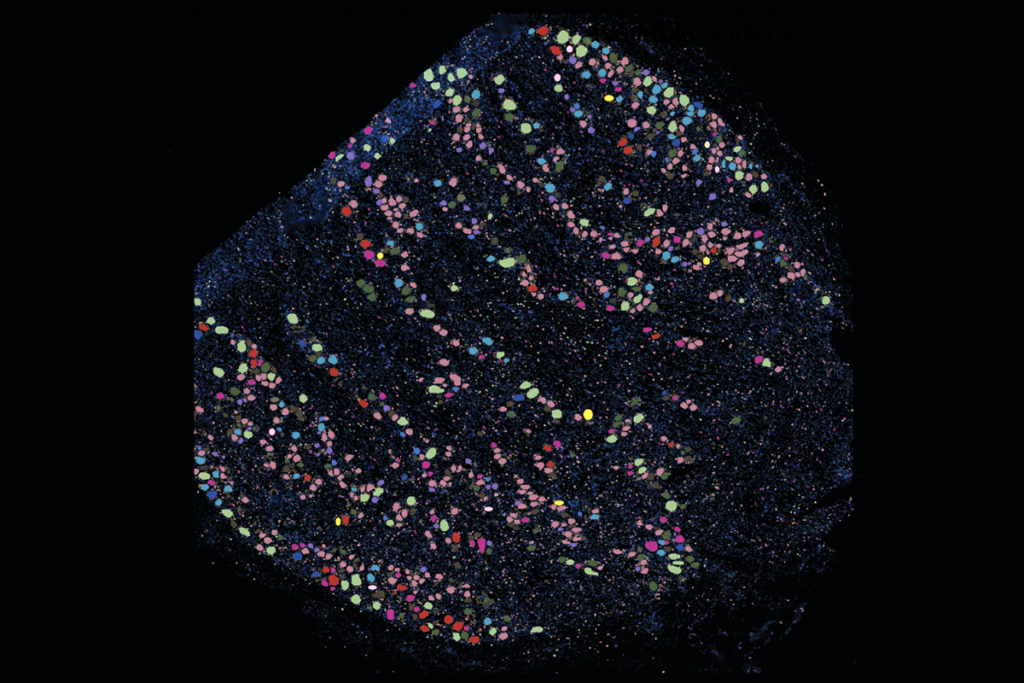
These findings, Hill and others say, are only the beginning. Being able to manipulate the presence of PIEZOs has turbocharged deeper insight into how multiple organs harness force for their functions, and scientists continue to spot the channels in further reaches of the body, including red blood cells, neurons that innervate fat and cells in the retina. Patapoutian says his group is thinking about doing a whole-body, single-cell resolution stain for PIEZOs in mice to find even more candidates.
“How far does this go? How important is pressure sensing in our physiology and diseases?” Patapoutian says. “We think that PIEZOs are the perfect tool to open up doors to all this interesting, novel biology.”