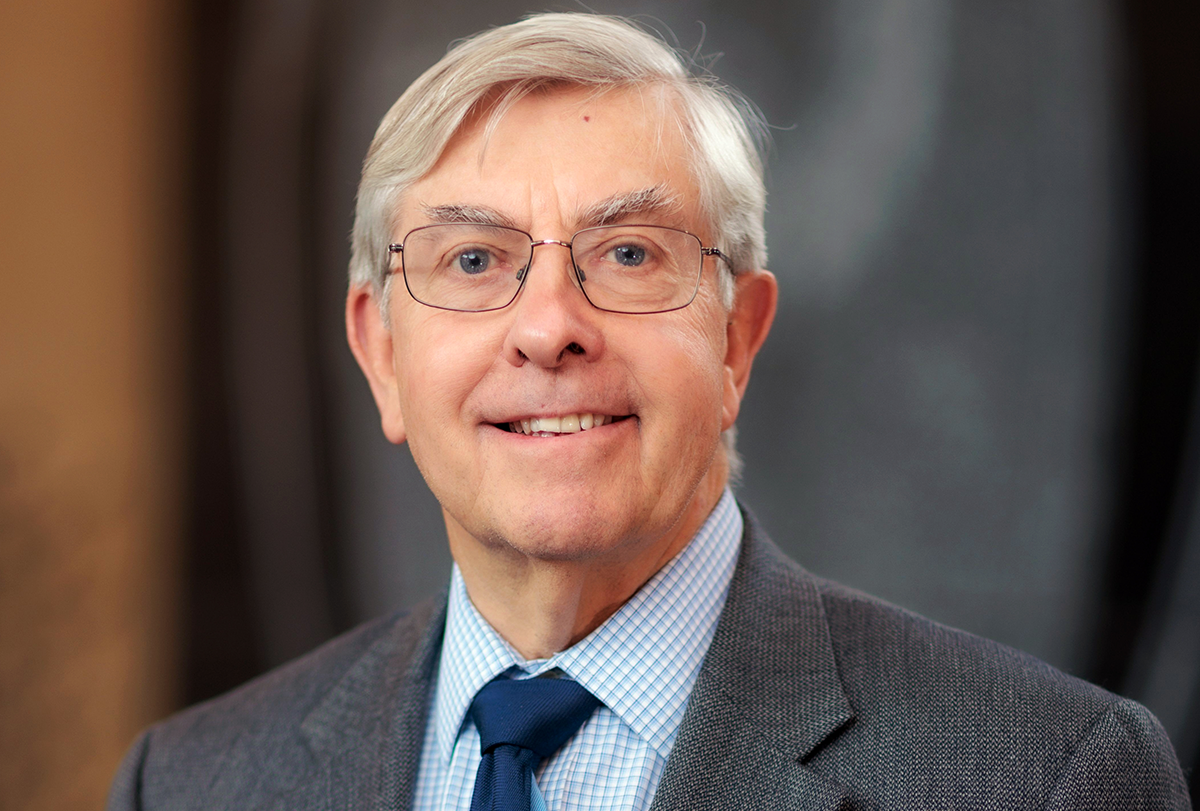
Last month, Walter Koroshetz, who had served as director of the U.S. National Institute of Neurological Disorders and Stroke for more than 10 years, learned that his request for reappointment had been denied.
That change was the latest challenge to standard operations at the National Institutes of Health since Donald Trump took office in January 2025. Over the past year, the institutes have seen canceled grants, hiring freezes, disruptions to peer review, and a presidential budget request that would have cut funding by 40 percent and completely restructured the organization.
Even so, Koroshetz says he thinks much of the concern around chaos at the NIH is overblown. “The main thing that matters is how much money the institutes get,” and funding appears to be stable for now, he says.
Koroshetz spoke with The Transmitter about his hopes for the future of the institutes, his legacy at NINDS and what he plans to do next.
“Today is my first day without a job in 58 years,” he said yesterday. “I got to shovel snow.”
The following interview has been lightly edited for length and clarity.
The Transmitter: What are you most proud of from your time at the National Institute of Neurological Disorders and Stroke?
Walter Koroshetz: I came in as deputy director in 2007, when the Iraq and Afghanistan wars were going on. And one thing that I felt good about is that I could get involved in trying to figure out how to better help servicemen and women, particularly with regard to blast injury. We got Congress to appropriate $70 million for a joint center between the NIH and Uniformed Services University that would concentrate on traumatic brain injury.
And then I think the biggest project during my time at NINDS was the BRAIN Initiative that was launched in 2014.
TT: Do you think Congress is likely to fund the BRAIN Initiative as it has in the past?
WK: Our base budget had been increasing every year, and in 2023, our money from the 21st Century Cures Act really shot up, too. So the leadership decided that for that year, they would reduce the BRAIN Initiative’s amount of base funding—the idea being that the next year, when the Cures money went down, the base funding would go back up to compensate. But that never happened.
So what we’d really like to do is not ask for anything additional, just the base budget that we had before 2023. And that would allow some main projects to continue.
TT: Which projects in particular?
WK: One is the use of light microscopy techniques and expansion microscopy for connectomics in the human brain. That’s going to take a while, but that would be amazing if we could do that.
And the other big one is to have a portal for all of the BRAIN Initiative work that would harmonize the data from all the different archives—for imaging, physiological data, cell census data, human data. But it’s expensive.
TT: What are the challenges that the NINDS faces with you gone?
WK: I don’t have any concerns at all that the institute can do its daily business just as it did. The problem with my leaving is more the things that I did with the other institutes. NINDS was a lead for the Blueprint for Neuroscience Research, which I worked on with the NIMH director, and there’s currently no NIMH director. And then I ran the NIH’s HEAL Initiative, which is helping to end addiction on the pain management side. Then the BRAIN Initiative, similarly, was run by the NIMH director and the NINDS director, and now we’re both gone. So those are the kind of projects that are in jeopardy.
TT: What are the biggest challenges at the NIH right now?
WK: People from other countries may not feel welcome here in the United States at the moment. The other challenge is that young people clearly are very worried about going into science as a career now. The messaging is very negative.
Negative thinking is going to be our downfall. As long as we can remain optimistic about the future of science and communicate that optimism to young people, we’re going to be fine. Things go up and down. They have in the past.
TT: Are you concerned about political influences on decisions about leadership and cuts to staffing?
WK: What happened at NIH was that there were big changes that occurred suddenly, without a backup plan. Multiple institute directors were let go, and they had the probationary people all fired, and then you had the reduction in force, and people being pushed to retire. That really hurt the institutes. They’ve been under a hiring freeze since last February. But the news that we got just as I was leaving is that they’re going to open up hiring again soon.
I think the institute director issue is significant, just because it caused a big turnover right away. But I am actually a proponent of institute directors being there for 10 or 12 years—not 30 or 40 years. Science is changing so fast. To have somebody come in with a new, bright vision is a good thing.
TT: What do you think is the NIH’s biggest strength?
WK: The key thing is that your grant gets reviewed by peers, and they give you a score, and that determines, in large part, whether you get funded or not. That’s very uncomfortable for the government; they want to be in control of who gets money. But in the U.S., peer review controls where the money goes. Peer review is our strength. And if you start messing with that, I don’t think it’s going to go well.
TT: Do you have a sense of why you were not reappointed last month?
WK: Dr. Bhattacharya, the director of the NIH, definitely wanted me to stay, and I was told that it was just a matter of time before my reappointment was approved. But then something else happened. I don’t know exactly what it was.
TT: What’s next for you?
WK: I’m looking for another job. Not sure what it’ll be yet, but I think I have some skill sets that might be useful to other folks. I’m looking for an organization I can trust.
TT: What do you mean by that? Do you mean that you weren’t able to trust the NIH?
WK: NIH is a little tricky now. You don’t know who’s running it. It’s hard to trust what’s coming down from on top.
TT: What does that look like?
WK: It used to be that there was no tension between the direction that came from above, because NIH was always separate from politics. COVID-19 happened, and I think that pushed Anthony Fauci, former director of the National Institute of Allergy and Infectious Diseases, into politics. But NIH needs to get out of politics. And the politicians have got to get out of NIH.
I don’t think the politicians ever really tried to take over NIH, but what we’ve seen is more and more attempts at influence. I think that’s very dangerous. Congress is the one who’s protecting us now, but they’ve got to hold that line. It’s pretty clear to everybody in NIH that the executive branch may not value what we do.