Two neurobiologists who helped decipher how the somatosensory system detects touch and pain have won this year’s Brain Prize, the world’s largest award in neuroscience.
Patrik Ernfors, professor of tissue biology at the Karolinska Institutet, and David Ginty, professor of neurobiology at Harvard University, will share the 10 million Danish kroner (about $1.6 million) prize. The award was announced today by the Lundbeck Foundation, which founded the Brain Prize in 2011. The honorees will be officially awarded at a ceremony in Copenhagen in May.
Research by Ernfors and Ginty has “created a blueprint for understanding normal touch and for pinpointing where things go wrong in disorders such as chronic pain,” said Andreas Meyer-Lindenberg, chair of the Brain Prize selection committee, in a press release announcing the winners.
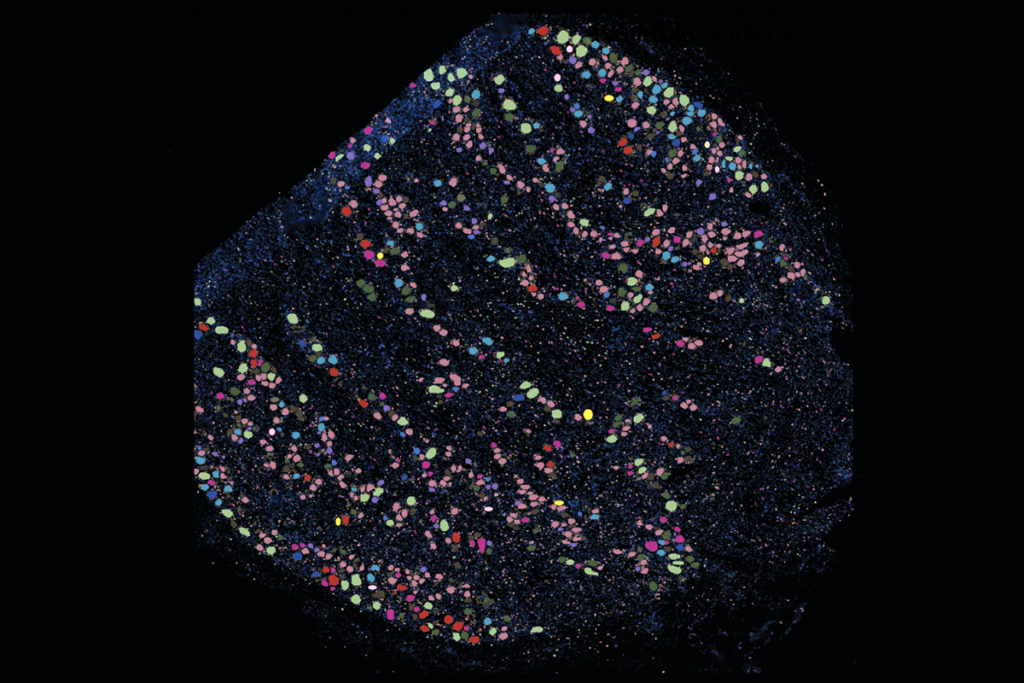
Ernfors was honored for his contributions to classifying the neurons that make up the sensory nervous system in mice. Historically, neuroscientists differentiated among different somatosensory neurons based on a handful of functional features, such as conduction velocity, individual markers and cell morphology, Ernfors says. He and his colleagues have instead classified different types of neurons based on the constellation of genes they express. For example, in one of his most-cited analyses, Ernfors and his colleagues distinguished 622 mouse sensory neurons based on their gene expression patterns.
“Now that we know what kinds of neurons there are, we can establish where they project peripherally, centrally, how they connect to each other and what makes them active or inactive,” Ernfors explains.
Ernfors says he feels “honored” and “humbled” to receive “the most prestigious award in neuroscience,” adding, “The greatest compliment that a scientist can get is recognition from fellow peers, and this is the biggest recognition you can get.”
Ginty was unavailable for an interview but reacted to his win in an autobiographical statement he prepared for the Brain Prize and shared with The Transmitter: “Being honored with the 2026 Brain Prize feels overwhelming, and I’m almost embarrassed to accept it, because my lab’s work reflects collaboration with many talented, dedicated individuals.”
Ginty’s research has explored the mechanisms behind the development and function of somatosensory neurons. In particular, he and his colleagues have used genetic tools to understand how sensory neurons in mice distinguish among different types of touch, allowing for a “deeper understanding of mechanisms of touch neuron activation, as well as organizational principles of spinal cord circuitry and ascending neural pathways for touch and pain,” he wrote in the statement.
“Ginty did pioneering work looking at the development of these different types of neurons and identifying the programs of gene expression that define them,” says Alison Barth, professor of life sciences at Carnegie Mellon University, who researches somatosensation in mice.
Ginty’s lab has also explored how various tactile stimuli are converted into neural signals and transmitted to the spinal cord and brain.
“We had some idea of what various touch receptors looked like, but nothing to the detail and elegance of what David Ginty has been able to achieve,” says Peggy Mason, professor of neurobiology at the University of Chicago, who has studied the cellular mechanisms of pain modulation.
Ginty’s research has also explored the mechanisms behind sensory dysfunction. He discovered that the mechanisms underlying touch overreactivity in some people with autism lie in the peripheral nervous system rather than the brain, insights that are currently being tested therapeutically.