- A gene therapy administered after birth reverses disruptions in brain development observed in mice missing the FOXG1 gene. Spectrum previously reported on researchers whose work focuses on their own children’s conditions, as Soo-Kyung Lee has done with FOXG1 syndrome. The Scientist
- “Our findings highlight that patterns of age-related changes in the brain may be influenced by demographic and phenotypic characteristics, and thus future studies should consider these when examining or controlling for age effects in analyses.” Human Brain Mapping
- Zebrafish with autism-linked genetic variants show both altered auditory responses—hypersensitivity and delayed habituation—and brain-wide neuronal activity changes, according to a preprint. bioRxiv
Add us as a Preferred Source on Google
Set us as a Preferred Source to see The Transmitter more prominently in your Google Search results.
FOXG1 gene therapy; oligodendrocytes; stereotyped movements
Here is a roundup of autism-related news and research spotted around the web for the week of 23 September.
By
Jill Adams
24 September 2024 | 2 min read
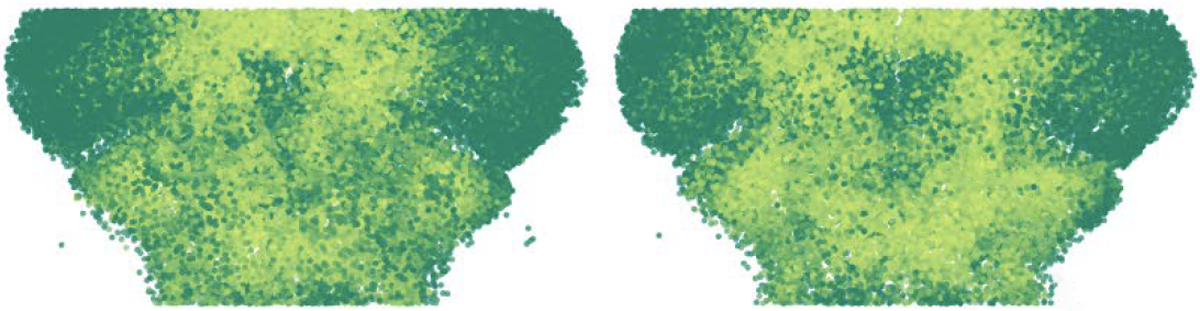
Slow learning: Zebrafish missing the autism-linked gene CNTNAP2A (right panel) display lower (light green) functional connectivity in several forebrain areas during an acoustic habituation task than do controls (left panel).
- Mice missing the autism-linked gene SCN2A in their oligodendrocytes show altered myelination and, in turn, changes in neuronal excitability and synaptic plasticity, according to a preprint. Spectrum has reported on the role of oligodendrocytes in autism. Research Square
- Infants with two or more of a suite of behavioral differences are more likely to have autism or other developmental conditions at age 3 than are those without these differences. Autism
- A machine-learning algorithm trained on videos of autistic children’s stereotyped movements can objectively recognize the presence and degree of such motor behaviors. JAMA Network Open
tags:
Explore more from The Transmitter
Sylvia Fogel, reshaping U.S. autism research strategy
By
Brady Huggett
17 September 2026 | 1 min read
Human brain organoids flourish in emptied mouse cortex
By
Brianna Abbott
16 September 2026 | 6 min read
What if Hegel were a neuroscientist?
By
Paul Middlebrooks
16 September 2026 | 1 min read
Cite this article: