Deep dive: Maternal antibodies that target a protein called CASPR2 are linked to autism, according to previous research. Two new papers offer deeper insight into that connection. One found that in-utero exposure to anti-CASPR2 antibodies leads to a decrease in both parvalbumin-positive interneurons and inhibitory synapses in the hippocampus in male mice. The other investigated novel variants of anti-CASPR2 antibodies—ones that recognize different epitopes of the protein, which resulted in a range of behavioral phenotypes in male mice. The Transmitter has covered previous work on anti-CASPR2 antibodies.
Plumbing the link between anti-CASPR2 antibodies and autism; and more
Here is a roundup of autism-related news and research spotted around the web for the week of 1 December.
By
Jill Adams
2 December 2025 | 1 min read
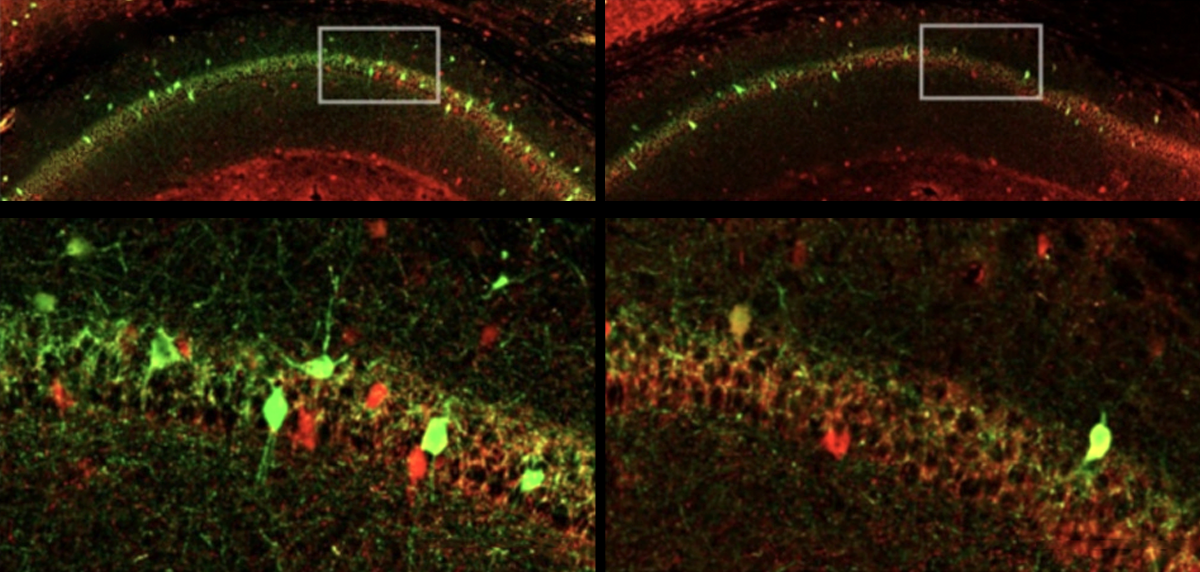
Protein paucity: Mice exposed to anti-CASPR2 antibodies in utero (right panels) show decreased expression of parvalbumin (green) compared with control mice (left panels).
More autism research we spotted:
- “Autism-associated SCN2A haploinsufficiency disrupts in vivo dendritic signaling and impairs flexible decision-making” Proceedings of the National Academy of Sciences
- “Cross-setting replication of the associations between maternal health and autism” Journal of the American Academy of Child & Adolescent Psychiatry
tags:
Explore more from The Transmitter

Structural brain changes in a mouse model of ATR-X syndrome; and more
By
Jill Adams
19 August 2025 | 2 min read

Cite this article: