Industry
Recent articles

How will the field’s relationship to industry change over the next decade? Will a larger neurotechnology sector emerge?
Interactions between academic neuroscience and industry will grow, and the neurotech sector will expand, most survey respondents predict. The current funding upheaval in the United States may accelerate this trend as the field searches for new funding models.
How will the field’s relationship to industry change over the next decade? Will a larger neurotechnology sector emerge?
Interactions between academic neuroscience and industry will grow, and the neurotech sector will expand, most survey respondents predict. The current funding upheaval in the United States may accelerate this trend as the field searches for new funding models.

The state of neuroscience in 2025: An overview
The Transmitter presents a portrait of the field through four lenses: its focus, its output, its people and its funding.
The state of neuroscience in 2025: An overview
The Transmitter presents a portrait of the field through four lenses: its focus, its output, its people and its funding.
Explore more from The Transmitter

Researchers retract multisensory learning paper after failed replications
Even though one set of experiments did not hold up, the authors stand by the original conclusions of the work and plan to resubmit it as a new paper.
Researchers retract multisensory learning paper after failed replications
Even though one set of experiments did not hold up, the authors stand by the original conclusions of the work and plan to resubmit it as a new paper.
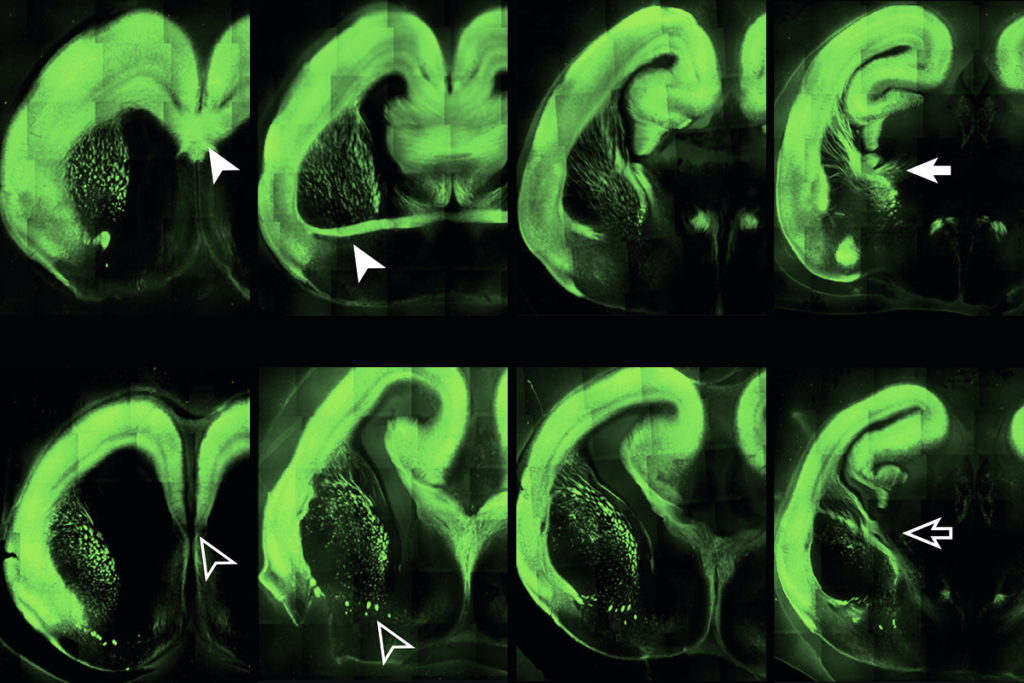
Cortical evolution, ZBTB18, and more
Here is a roundup of autism-related news and research spotted around the web for the week of 30 March.
Cortical evolution, ZBTB18, and more
Here is a roundup of autism-related news and research spotted around the web for the week of 30 March.

Letter asks Congress for nearly $500 million to sustain BRAIN Initiative
The one-time boost would help counter the planned end this year to one of the program’s long-standing funding streams, which will result in a $195 million drop in funding for fiscal year 2027.
Letter asks Congress for nearly $500 million to sustain BRAIN Initiative
The one-time boost would help counter the planned end this year to one of the program’s long-standing funding streams, which will result in a $195 million drop in funding for fiscal year 2027.