Information processing
Recent articles
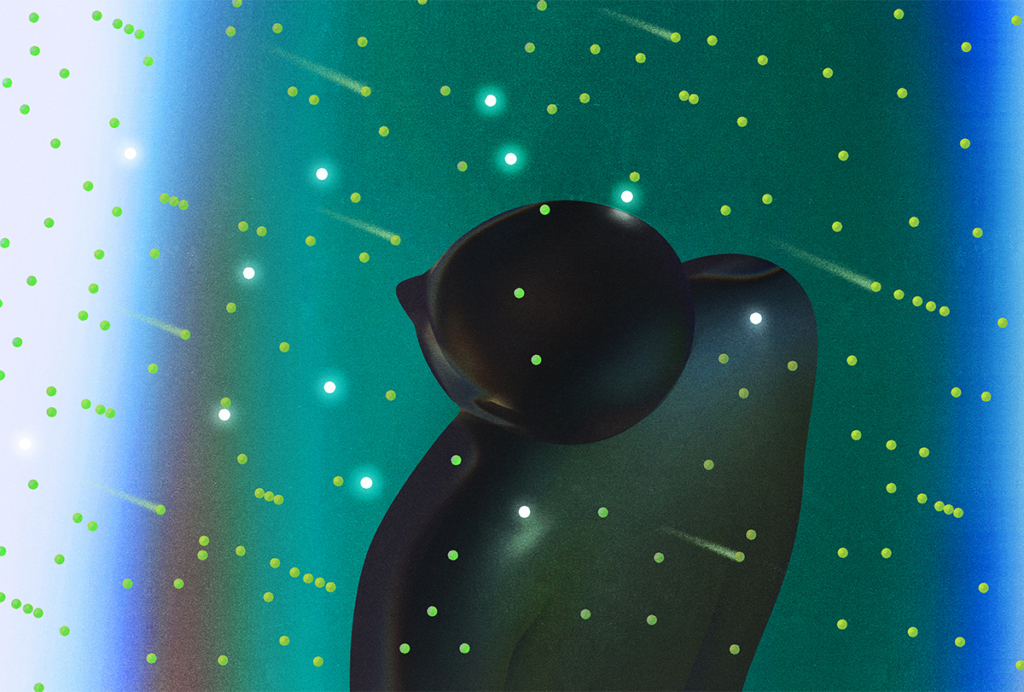
Explaining ‘the largest unexplained number in brain science’: Q&A with Markus Meister and Jieyu Zheng
The human brain takes in sensory information roughly 100 million times faster than it can respond. Neuroscientists need to explore this perceptual paradox to better understand the limits of the brain, Meister and Zheng say.
Explaining ‘the largest unexplained number in brain science’: Q&A with Markus Meister and Jieyu Zheng
The human brain takes in sensory information roughly 100 million times faster than it can respond. Neuroscientists need to explore this perceptual paradox to better understand the limits of the brain, Meister and Zheng say.
Explore more from The Transmitter
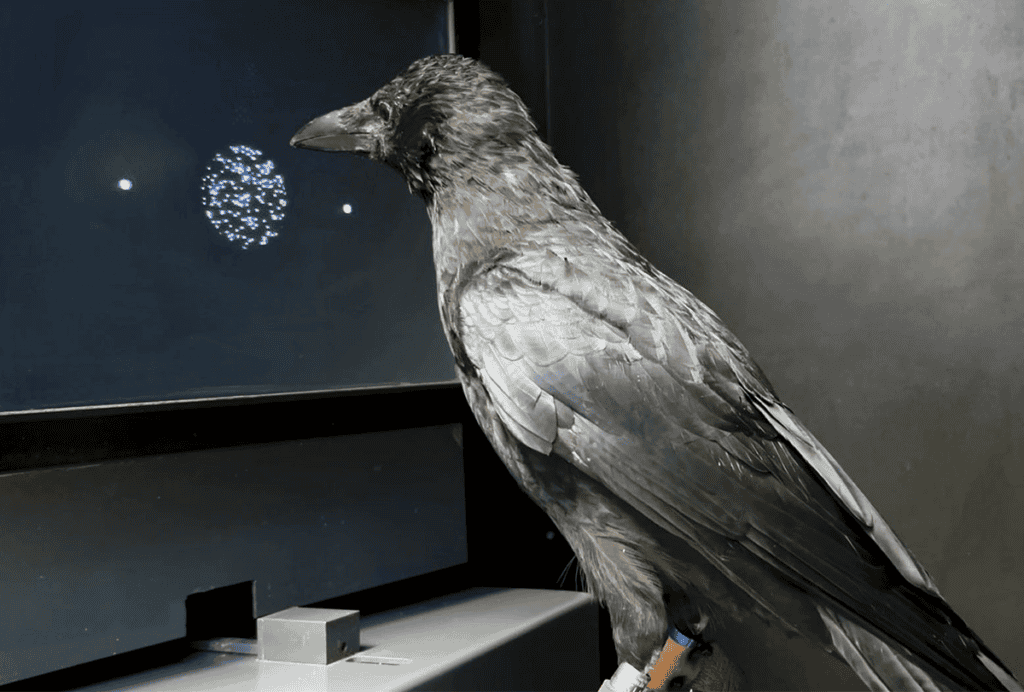
Crows have brains ‘in the fast lane’
The birds accurately complete decision-making tasks twice as fast as primates, although their endbrains look considerably different.
Crows have brains ‘in the fast lane’
The birds accurately complete decision-making tasks twice as fast as primates, although their endbrains look considerably different.

Prevalence of profound autism declines with new definition
The updated, more precise definition used in a CDC study includes adaptive scores.
Prevalence of profound autism declines with new definition
The updated, more precise definition used in a CDC study includes adaptive scores.
Is it time for neuroscience to shift its focus from a computational mind to a navigating mind?
Andrea Hiott explains her navigational approach to the mind, and why now is the time to embrace seemingly paradoxical findings in neuroscience.
Is it time for neuroscience to shift its focus from a computational mind to a navigating mind?
Andrea Hiott explains her navigational approach to the mind, and why now is the time to embrace seemingly paradoxical findings in neuroscience.