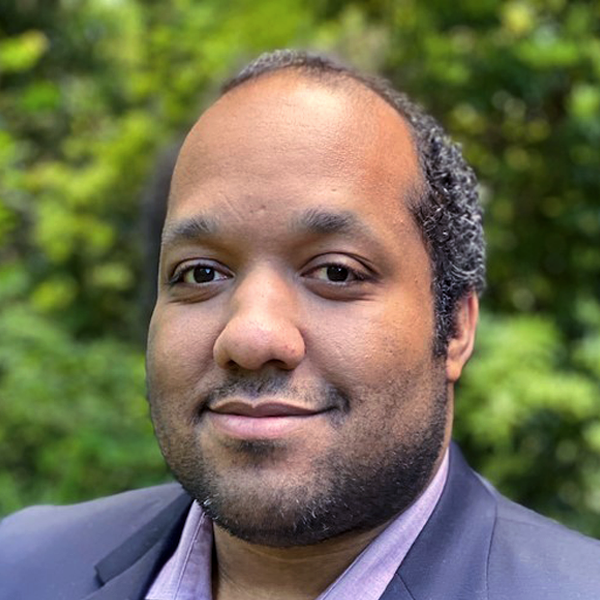
Timothy E Brown.

Timothy E. Brown

Assistant professor of bioethics and humanities
University of Washington School of Medicine

Timothy E. Brown is assistant professor of bioethics and humanities at the University of Washington School of Medicine. He leads ethics engagement within several large-scale National Institutes of Health and National Science Foundation-funded neuroscience projects, serves as a bioethics consultant for the Allen Institute and sits on the board of directors at the International Neuroethics Society. 

Brown works at the intersection of biomedical ethics, philosophy of technology, (Black/Latinx/queer) feminist thought, and aesthetics. His research explores the potential impact of implanted neurotechnologies on end users’ sense of identity and agency. His work also explores the potential for neuroscientific research to worsen or repair social harms. Finally, Brown’s approach to research is interdisciplinary and embedded, with the aim of encouraging deeper, more meaningful collaborations between humanists and engineers.
From this contributor

Explore more from The Transmitter

Illustration of pixelated eye and stacks of paper

Writing science that humans and machines can read

Large language models are now routinely used to search, summarize and synthesize the literature at scales impossible for any individual researcher—yet scientific publishing has not adapted to that reality.

By Rachel Parkinson
15 June 2026 | 7 min read
Mother mouse and her offspring.

Maternity induces lasting gene-expression changes in mouse brains

The findings add to a small but growing body of research on neurological changes linked to pregnancy, birth and parenting.

By Amber Dance
12 June 2026 | 5 min read
Map of socioeconomic opportunity in the United States next to visualizations of functional connectivity and structure in sensory and motor cortices.

IQ’s link to brain structure, function in children may be a mirage

A child’s socioeconomic status, screen time and amount of sleep all show stronger associations with measures of brain structure and function, according to an imaging study of nearly 12,000 9- to 10-year-olds.

By Natalia Mesa
11 June 2026 | 5 min read