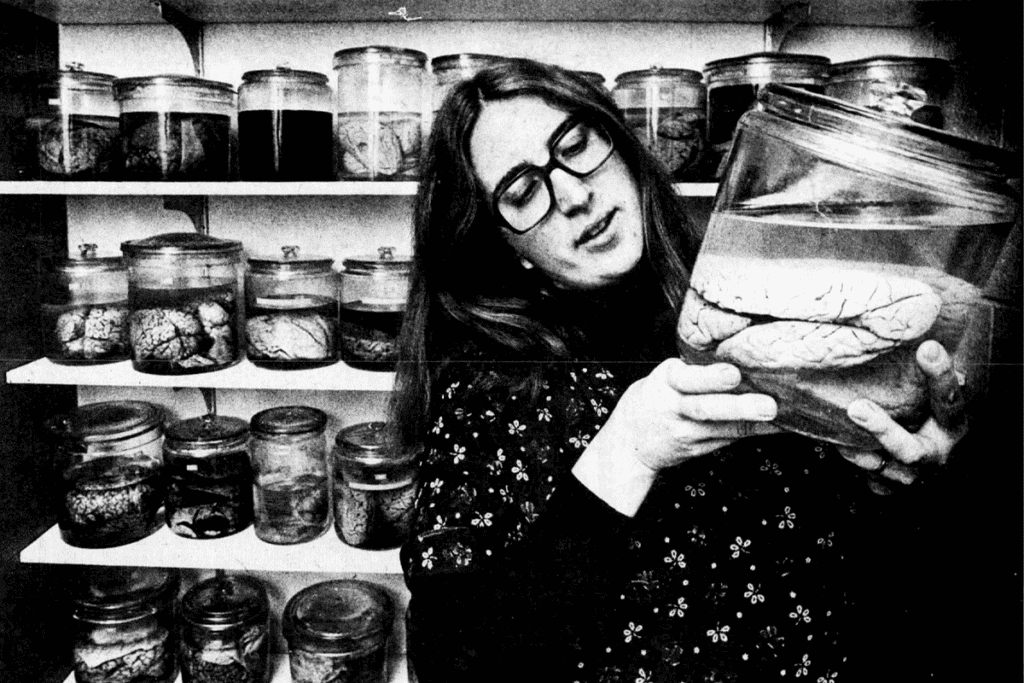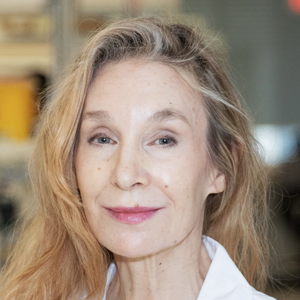
Sheena Josselyn is senior scientist at the Hospital for Sick Children (SickKids) and professor of psychology and physiology at the University of Toronto in Canada. She holds a Canada research chair in brain mechanisms underlying memory, and she is a fellow of the Royal Society of Canada and of the U.S. National Academy of Medicine.
Josselyn is interested in understanding how the brain encodes, stores and uses information. Her primary model organism is mice. Because several conditions (ranging from autism to Alzheimer’s disease) may stem from disrupted information processing, this basic knowledge in mice is critical not only for understanding typical human brain function, but for developing new treatment strategies for these conditions.
She received her undergraduate degrees in psychology and life sciences and an M.Sc. in clinical psychology from Queen’s University in Kingston, Canada. She received a Ph.D. in neuroscience/psychology from the University of Toronto, with Franco Vaccarino as her supervisor. She conducted postdoctoral work with Mike Davis of Yale University and Alcino Silva of the University of California, Los Angeles.
Josselyn has received numerous awards, including the Innovations in Psychopharmacology Award from the Canadian College of Neuropsychopharmacology, the Effron Award from the American College of Neuropsychopharmacology, the Andrew Carnegie Prize in Mind and Brain Sciences, and the Betty & David Koetser Award for Brain Research.