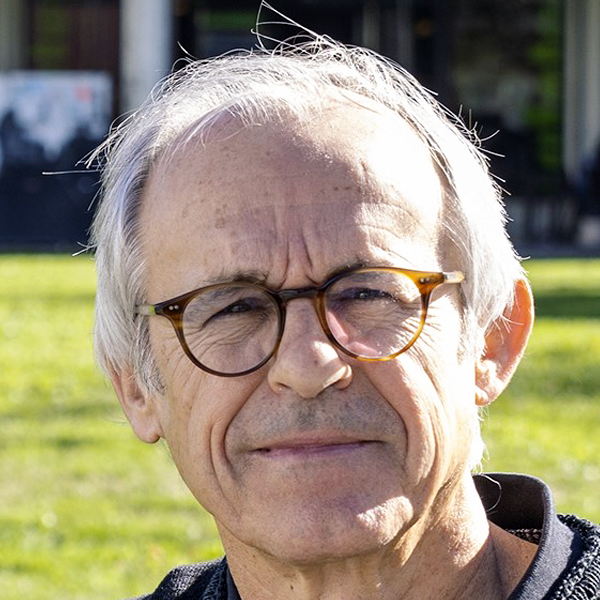
Carlos Matute is professor of neuroscience at the University of the Basque Country (UPV/EHU) and a member of the Network Center for Biomedical Research in Neurodegenerative Diseases (CIBERNED) and the Biobizkaia Health Research Institute. His research focuses on glial biology in health and disease, with influential contributions to understanding how neurotransmitter signaling regulates oligodendrocyte function and survival. His current work explores myelin as a dynamic and potentially metabolic structure, combining human physiology, advanced imaging and disease models to investigate its role in brain energy homeostasis and neurodegeneration.
He is founder and former scientific director of the Achucarro Basque Center for Neuroscience, president of the Spanish Society for Neuroscience (SENC), secretary general of Network Glia and a member of Academia Europaea.
Matute trained in physics and neuroscience at the University of Zaragoza and carried out postdoctoral research at the University of Zurich and the University of California, Irvine. He has also held visiting positions at the Max Planck Institute for Biophysical Chemistry and the Albert Einstein College of Medicine.