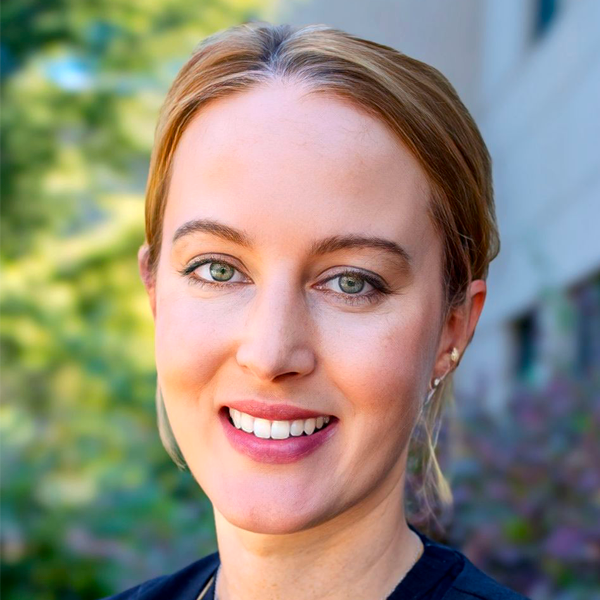
Katrin Franke.

Katrin Franke

Senior research scientist, Stanford University School of Medicine
Research group leader, Institute for Ophthalmic Research

Katrin Franke is a senior research scientist at Stanford University School of Medicine and a research group leader at the Institute for Ophthalmic Research in Tübingen, Germany. Her research combines systems neuroscience, computational modeling and machine learning to understand how neural circuits in the retina and cortex process visual information.

Before joining Stanford, Franke led an independent research group at the Bernstein Center for Computational Neuroscience in Tübingen, where she investigated how retinal and cortical networks enable robust visual perception. Her work has been recognized with several awards, including an ERC Starting Grant (2023), the Schilling Award of the German Neuroscience Society (2021), and membership in the EMBO Young Investigator Programme (2022).

Franke earned her Ph.D. in neuroscience at the International Max Planck Research School and the University of Tübingen (summa cum laude).
Explore more from The Transmitter

Research image of the mouse dentate gyrus.

Microglia implicated in infantile amnesia

The glial cells could explain the link between maternal immune activation and autism-like behaviors in mice, but methodological challenges prompt questions about the new evidence.

By Lauren Schneider
12 February 2026 | 5 min read
Research image of myelinated axons.

Oligodendrocytes need mechanical cues to myelinate axons correctly

Without the mechanosensor TMEM63A, the cells cannot deposit the appropriate amount of insulation, according to a new study.

By Calli McMurray
11 February 2026 | 5 min read

Modern AI is simply no match for the complexity likely required for harboring consciousness, says Jaan Aru

He argues that our brain’s computations are of a completely different nature than any artificial intelligence because they take place across many spatial and temporal scales and are inextricably entwined with biological materials.

By Paul Middlebrooks
11 February 2026 | 1 min read

privacy consent banner

Privacy Preference

We use cookies to provide you with the best online experience. By clicking “Accept All,” you help us understand how our site is used and enhance its performance. You can change your choice at any time. To learn more, please visit our Privacy Policy.