
Kim Stachenfeld.

Kim Stachenfeld

Staff research scientist, Google DeepMind
Adjunct assistant professor, Columbia University

Kim Stachenfeld is staff research scientist at Google DeepMind and adjunct assistant professor at Columbia University’s Center for Theoretical Neuroscience. Her research bridges neuroscience and artificial intelligence, focusing on AI-inspired models of neural computation and the use of AI tools to understand brain data.

Stachenfeld earned her Ph.D. in computational neuroscience from Princeton University in 2018 and a B.S. in chemical and biological engineering and B.A. in mathematics from Tufts University in 2013. Her work has been featured in The AtlanticQuanta MagazineNautilus and MIT Technology Review. In 2019, she was recognized by MIT Technology Review as one of its Innovators Under 35 for her research on predictive representations in the hippocampus.

Explore more from The Transmitter

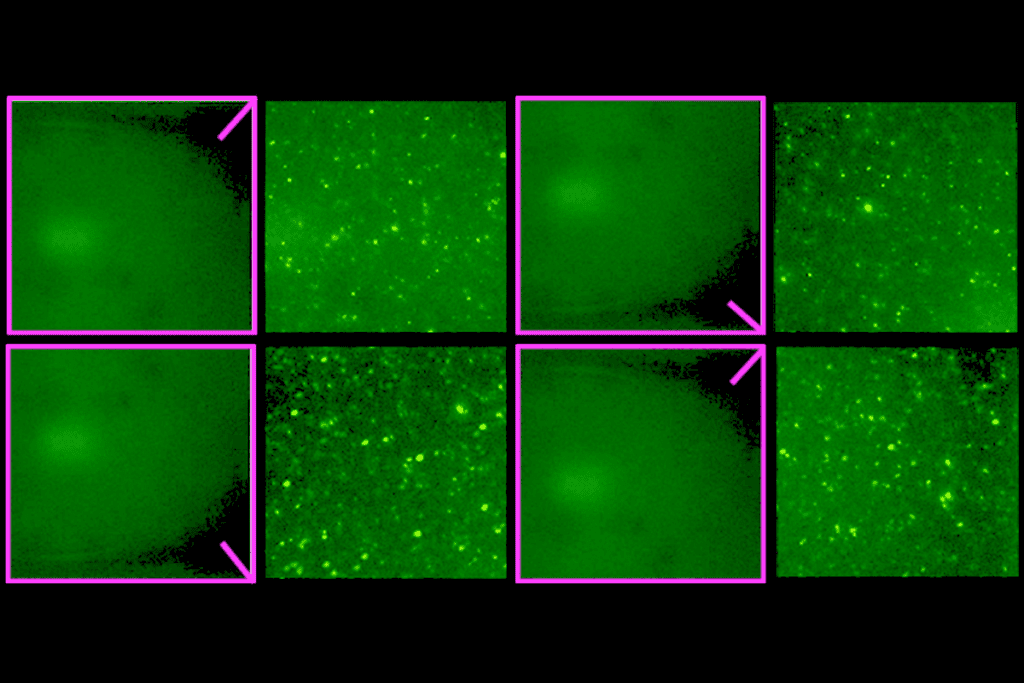
Research image of inputs into a single neuron in the mouse visual cortex

‘Unbelievably beautiful’ evidence extends Nobel Prize-winning model of vision

Orientation tuning—the ability to distinguish a horizontal line from a vertical one or something in between—originates in the visual cortex, according to new mouse synapse imaging experiments.

By Claudia López Lloreda
29 May 2026 | 5 min read
Illustration of people connecting basic science.

Bringing basic biology back to INSAR

As the International Society for Autism Research has grown over the past two decades, basic science has become less central, Christine Wu Nordahl says. This year, she and other meeting organizers aimed to change that.

By Diana Kwon
28 May 2026 | 6 min read
Illustration of scale balancing Petri dish and test tubes.

Every neuroscience lab needs an ethicist

The ethics issues that arise in neuroscience research are usually novel, unresolved and understudied. Embedding ethicists in labs helps scientists navigate these challenges and develop strategies in real time to prevent harm.

By Timothy E. Brown
27 May 2026 | 5 min read