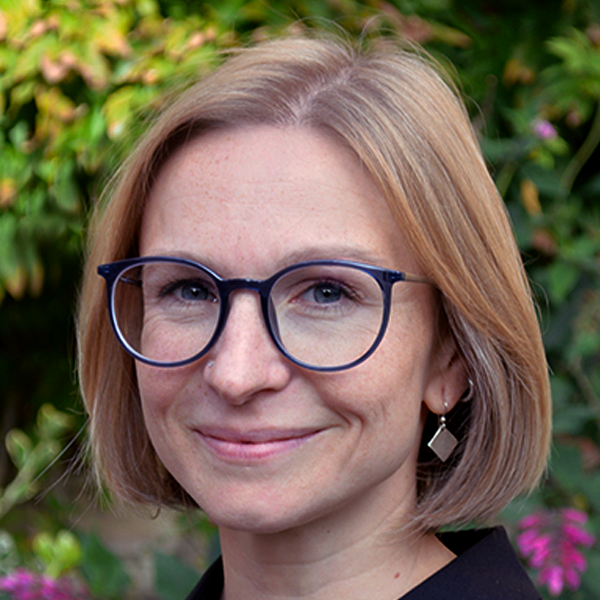
Rachel Parkinson.

Rachel Parkinson

Lecturer, Queen Mary University of London
Schmidt AI in Science Fellow, University of Oxford

Rachel Parkinson is lecturer in computational ecotoxicology and neuroethology at Queen Mary University of London and a Schmidt AI in Science Fellow at the University of Oxford. Her research integrates neurophysiology, behavior and computational modeling to understand how environmental stressors affect insect sensory systems and pollinator health. She develops AI-driven tools to accelerate bioscience research, including equipment for high-throughput behavioral toxicology and a large language model pipeline for systematic reviews.

Parkinson earned her Ph.D. at the University of Saskatchewan, where she investigated how pesticides alter visual motion circuits and escape behaviors in locusts, under the supervision of Jack Gray. As a Grass Fellow at the Marine Biological Laboratory, she demonstrated pesticide-induced disruption of orientation behavior in honeybees. She later held a Royal Society Newton International Fellowship at the University of Oxford, studying taste perception in bees with Geraldine Wright.
Explore more from The Transmitter

Illustration with silhouettes of a human, bat and nonhuman primate.

Neuroscience has a species problem

If our field is serious about building general principles of brain function, cross-species dialogue must become a core organizing principle rather than an afterthought.

By Nanthia Suthana
16 February 2026 | 7 min read
Gloved hand reaches out to touch a mouse.

This paper changed my life: Ishmail Abdus-Saboor on balancing the study of pain and pleasure

A 2013 Nature paper from David Anderson’s lab revealed a group of sensory neurons involved in pleasurable touch and led Abdus-Saboor down a new research path.

By Ishmail Abdus-Saboor
13 February 2026 | 7 min read
A boy and girl run in a field.

Sex bias in autism drops as age at diagnosis rises

The disparity begins to level out after age 10, raising questions about why so many autistic girls go undiagnosed earlier in childhood.

By Helena Kudiabor
13 February 2026 | 4 min read

privacy consent banner

Privacy Preference

We use cookies to provide you with the best online experience. By clicking “Accept All,” you help us understand how our site is used and enhance its performance. You can change your choice at any time. To learn more, please visit our Privacy Policy.