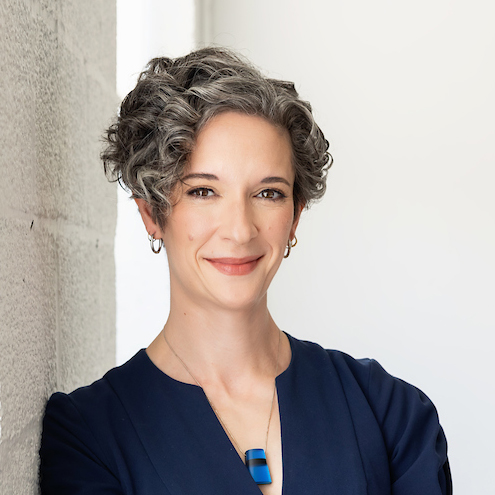
Theresa Desrochers.

Theresa Desrochers

Rosenberg Family Assistant Professor of Brain Science
Brown University

Theresa Desrochers is Rosenberg Family Assistant Professor of Brain Science in the neuroscience department at Brown University. Her lab studies how the brain tracks and controls cognitive and behavioral sequences, such as cooking a meal or making a cup of coffee. In her research, she takes a unique cross-species approach, integrating cellular-level neuroscience insight in animal models with studies of human high-level cognitive function.

She earned a B.S. in neural science and science education from New York University. After teaching science in a public high school for a year, she went on to earn her Ph.D. in Ann Graybiel’s lab at the Massachusetts Institute of Technology, studying the neural basis of habit learning in an animal model. She was then a postdoctoral fellow with David Badre at Brown University, where she studied human cognitive control.
Explore more from The Transmitter

Tatiana Engel explains how to connect high-dimensional neural circuitry with low-dimensional cognitive functions

Neuroscientists have long sought to understand the relationship between structure and function in the vast connectivity and activity patterns in the brain. Engel discusses her modeling approach to discovering the hidden patterns that connect the two.

By Paul Middlebrooks
3 December 2025 | 1 min read

Beyond the algorithmic oracle: Rethinking machine learning in behavioral neuroscience

Machine learning should not be a replacement for human judgment but rather help us embrace the various assumptions and interpretations that shape behavioral research.

By Nedah Nemati, Matthew Whiteway
3 December 2025 | 7 min read
A see-through human brain with circuits inside it.

‘Wired for Words: The Neural Architecture of Language,’ an excerpt

In his new book, Hickok provides a detailed overview of the research into the circuits that control speech and language. In this excerpt from Chapter 5, he shares how meeting his colleague David Poeppel led to them developing the theory for bilateral speech perception.

By Gregory Hickok
2 December 2025 | 8 min read

privacy consent banner

Privacy Preference

We use cookies to provide you with the best online experience. By clicking “Accept All,” you help us understand how our site is used and enhance its performance. You can change your choice at any time. To learn more, please visit our Privacy Policy.