Listen to this story:
0:00
/
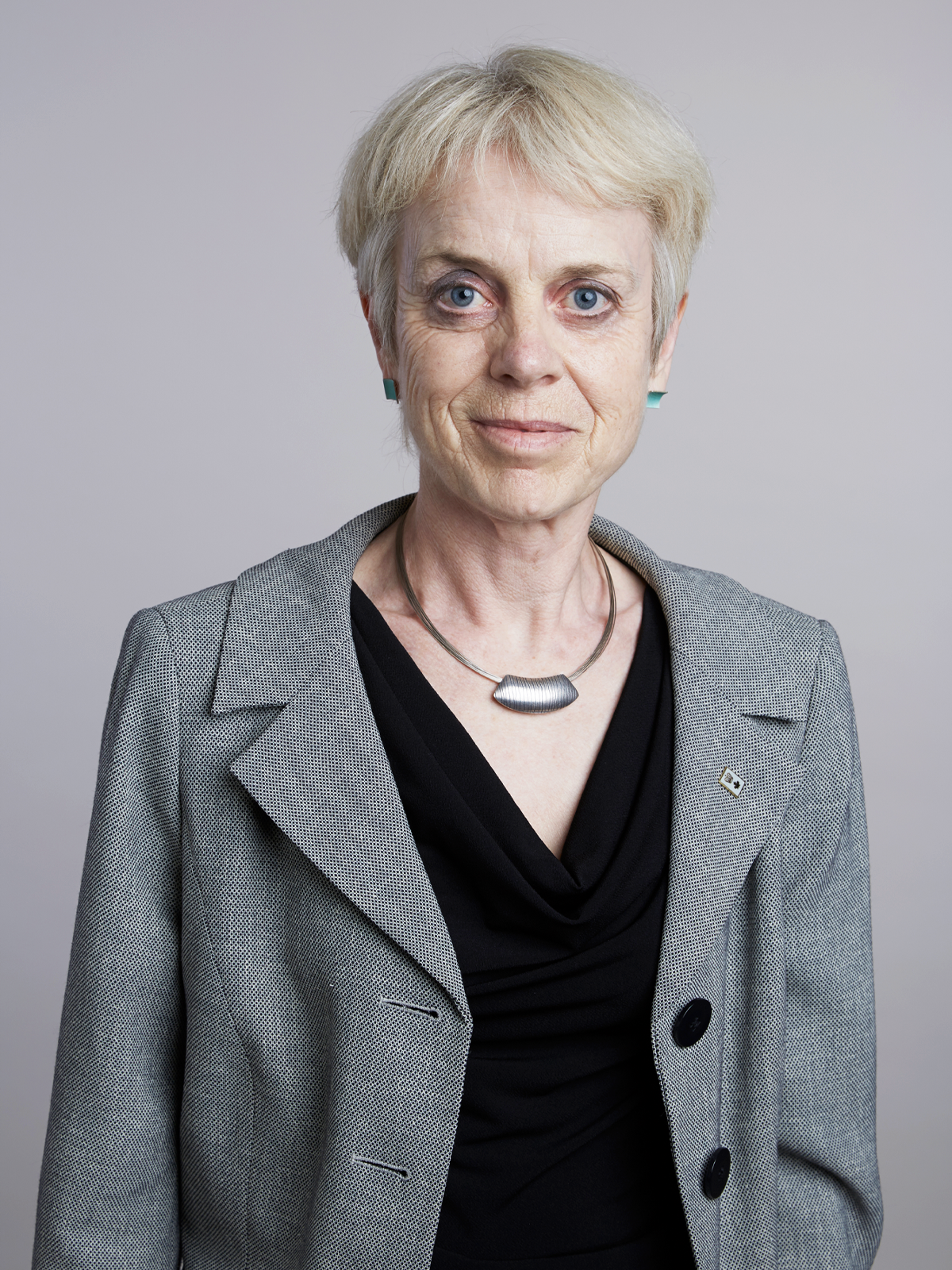
The “intuitive” neuropharmacologist pushed against the status quo.
When Annette Dolphin started studying voltage-gated calcium channels in the 1980s, science was only beginning to learn how these protein complexes facilitate neuronal signaling. By the early 2000s, the community had identified a diverse set of subunits that determine how these channels function, and Dolphin—a neuropharmacologist at University College London—herself had zeroed in on a subset of components known as alpha 2 delta.
In 2005, her group published findings that ultimately helped clarify how alpha-2-delta subunits regulate the traffic of channel proteins to the neuronal membrane. They then linked this function to neuropathic pain and eventually revealed that gabapentin works by modulating this trafficking.
Anthony Dickenson, a fellow neuropharmacologist at UCL and longtime friend of Dolphin’s, was a primary collaborator in the gabapentinoid drug research, combining his pain expertise with Dolphin’s mastery of calcium channel biology. “To go from a molecule to knowing what’s happening in a clinical application—that was really a huge step forward,” he says.
Dolphin—who died of cancer at the age of 74 on 26 January—became a leader in the field of voltage-gated calcium channel research over the course of a five-decade career. Her research, says Gary Stephens, a pharmacologist at the University of Reading and former postdoctoral researcher in the Dolphin Lab, places her “amongst the luminaries.”
D
That disdain for convention would follow her into her academic career. After receiving her B.A. in biochemistry at the University of Oxford in 1973, she enrolled in a neurology Ph.D. program at the Institute of Psychiatry in London. While there, she attended a 1975 meeting of the Physiological Society, where she forced the group to change its requirement that women authors be identified by their full first name; men were identified with first initial only.
She earned her Ph.D. in 1977. For her postdoctoral work, Dolphin joined the laboratory of Paul Greengard, then at Yale University, with the goal of broadening her perspective beyond the clinic. “I knew I needed more basic training in cell signaling pathways,” she recalled in a review for The Journal of Neuroscience.
Dolphin established her research group at St. George’s Hospital Medical School in 1983. By then she had become fascinated by the connection between neurotransmitter-mediated signaling and calcium flux within neurons. Working with postdoctoral fellow Roderick Scott, Dolphin determined that signals generated by neurotransmitters such as GABA and adenosine dampen action-potential-induced calcium influx in cultured rat neurons.
Dolphin and Scott subsequently revealed how various G-protein-coupled receptors modulate voltage-gated calcium channel activity. This interplay remained a major focus of the Dolphin Lab, as it moved to the Royal Free Hospital School of Medicine in 1990 and then to UCL in 1997, where Dolphin stayed for the rest of her career. “A lot of the work that she did in the GPCR modulation of voltage-gated calcium channels was very seminal,” says Damian Bell, director of global scientific affairs at Sophion Bioscience and Dolphin’s former graduate student.
Over the next 20 years, much of her research centered on the subunits that modulate the function of voltage-gated calcium channels and their interactions with other components of the cellular signaling machinery.
Jörg Striessnig, a pharmacologist at the University of Innsbruck and colleague of Dolphin’s, says that her insights into channel biology are particularly impressive given that much of the foundational work was done early in the molecular biology revolution. “She was a very intuitive person and a very good biochemist,” he says. Her work also won her recognition in the broader community—among other honors, Dolphin was elected fellow of the Royal Society in 2015 and served as president of both the British Neuroscience Association and the Physiological Society.
D
Dolphin took her role as a scientific mentor seriously. “There was a core group of us who worked in her lab and were supported by her for 10 to 20 years,” says Manuela Nieto-Rostro, a former postdoc in Dolphin’s lab. Bell says Dolphin “always seemed to have a lot of time and effort that she would give to effectively unknown young scientists coming up.” And Striessnig says that Dolphin’s early support was invaluable for the success of the European Calcium Channel Conference, a recurring international meeting that he and his colleagues in the field have been hosting since 2012.
Still, the desire to push boundaries that she had shown since her youth persisted. Early in her career, “it was actually probably quite difficult for her as a female starting off in science,” Dickenson says. And in a 2006 letter to Nature, she evaluated 10 major science prizes and noted that only 3.2 percent had gone to women, and also highlighted the gender disparity in speaking opportunities. In a subsequent editorial, she wrote that “women need to speak out wherever and whenever they notice discrimination,” and warned that “one should also not assume that progress towards equality is inevitable and irreversible.”
While president of the British Neuroscience Association, Dolphin helped develop policies to promote broader representation of women and other underrepresented groups. “Annette was never afraid to be quite bold in terms of calling people out and in terms of saying, ‘That’s not OK—there’s work to do here,’” says Emma Yhnell, associate dean for equity, diversity and inclusion at Cardiff University, who served on the governing council of the British Neuroscience Association.
Although Dolphin relished her role as mentor, she also maintained clear divisions between her professional and personal life. “To me, she was always Annie,” says Dickenson, who knew Dolphin for more than 40 years. “But as a senior scientist and as a professor, she was always Annette.” This distance seemed a conscious choice; in a 2015 profile, Dolphin said that if she could give advice to her younger self, it would be to “compartmentalise your career away from problems in your personal life.”
That shaped Dolphin’s communication about having Lynch syndrome, a hereditary condition that heightens the risk of certain cancers. She kept her condition a secret outside of her immediate family. Though she had undergone treatment for three prior cancers before the one that claimed her life, “none of us really knew about that until her death,” Bell says.
Frith says Dolphin was concerned that if people knew of her condition, she might lose opportunities for grants or collaborations. “People would’ve just said, ‘Well, is she going to be able to devote her energies to it?’” he says. But before she died, she gave Frith a final request: to spread awareness of Lynch syndrome. Early diagnosis can make cancer treatment less strenuous for patients, and “it’s a good thing to be aware that you should have enhanced monitoring if you’re a higher risk,” Frith says.
To talk of her illness after decades of secrecy, Frith says, was soothing in its own way. “I think it was a great relief to her, actually.”