Lauren Schneider is a science reporter and was The Transmitter‘s news reporting intern in the fall of 2025. She completed her M.A. in journalism in New York University’s Science, Health and Environmental Reporting Program and earned her B.S. in neuroscience at the University of Texas at Austin. She previously interned at JAMA Medical News, and her work has appeared in Texas Monthly, Alzforum, Eos and elsewhere.

Lauren Schneider
Former news reporting intern
The Transmitter
From this contributor
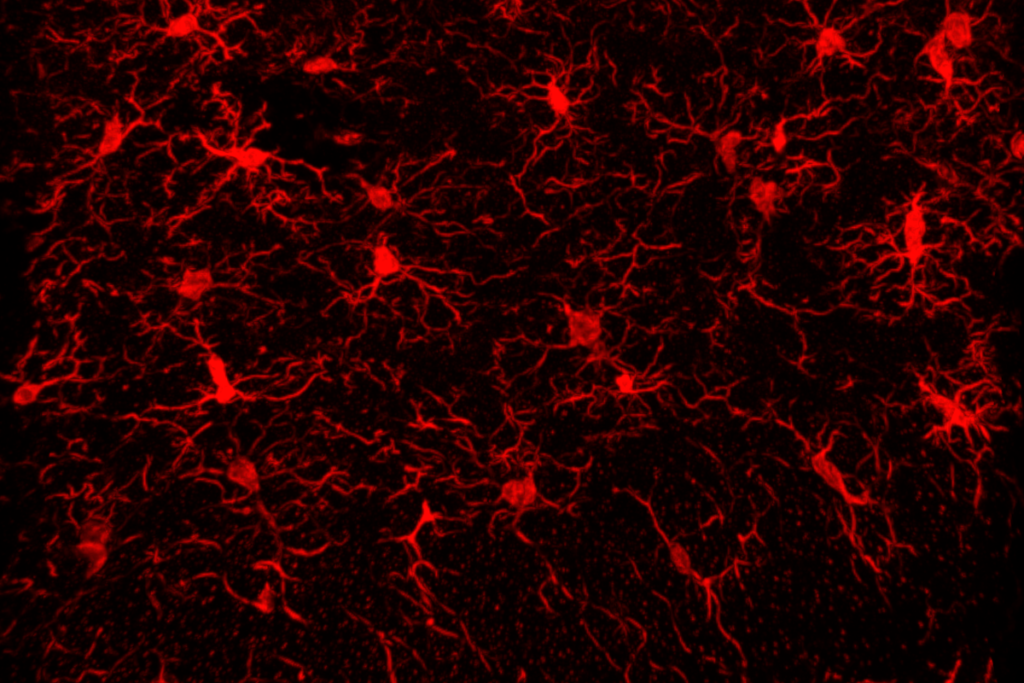
Microglia implicated in infantile amnesia
The glial cells could explain the link between maternal immune activation and autism-like behaviors in mice.
Microglia implicated in infantile amnesia
By
Lauren Schneider
12 February 2026 | 5 min read
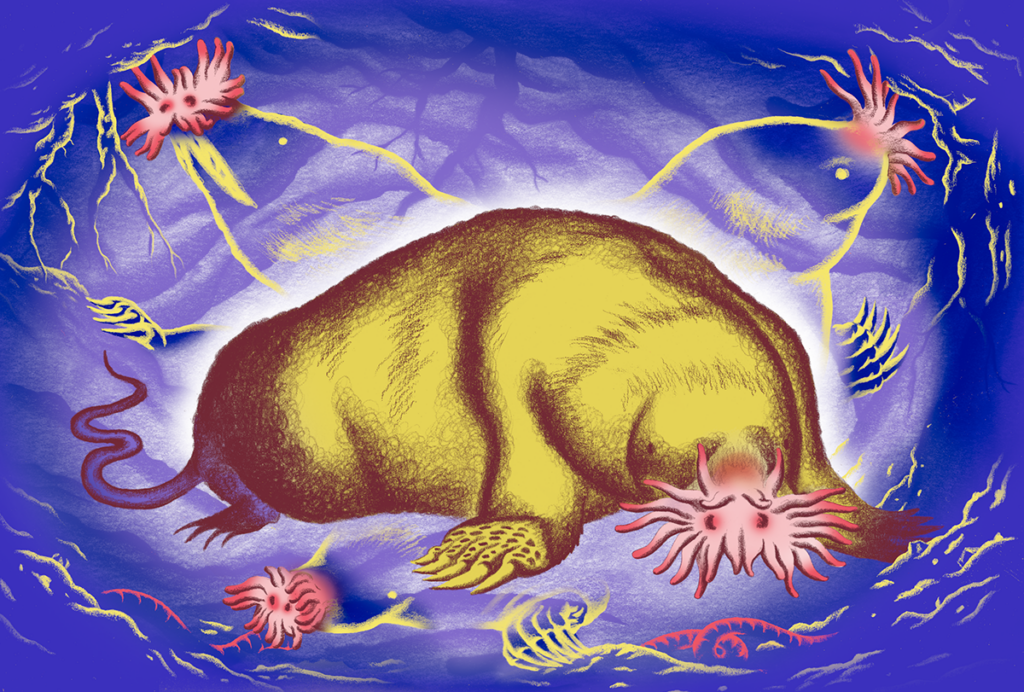
Why star-nosed moles are such fast foragers
“MacArthur genius” Kenneth Catania outlined the physiology behind the moles’ stellar foraging skills two decades ago. Next, he wants to better characterize their food-seeking behavior.
Why star-nosed moles are such fast foragers
By
Lauren Schneider
4 February 2026 | 7 min read

Remembering Adam Kampff, neuroscience educator and researcher
Kampff’s do-it-yourself approach inspired a generation of neuroscientists.
Remembering Adam Kampff, neuroscience educator and researcher
By
Lauren Schneider
24 December 2025 | 6 min read
Waves of calcium activity dictate eye structure in flies
Synchronized signals in non-neuronal retinal cells draw the tiny compartments of a fruit fly’s compound eye into alignment during pupal development.
Waves of calcium activity dictate eye structure in flies
By
Lauren Schneider
12 December 2025 | 0 min watch

Neurophysiology data-sharing system faces funding cliff
After the primary grant supporting Neurodata Without Borders ends in March 2026, the platform may no longer be maintained or kept up to date.
Neurophysiology data-sharing system faces funding cliff
By
Lauren Schneider
17 November 2025 | 5 min read
Explore more from The Transmitter
Commentary: Citation graphs may underestimate neuroscience’s influence on AI
An alternative, albeit less quantitative, way to trace this history is through the people who carried ideas between the fields.
Commentary: Citation graphs may underestimate neuroscience’s influence on AI
An alternative, albeit less quantitative, way to trace this history is through the people who carried ideas between the fields.
By
Anthony Zador
26 October 2026 | 5 min read
Commentary: The rising absolute number of neuro-inspired AI papers represents a substantial footprint
Many of the design choices present in the current generation of artificial-intelligence tools parallel purported properties of the brain.
Commentary: The rising absolute number of neuro-inspired AI papers represents a substantial footprint
Many of the design choices present in the current generation of artificial-intelligence tools parallel purported properties of the brain.
By
Kim Stachenfeld
26 October 2026 | 2 min read

Examining the bridge between neuroscience and AI
A citation analysis reveals that the connection between the two fields is real and gaining momentum. But it’s also narrow and tool-heavy; we need to find ways to widen it.
Examining the bridge between neuroscience and AI
A citation analysis reveals that the connection between the two fields is real and gaining momentum. But it’s also narrow and tool-heavy; we need to find ways to widen it.
By
Renato Duarte
26 October 2026 | 12 min read