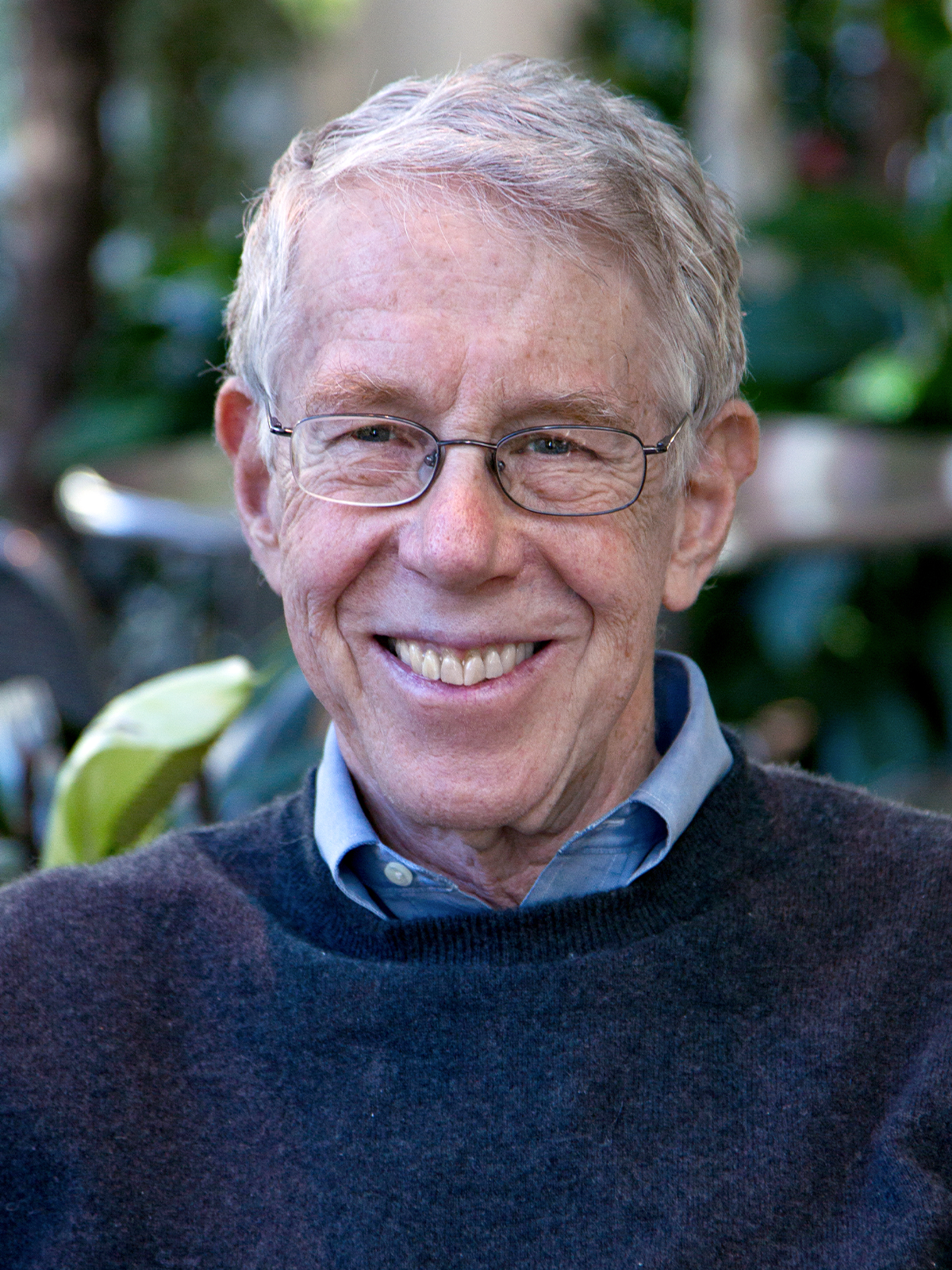
Pain pioneer: Howard Fields helped establish pain as a field of research before becoming a leading figure in addiction research.
Courtesy of Susan Merrell / UCSF
In 1967, Howard Fields was drafted into the U.S. military and stationed at the Walter Reed Army Institute of Research in Silver Spring, Maryland. It was the height of the Vietnam War, and Fields, who had recently graduated from Stanford University with an M.D. and Ph.D., was assigned to treat wounded soldiers.
Among his patients was a man with median nerve causalgia, a painful condition caused by nerve damage following physical trauma. Treatment options for pain were limited at the time, and Fields decided to try what he later recalled as “this strange therapy” that electrically stimulated the peripheral nerve. “The results were dramatic,” Fields wrote in an autobiographical narrative. “Immediate, complete relief lasting for several hours.”
His experience with the Vietnam War would guide his career in research. “He saw a lot of trauma,” says Jennifer Mitchell, professor of neurology at the University of California, San Francisco (UCSF), who was a graduate student in Fields’ lab. “I think he was compelled to help people that were suffering.”
Fields died of complications from prostate cancer on 1 May 2026, at the age of 86. He spent his career mapping the pain-modulating circuits in the central nervous system, and his lab was the first to demonstrate the efficacy of opioids for neuropathic pain and topical lidocaine for postherpetic neuralgia. Later, he pivoted to studying addiction and mapped out the mechanisms by which opioids co-opt reward circuitry.
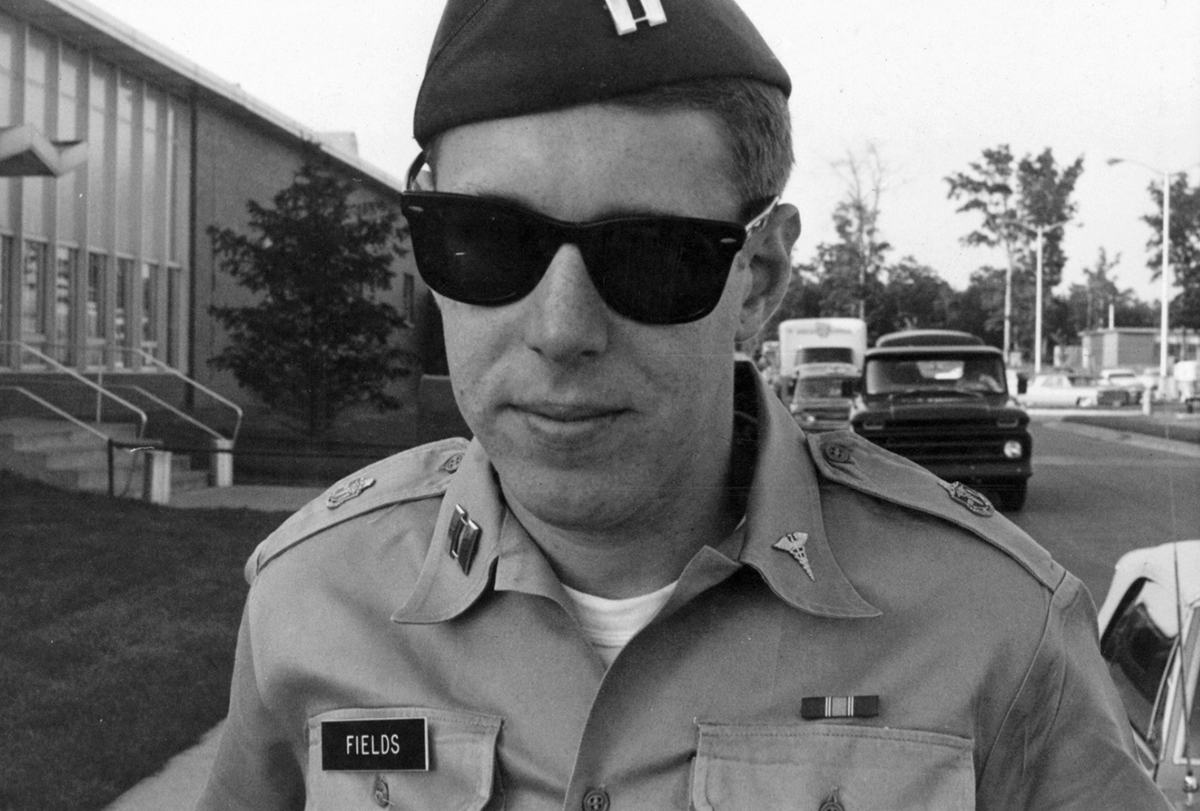
On duty: Fields served in the U.S. military during the Vietnam War, from 1965 to 1967.
Courtesy of Gabriel Fields
His work around the physiology and anatomy of pain circuits made Fields “a giant in the field,” says Mary Heinricher, professor of neurological surgery and biomedical engineering at Oregon Health & Science University, who did a postdoctoral fellowship with Fields. In fact, Heinricher adds, “It wasn’t really a field of research before his generation.”
F
ields was born on 12 December 1939 on the South Side of Chicago. Early on, he wasn’t a strong student; he often skipped class and, in fact, never graduated from high school, says his son, Gabriel Fields. His parents enrolled him in a junior college with a more open curriculum when he was 16, and he gained focus. In 1956 he enrolled at the University of Chicago, thanks to his connection with several alumni family members, his son says. Fields studied biology and, in his final year of college, developed an interest in neurophysiology. He enrolled in an M.D.-Ph.D. program at Stanford University and worked under Donald Kennedy, studying the neurophysiology of the crayfish abdominal stretch receptor. While at Stanford, he met his wife, Carol Felts, with whom he had Gabriel and also a daughter, Rima Johnson; they all survive him.
Fields’ time at Stanford had awakened an interest in the 1960s counterculture, and he moved to Berkeley, California, when he started his lab at UCSF in 1972. Allan Basbaum, professor of anatomy at UCSF and a former postdoctoral researcher in Fields’ lab, recalls being shocked when he attended a dinner at Fields’ house in Berkeley. “There was music blasting,” Bausbaum says. “He was a bit of a hippie,” though he kept his demeanor in the lab buttoned-up, especially later in life.
At UCSF, Basbaum and Fields used neuroanatomical tracing to show that pain-modulating signals travel from the periaqueductal gray through the rostral ventromedial medulla to the spinal cord dorsal horn. Together they wrote a 1978 review in the Annals of Neurology about this work—to date, it has been cited about 1,100 times—and their model of the brain and spinal cord pain pathways is still “largely sustained,” Basbaum says.Overall, they published nearly 40 papers together, most of them focused on showing that the system they had mapped indeed mediated pain relief produced by opioids.
Fields, working with Jon Levine and other colleagues, also showed that the opioid antagonist naloxone blocks placebo analgesia, providing the first direct evidence that endogenous opioids modulate pain in humans and uncovering a biological mechanism for the placebo effect. “That was big,” Basbaum says, and somewhat controversial—previously, people had considered the placebo effect to be purely a psychological phenomenon.
Fields would go on to tease out the functional cell classes in descending pain control, and the direct and indirect actions of opioids on the circuit, work done with Heinricher and Peggy Mason, then a postdoctoral researcher in Fields’ lab and today professor of neurobiology at the University of Chicago. They identified two opposing neuron types within the rostral ventromedial medulla: “on-cells,” which facilitate pain, and “off-cells,” which suppress it. They then showed that opioids work by simultaneously activating the latter and silencing the former, elucidating that the brain is able to suppress pain as well as amplify it.
F
ields was thin and stood 6 feet, 2 inches tall, with a wry humor and “a cackle of a laugh,” Mitchell says. He preferred to be around “people that were really challenging, whether it was challenging the political status or challenging traditional science. He wanted people to think outside the box.”
He was known for being warm and generous with both his resources and time. He had an “intellectual curiosity,” and speaking with him “generated all sorts of ideas” that others would take back to their own laboratories, Heinricher says.
But he also could be intense and incisive. “He was scientifically demanding, intellectually rigorous,” Mitchell says. “He would speak out if he didn’t think somebody’s data were up to snuff. He had no problem calling you out and explaining to you what you’ve done wrong,” whether that was in the lab or during a seminar. Yet he had “zero airs” about him, Mason says.
Fields’ pivot to the study of addiction was a natural extension of his pain research and his interest in reward mechanisms, his son says. Over time, Fields became interested in the cognitive and emotional component of pain, Basbaum says, nailing down that the anterior cingulate cortex, which plays a crucial role in addiction, is necessary to produce the negative affective component of pain.
Fields “became known for [leading] this cadre of people” that studied animal behavior and decision-making in awake, behaving animals, Mitchell says. He, along with Saleem Nicola, discovered the circuit by which certain cues trigger reward-seeking behavior, specifically how the basolateral amygdala drives nucleus accumbens neurons in response to natural and drug rewards. His work with Elyssa Margolis showed that properties of dopamine neurons in the ventral tegmental areavary by projection type.The two researchers also challenged the canonical view that opioids activate dopamine neurons in the ventral tegmental area indirectly, showing that opioids have more control over these circuits than previously thought, Mitchell says.
Through this work, “he became a major figure in addiction,” Basbaum says, adding that “there are not that many people who ever made a significant contribution” to more than one field. Indeed, Fields was named the inaugural director of UCSF’s Wheeler Center for the Neurobiology of Addiction in 1998.
Fields built close relationships with his coworkers. He loved baseball and often took his lab to Oakland Athletics games. “He treated the people he worked with for a long time like family,” says Mitchell, who eventually became his neighbor. “My kids and I spent between Christmas and New Year’s at his house in Tahoe.”
Fields never fully retired, Mitchell says. He was involved in scientific collaborations until this year. In July 2025, UCSF held an event to honor Fields’ work and contributions. Fields embraced Buddhism as he aged, his son says, and that helped him let go of the concept of self. The last time they met for lunch at a restaurant just off the UCSF campus, Fields told Basbaum he was ready. “Literally, those were his words,” Basbaum says. “He said he’d had a good life.”