Astrocytes are the most abundant non-neuronal cell in the brain and a fresh focus in autism research. As with other glial cells, they were long considered “support cells” for neurons—but recent research makes it clear they play critical roles as neuromodulators. Studies are showing their role in guiding neural pathway development and regulating social behaviors, oxytocin and anxiety in ways that may help to explain certain autism traits. In addition, far from being silent cells, as was initially assumed, astrocytes communicate across extensive networks in the brain. Here we round up some of The Transmitter’s recent coverage of these star-shaped structures.
Astrocytes in mouse amygdala encode emotional stateThe glial cells’ activity reliably tracks with freezing, hesitancy and other behaviors reminiscent of anxiety.
Astrocytes orchestrate oxytocin’s social effects in miceThe cells amplify oxytocin—and may be responsible for sex differences in social behavior, two preprints find.
Astrocytes stabilize circuits in adult mouse brainThe glial cells secrete a protein that suppresses plasticity post-development.
Astrocyte networks span large swaths of brainThe networks are plastic, connect brain regions that aren’t connected by neurons and may enable long-distance communication between astrocytes, a preprint shows.
Astrocytes sense neuromodulators to orchestrate neuronal activity and shape behaviorAstrocytes serve as crucial mediators of neuromodulatory processes previously attributed to direct communication between neurons, four studies show.
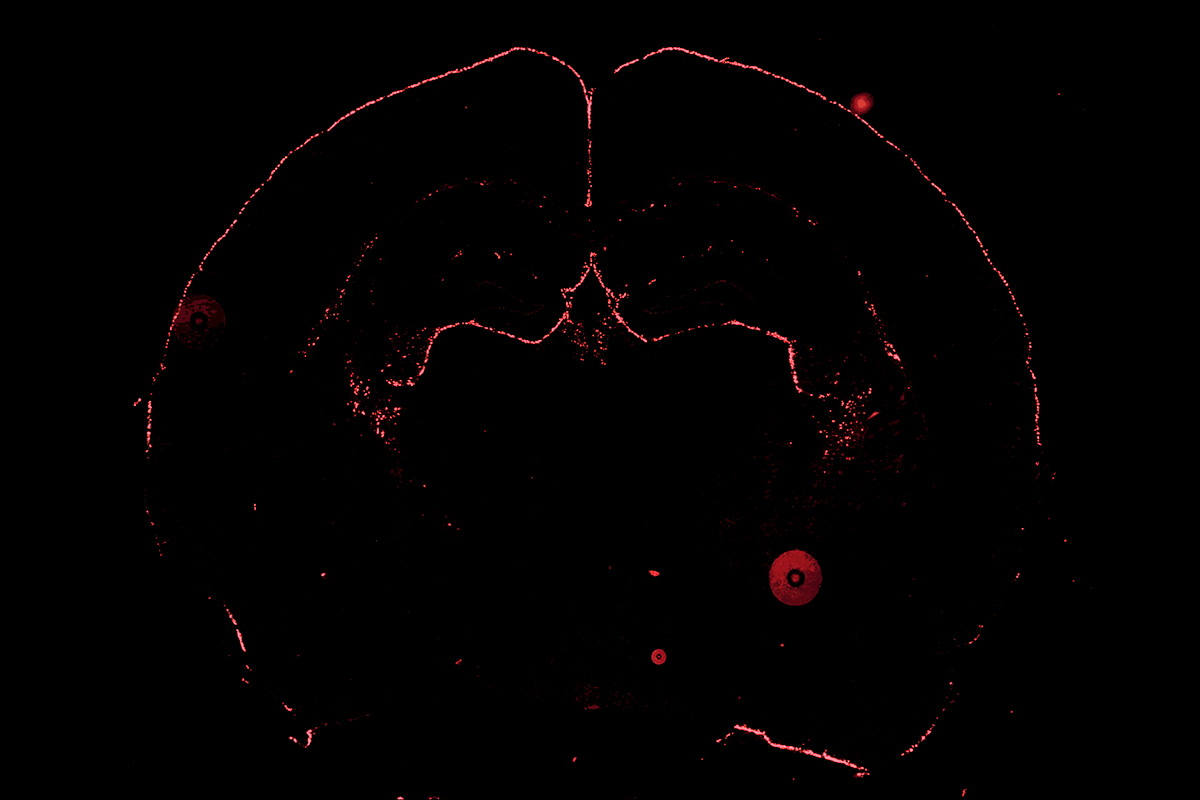
Unexpected astrocyte gene flips image of brain’s ‘stalwart sentinels’The genetic marker upends the accepted orientation of non-star-like astrocytes in the glia limitans superficialis.
Astrocytes star in memory storage, recallThe cells, long cast as support players in memory research, can activate or disrupt fear memories, according to a study in Nature.
Mouse studies cast astrocytes as stars of sensory perceptionData from two separate research teams suggest the cells are key to sensory hypersensitivity in fragile X syndrome.
How star cells’ secretions may stunt neurons: Q&A with Nicola AllenNon-neuronal brain cells called astrocytes secrete proteins that seem to hamper the growth of neurons in people with autism-related syndromes. These proteins could be new drug targets, Allen says.
Portrait of a research field: astrocytes in autismLong cast in supporting roles in the brain, astrocytes are emerging as primary players in certain characteristics of autism and related conditions.